PRESS RELEASE: Galápagos Smart Island Monitoring System Wins Premios Verdes 2026 Recognition for Conservation Innovation

Island Conservation Smart Islands Monitoring System

An ambitious collaboration is transforming ecological restoration and invasive species management through real-time monitoring on Floreana Island.

Cuenca, Ecuador – October 22, 2026 –The Smart Island Monitoring System on Floreana Island in the Galápagos has been selected as a Top 50 Finalist for the 2026 Premios Verdes, one of the region’s most recognized platforms for identifying and amplifying high-impact environmental and social initiatives across Latin America and the Caribbean. 

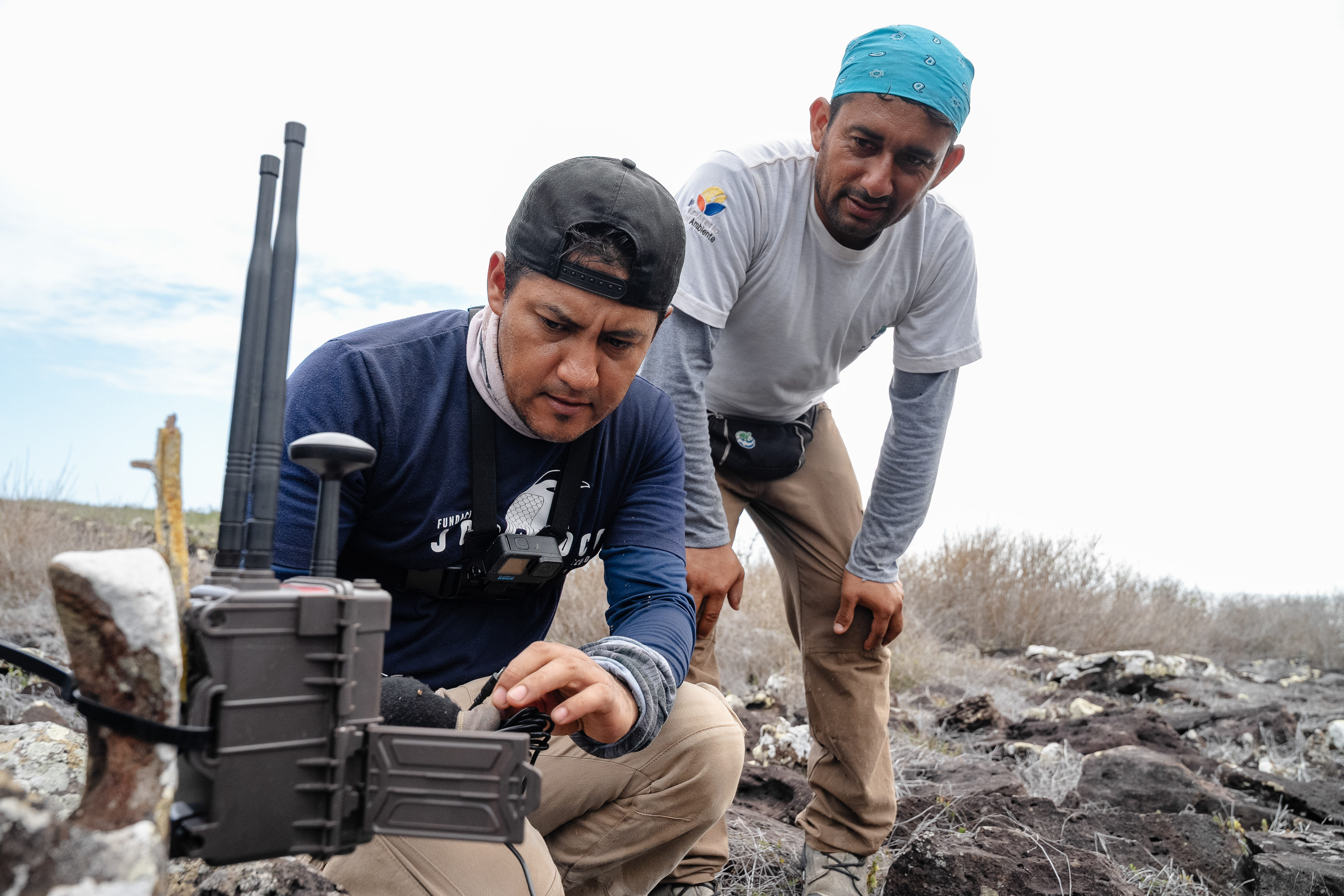
Developed by Island Conservation with technology partners Wildlife Protection Solutions, Smart Parks, and EarthRanger, the Smart Island Monitoring System was deployed on Floreana through a collaboration with Fundación Jocotoco and the Galápagos National Park Directorate. The system combines an island-wide LoRaWAN Internet of Things (IoT) network with autonomous AI-enabled camera traps, smart traps, animal trackers, and real-time data visualization platforms to deliver vital information to conservationists. By capturing and analyzing more than 8,500 photos each month, it is transforming wildlife monitoring and freeing conservation teams to spend more time working in the field.

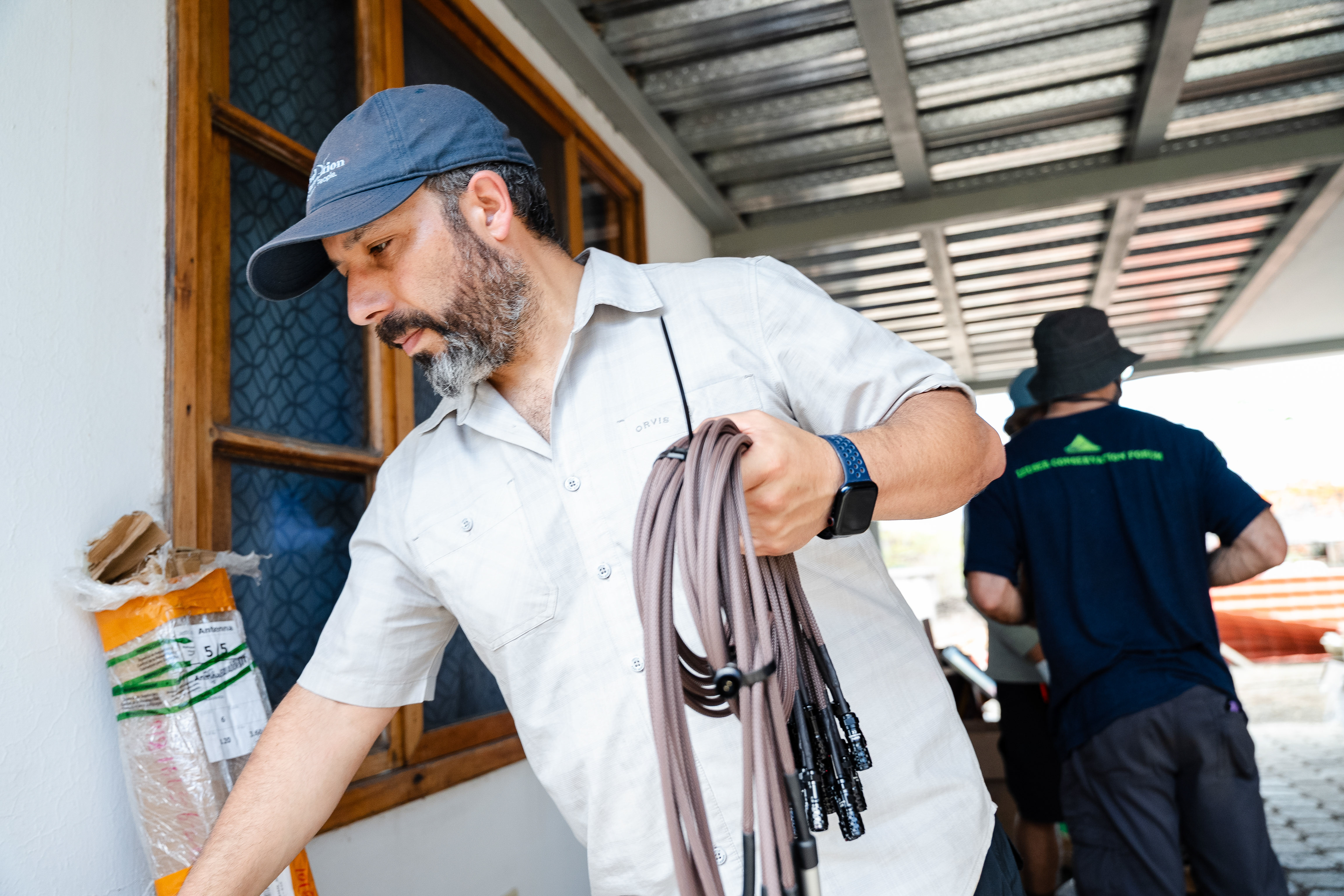
Jose Luis Cabello helping set up the Smart Island system. Photo credit: Jocotoco

“On Floreana, this technology is vital to the work of our park rangers. It helps them monitor the island more effectively and make timely, informed decisions in the field. What we learn here will also strengthen our efforts to protect biodiversity across the Galápagos archipelago,” said Pablo Sánchez Hidalgo, Director of the Galapagos National Park. 

Founded in Ecuador, Premios Verdes identifies, connects, and amplifies high-impact social and environmental initiatives across Latin America and the Caribbean. Each year, it evaluates hundreds of projects for measurable impact, innovation, contributions to sustainable development, scalability, long-term viability, and the potential to generate positive environmental and social outcomes. Recognition places the Smart Island Monitoring System among a highly competitive group of projects and demonstrates that innovations supporting ecosystem restoration and biodiversity protection in the Galápagos can offer valuable lessons for protected areas and conservation initiatives worldwide.  

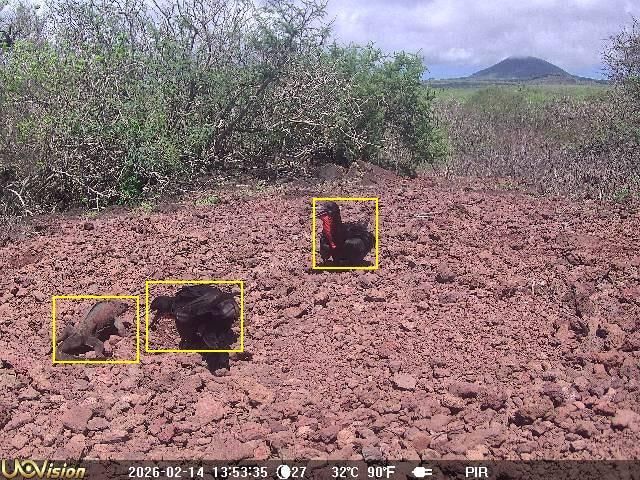
A camera trap captures an interaction between frigatebirds and an iguana. Photo Credit: Island Conservation / Doug Gillings

“On Floreana, this technology is vital to the work of our park rangers. It helps them monitor the island more effectively and make timely, informed decisions in the field. What we learn here will also strengthen our efforts to protect biodiversity across the Galápagos archipelago,” said Pablo Sánchez Hidalgo, Director of the Galapagos National Park. 

Founded in Ecuador, Premios Verdes identifies, connects, and amplifies high-impact social and environmental initiatives across Latin America and the Caribbean. Each year, it evaluates hundreds of projects for measurable impact, innovation, contributions to sustainable development, scalability, long-term viability, and the potential to generate positive environmental and social outcomes. Recognition places the Smart Island Monitoring System among a highly competitive group of projects and demonstrates that innovations supporting ecosystem restoration and biodiversity protection in the Galápagos can offer valuable lessons for protected areas and conservation initiatives worldwide.  

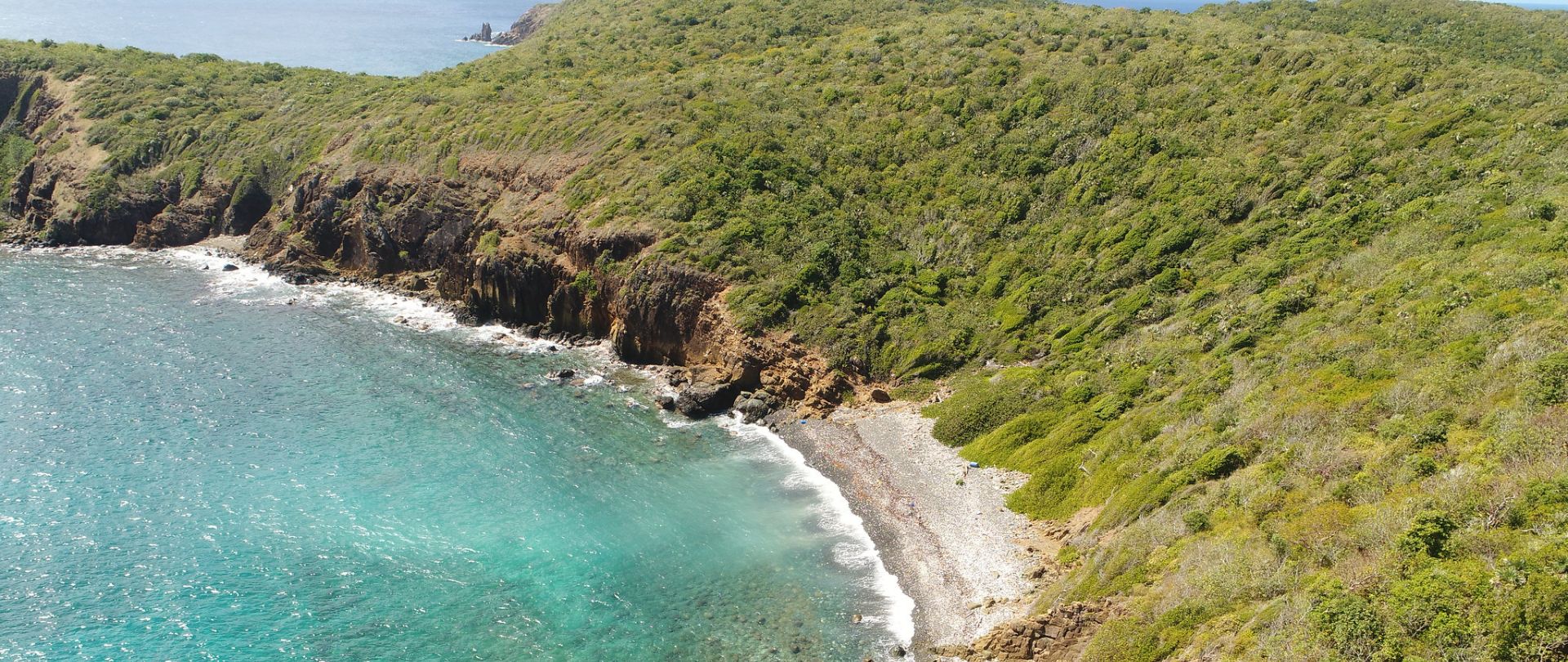
Floreana as seen from above. Photo Credit: Jocotoco Location: Floreana, Galapagos, Ecuador Region: Latin America

“Applying to Premios Verdes gave us the opportunity to bring together the results, challenges, and lessons from implementing this technology on Floreana. We wanted to show how a system developed through collaboration and learning in the field can make a practical difference for conservation. Being selected among the Top 50 finalists out of 2,087 projects is a recognition of that collective effort and an opportunity to share our experience with other islands,” said Renato Perez-Loyola, Technology Innovation Coordinator for Jocotoco.   

On Floreana Island, the Ecological Restoration Project is working to address invasive species and create the conditions for 12 locally extinct species to return. As this long-term effort advances,  the network is helping conservation teams access information more efficiently, improve coordination across field operations, and make faster, more informed decisions in support of ecosystem recovery. For example, the process of detecting and tracking down a specific animal on the island—a process that once may have taken weeks or months—can now be accomplished in mere hours or days. Since its deployment in January of 2026, the Smart Islands Monitoring System has captured 603373 images and saved conservationists an approximated 86 days of work.  

“Every restoration effort needs good eyes on the ground. This network is making sure that when Floreana’s bird species return, the island is ready for them. Because the goal is not only to remove threats posed by invasive species, it is to bring life back,” added Rakan Zahawi, Executive Director of the Charles Darwin Foundation who helped finance the initiative and is a co-executor of the island’s Restoration Project. 

Setting up the Smart Islands Monitoring System. Photo Credit: Jocotoco Location: Floreana, Galapagos, Ecuador Region: Latin America

The project demonstrates how connected conservation technologies can be deployed in remote landscapes where traditional communications infrastructure is unavailable. The system replaces delayed reporting and disconnected data sources with a shared view of activity across the landscape, enabling conservation practitioners to make faster, more data-driven decisions. The larger impact comes not from the technology alone, but from giving conservation professionals the information and connectivity they need to work effectively in challenging, remote conditions. 

Beyond species monitoring, the Smart Island Monitoring System can support species reintroductions, field team safety, and ecosystem management.

David Will

Senior Director of Innovation, Island Conservation

For the Smart Island Monitoring System, recognition by Premios Verdes highlights the potential for partnerships between conservation organizations, protected area managers, and technology innovators to create scalable solutions with global relevance. As restoration efforts continue in the Galápagos, project partners remain focused on expanding the use of innovative tools and collaborative approaches that can help conservation teams achieve greater impact throughout Latin America and the world. 

How to Help

There’s more than one way to make an impact. Join our collective of dedicated supporters by donating today or signing up for our newsletter to stay informed.

Media Assets 

Photos: https://drive.google.com/drive/folders/1Yiul-4vFRJhuyA2Yfl7ehSOw8ug1sO2p?usp=sharing    

Interviews available upon request.  

Media Contacts:

Island Conservation  

Sally Esposito, Senior Communications Director  

sally.esposito@islandconservation.org  

Fundacion Jocotoco   

Isabel Grijalva, Communications Coordinator, Fundación Jocotoco  

isabel.grijalva@jocotoco.org.ec 

Other orgs add as needed 

About Floreana Island

 Floreana Island is one of the oldest islands in the Galápagos Archipelago and home to a community of approximately 160 residents. Once rich with unique wildlife, Floreana experienced dramatic ecological decline following the introduction of invasive mammals in the 18th and 19th centuries. The island is historically significant for its role in early human settlement in the Galápagos and is recognized today as a priority site for global biodiversity recovery.  

About the Smart Island Monitoring System

Wildlife Protection Solutions contributed wpsWatch, a platform that simplifies how camera traps are managed across the island. Instead of manually checking equipment, rangers can now see which cameras are working properly and which may need attention. The system automatically reviews images with customized AI to detect wildlife activity and sends alerts to rangers via WhatsApp and EarthRanger when targeted animals are detected, helping teams focus only on what matters most. Smart Parks supported the design and setup of the island’s LoRaWAN communication network and TrapEdge smart trap sensors. This allows conservation staff to see the location and status of traps and tracking devices in near real time, without needing to physically visit each one. As a result, issues can be identified early, equipment stays operational for longer, and field teams can work more efficiently.   

All information from cameras, sensors, and ranger patrols is brought together in EarthRanger, a software platform provided by Ai2, a Seattle-based nonprofit research institute. EarthRanger turns complex streams of data into a clear, visual picture of what is happening across the island, helping rangers and managers make informed decisions quickly and confidently.  

About the Floreana Island Ecological Restoration Project

The Floreana Island Ecological Restoration Project is led by the Galápagos National Park Directorate along with the Biosecurity and Quarantine Agency for Galápagos. It is part of the Island-Ocean Connection Challenge, an international collective with the goal of beginning holistic restoration on 40 globally significant islands from ridge to reef by 2030. It is co-executed by Fundación Jocotoco, the Charles Darwin Foundation, and Island Conservation, with the support of several partner organizations. 

Countless individuals and the following organizations generously supported this monumental project along the way: Bell Laboratories, Inc., Blue Action Fund, Global Environmental Facility, Charities Aid Foundation Canada, Conservation International Foundation, Corporacion Andina de Fomento (Development Bank of Latin America), Durrell Wildlife Conservation Trust, Ecoventura, Fondation Ensemble, Fondo Especies Invasoras Galápagos,Fundación Galápagos, Galápagos Conservation Trust, Global Environment Facility, Konrad Lorenz Research Center – Vienna University, Kreditanstalt für Wiederaufbau (German Development Bank), Lindblad Expeditions-National Geographic Fund, The Mohamed bin Zayed Species Conservation Fund, Once Upon a Time Foundation, Scripps Institution of Oceanography, Silversea Cruises, Texas Parks and Wildlife Foundation, The Conservation Foundation, The David and Lucile Packard Foundation, The International Galápagos Tour Operators Association, The Leona M. and Harry B. Helmsley Charitable Trust, the U.K. Government (through The Darwin Initiative), Tourism Cares, Re:wild, The Raptor Center, Unigalapagos, Willow Grove Foundation, and other anonymous donors. 

About the Collaborators

Island Conservation’s mission is to restore islands for nature and people worldwide. We are a United States–based 501(c)(3) charitable organization with a globally distributed team—often made up of local islanders who bring deep knowledge and connection to the places where we work. Together, we collaborate with local communities, government management agencies, and conservation organizations to holistically restore islands by bringing back biodiversity, the foundation of all healthy ecosystems. We do this by removing a primary threat (introduced, damaging invasive species) and accelerating the return of native plants and animals. We utilize innovative technology and techniques to work more efficiently and showcase the many benefits of holistically restored islands for biodiversity, climate resilience, ocean health, and sustainable development across the globe.  

Fundación Jocotoco is an Ecuadorian conservation organization dedicated to protecting the country’s most threatened ecosystems and species through science-based conservation, habitat restoration, and strong local leadership. Since its founding in 1998, Jocotoco has established and manages a network of protected areas across mainland Ecuador and the Galápagos Islands, safeguarding critical habitats for endemic and endangered species.  

In the Galápagos, Fundación Jocotoco plays a key role in large-scale restoration initiatives, including the Floreana Island Ecological Restoration Project, working closely with local communities, government authorities, and national and international partners. Through long-term planning, research, and community engagement, Jocotoco supports the recovery of ecological processes that sustain both biodiversity and human well-being. For more information please visit: https://jocotoco.org.ec/  

Charles Darwin Foundation 

The Charles Darwin Foundation for the Galápagos Islands (CDF) is an international non-profit organization that has operated in Galapagos since 1959 under a special agreement with the Government of Ecuador. Its mission, and that of its Research Station, is to address the greatest threats and challenges facing Galapagos through scientific research and conservation actions, to protect one of the world’s most important natural treasures. Today CDF supports more than 25 research, conservation, and education projects across land and sea, and is the custodian of over 137,000 specimens in its Natural History Collections. Its diverse team of more than 140 scientists, educators, and support staff is composed primarily of Ecuadorian citizens, with over 60% from Galápagos. 

For more information, please visit: www.darwinfoundation.org 

Wildlife Protection Solutions  

https://www.wildlifeprotectionsolutions.org/ Wildlife Protection Solutions (WPS) is an international nonprofit that uses technology to help protect endangered species, ecosystems, and the communities connected to them. Through AI-enhanced monitoring, camera traps, remote sensors, real-time alerts, and immersive education experiences, WPS gives conservation teams better tools to monitor landscapes, respond to threats, and build public support for wildlife protection.  

Smart Parks  

https://www.smartparks.org is a nonprofit technology organization that helps conservation teams monitor and protect wildlife more effectively in remote and challenging environments. By developing and deploying open, field-ready systems such as LoRaWAN communication networks and smart sensors, Smart Parks enables real-time visibility into traps, tracking devices, and other critical conservation tools. On Floreana, Smart Parks supported the design and setup of the island’s communication network and TrapEdge smart trap sensors, helping teams detect issues earlier, reduce manual field checks, and keep essential equipment operating reliably. Through practical, scalable technology, Smart Parks strengthens conservation efforts by making it easier for field teams to respond quickly and work more efficiently.   

EarthRanger   

EarthRanger is a data visualization and analysis platform provided at no cost by Ai2, a Seattle-based nonprofit research institute. It gives conservationists the real-time information they need to keep wildlife, habitats, and communities safe. It collects, integrates, and displays remote sensing data and field reports to effectively monitor collared wildlife, rangers, enforcement assets, and infrastructure within protected areas and landscapes. The application of EarthRanger is diverse and varies relative to the primary needs of the area or organization. Among them, the platform is used to monitor vast areas, track and study wildlife, coordinate ranger units, and proactively mitigate human-wildlife conflict.   

The EarthRanger program has been in place for over 10 years and has reduced threats to biodiversity and habitats in over 900 protected areas across 90 countries and on six continents. It has facilitated the reintroduction and restoration of diverse species and ecosystems that deliver global environmental and socioeconomic benefits. Follow EarthRanger’s work on LinkedIn, Instagram, Facebook, X, and YouTube.   


Galapagos Conservation Trust 

Galapagos Conservation Trust is the only UK-registered charity focused solely on the conservation and responsible stewardship of the Galapagos Archipelago, and was founded in 1995 in response to the growing threat posed by humans. We believe that Galapagos can be a beacon of hope for the world as we tackle the interlinked crises of climate change, biodiversity loss and pollution, and we have been supporting the restoration of Floreana for over 20 years. 

Find out more: https://galapagosconservation.org.uk/  

 Q&A

What is a Smart Island Monitoring System?

A Smart Island Monitoring System is a connected network of conservation technologies that helps monitor wildlife, ecosystems, and restoration projects in real time. These systems can combine sensors, cameras, communications networks, artificial intelligence, and data platforms to provide a live picture of environmental conditions and conservation activities.


How do smart islands use technology for conservation?

Smart islands use connected technologies such as wildlife cameras, environmental sensors, GPS trackers, wireless communications networks, and AI-powered software to collect and analyze information. This allows conservation teams to make faster, more informed decisions while reducing time spent on manual data collection.


What technologies are used in smart conservation projects?

Smart conservation projects often use:

  • Artificial intelligence (AI)
  • Camera traps
  • Environmental sensors
  • Wildlife tracking devices
  • LoRaWAN communication networks
  • Internet of Things (IoT) technology
  • Real-time monitoring platforms
  • Data visualization software

Together, these technologies help conservation teams understand what is happening across a landscape and respond more effectively.


What is IoT technology in conservation?

The Internet of Things (IoT) refers to networks of connected devices that automatically collect and share information. In conservation, IoT devices can include camera traps, wildlife trackers, sensors, and smart equipment that transmit data from remote locations to conservation teams in real time.


How does AI help monitor wildlife?

Artificial intelligence can automatically analyze images and other monitoring data to identify species, detect wildlife activity, and highlight important observations. This reduces the need for people to manually review thousands of photos and helps conservation teams focus on the most important information.


What are AI-enabled camera traps?

AI-enabled camera traps are wildlife cameras that use artificial intelligence to automatically identify animals and filter images. Some systems can send alerts when specific species are detected, helping conservation teams respond more quickly and monitor wildlife more efficiently.


How do conservation teams monitor wildlife in remote places?

Conservation teams increasingly use connected camera traps, sensors, animal-tracking devices, and communications networks that can transmit information from remote areas. This provides near-real-time visibility into wildlife activity and ecosystem conditions without requiring frequent field visits.


What is real-time conservation monitoring?

Real-time conservation monitoring is the collection and analysis of environmental information as events happen. By receiving immediate updates from sensors, cameras, and tracking devices, conservation teams can detect issues faster and make timely management decisions.


What is a conservation data platform?

A conservation data platform brings together information from multiple monitoring tools, including cameras, sensors, wildlife trackers, and field teams. These platforms help organizations visualize trends, manage operations, and make evidence-based decisions.


How does technology improve conservation decision-making?

Technology helps conservation organizations gather more accurate information, identify patterns more quickly, and monitor larger areas than would otherwise be possible. Access to timely data allows managers to prioritize actions, deploy resources efficiently, and measure conservation outcomes.


Can technology make conservation more efficient?

Yes. Connected monitoring systems can automate many tasks that traditionally required significant field time. By reducing manual equipment checks, data collection, and image review, conservation teams can spend more time acting on information rather than gathering it.


How are smart monitoring systems used in ecosystem restoration?

Smart monitoring systems help restoration teams track wildlife recovery, monitor ecosystem health, detect threats, and evaluate project outcomes over time. This information helps practitioners understand whether restoration efforts are succeeding and where additional interventions may be needed.


How does technology help manage invasive species?

Technology can improve invasive species management by detecting animals earlier, monitoring their movements, tracking response efforts, and measuring impacts. AI-powered monitoring tools can help teams identify priority actions more quickly and efficiently.


What is a connected conservation network?

A connected conservation network links monitoring devices, communications infrastructure, and software platforms into a single system. This allows information from cameras, sensors, wildlife trackers, and field teams to be shared and analyzed in one place.


Can smart island technology be used in other locations?

Yes. Many smart conservation technologies are designed to be scalable and adaptable to remote islands, protected areas, wildlife reserves, and other landscapes where communications infrastructure is limited. Similar approaches can support biodiversity monitoring and ecosystem management around the world.


Why are smart monitoring systems important for biodiversity conservation?

Smart monitoring systems help conservation organizations monitor wildlife more effectively, detect environmental changes sooner, improve operational efficiency, and make better-informed decisions. As biodiversity faces growing pressures worldwide, these technologies can help conservation efforts become more proactive, scalable, and effective.


What is the future of conservation technology?

The future of conservation technology is likely to include greater use of artificial intelligence, environmental DNA (eDNA), connected sensors, satellite monitoring, predictive analytics, autonomous monitoring devices, and integrated data platforms. These tools can help conservation practitioners monitor ecosystems at larger scales and respond more quickly to emerging challenges.

Next

Want to learn more?

Check out other journal entries we think you might be interested in.