September 1, 2026
Field Notes: Welcome to Sonsorol, Palau
Linden Brown shares the incredible things he saw and experienced while working to restore islands in Sonsorol State, Palau!
 Island Conservation
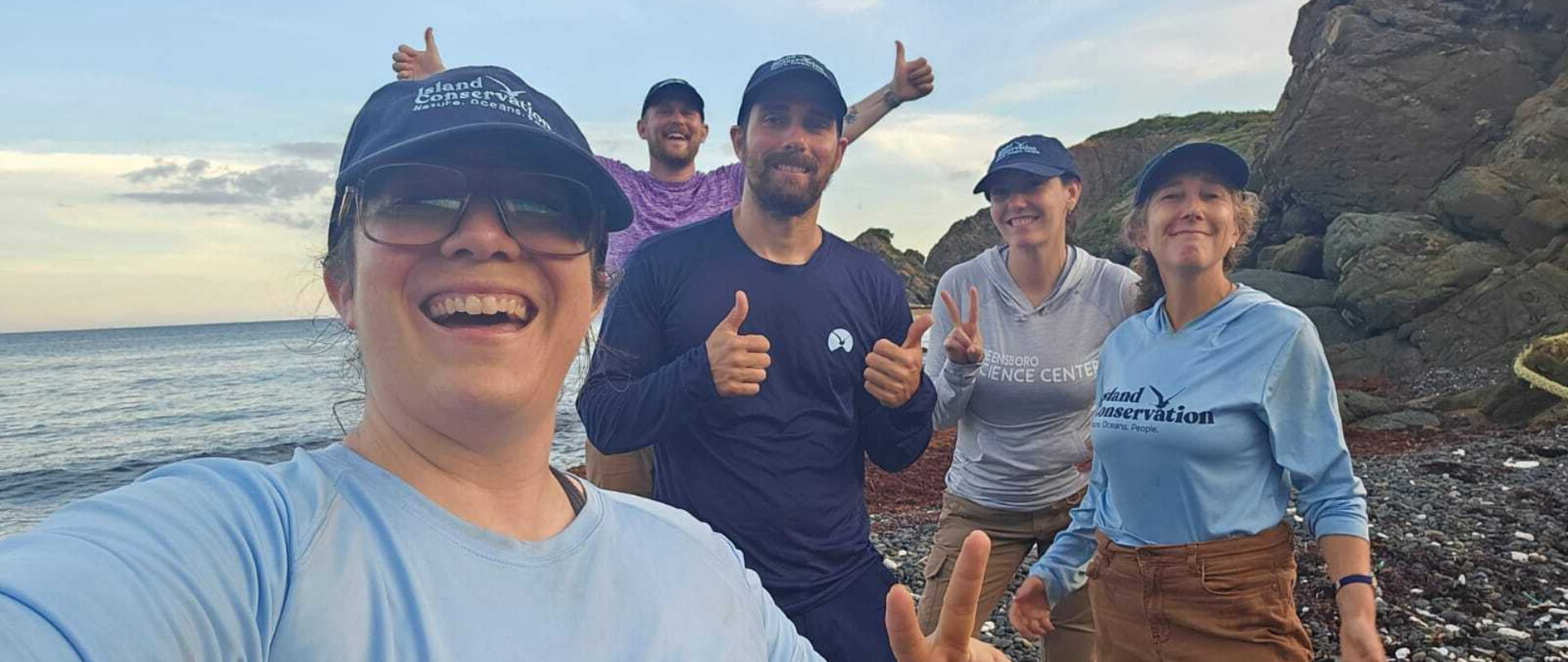
An endangered species that has disappeared from much of its native range may soon have a new home. In 2026, Island Conservation took the next crucial steps toward the translocation of the Virgin Islands Tree Boa—and I had the rare privilege of experiencing this work firsthand.
As a Development Officer in the Island Conservation philanthropy department, I was eager for the special opportunity to join the 2026 Field Deployment on Savana, an uninhabited island, managed by the US Virgin Islands Department of Planning and Natural Resources (DPNR). The ultimate goal is to bring back the endangered Virgin Islands Tree Boa from the brink of extinction.
The Tree Boa is a beautifully patterned, nocturnal snake. This rare snake is mottled with dark spots and easily blends with its surroundings in subtropical island forests, where it forages for lizards. Viviparous, the Tree Boa gives birth to live snakes, not eggs like most snakes. As the snakes grow, they shed, and newly shed boas are noticeable for their blue-purple iridescence. This boa is endangered due to habitat loss and predation by invasive mammals. With few individuals remaining, the time to act is now.
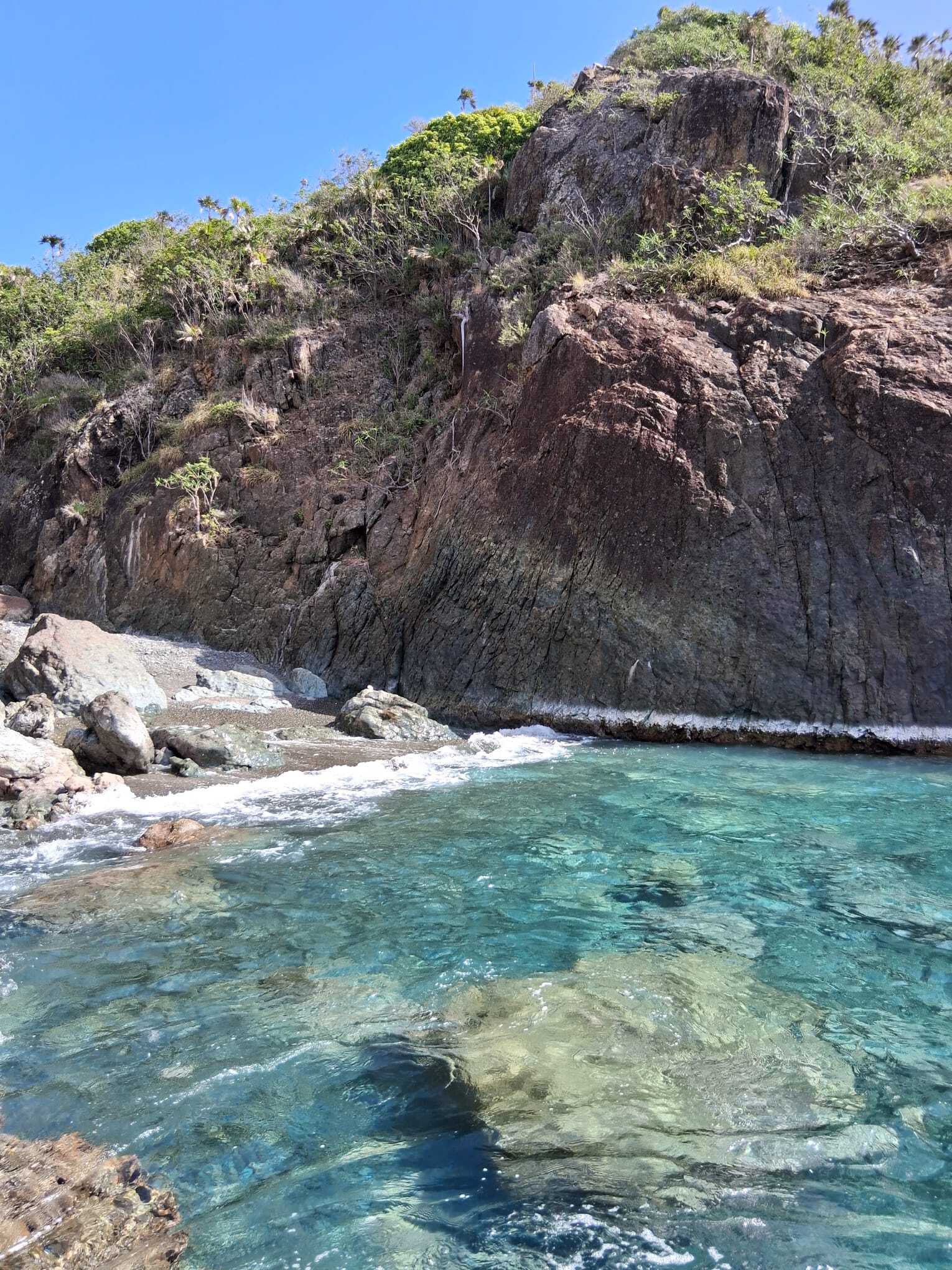
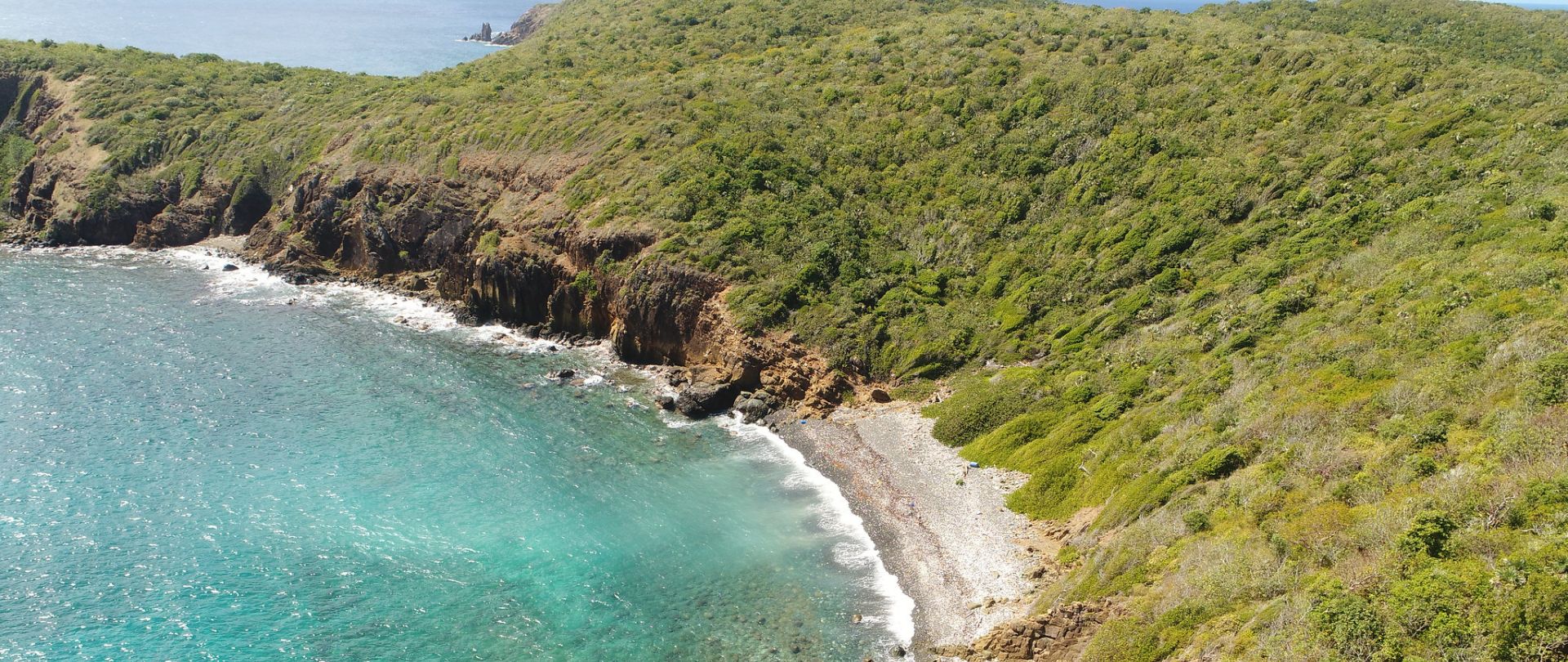
This field deployment was an opportunity for me to experience Island Conservation’s work and challenges firsthand. But as my departure date grew near, my excitement was somewhat tempered by nerves. Cielo Figuerola, Island Restoration Specialist and leader of this monitoring initiative, shared a slide deck to prepare our team for the expedition. This was no idealistic, picturesque Caribbean paradise. We will be camping for 16 days on an island of steep cliffs, thorny plants that aim to hurt you, no fresh water, and a campsite on a rock-strewn beach covered in sargassum, a thick, matte-like seaweed that notoriously stinks when it decomposes on the beach. As ocean water warms from climate change, it’s becoming an annual menace across the Caribbean and beyond.
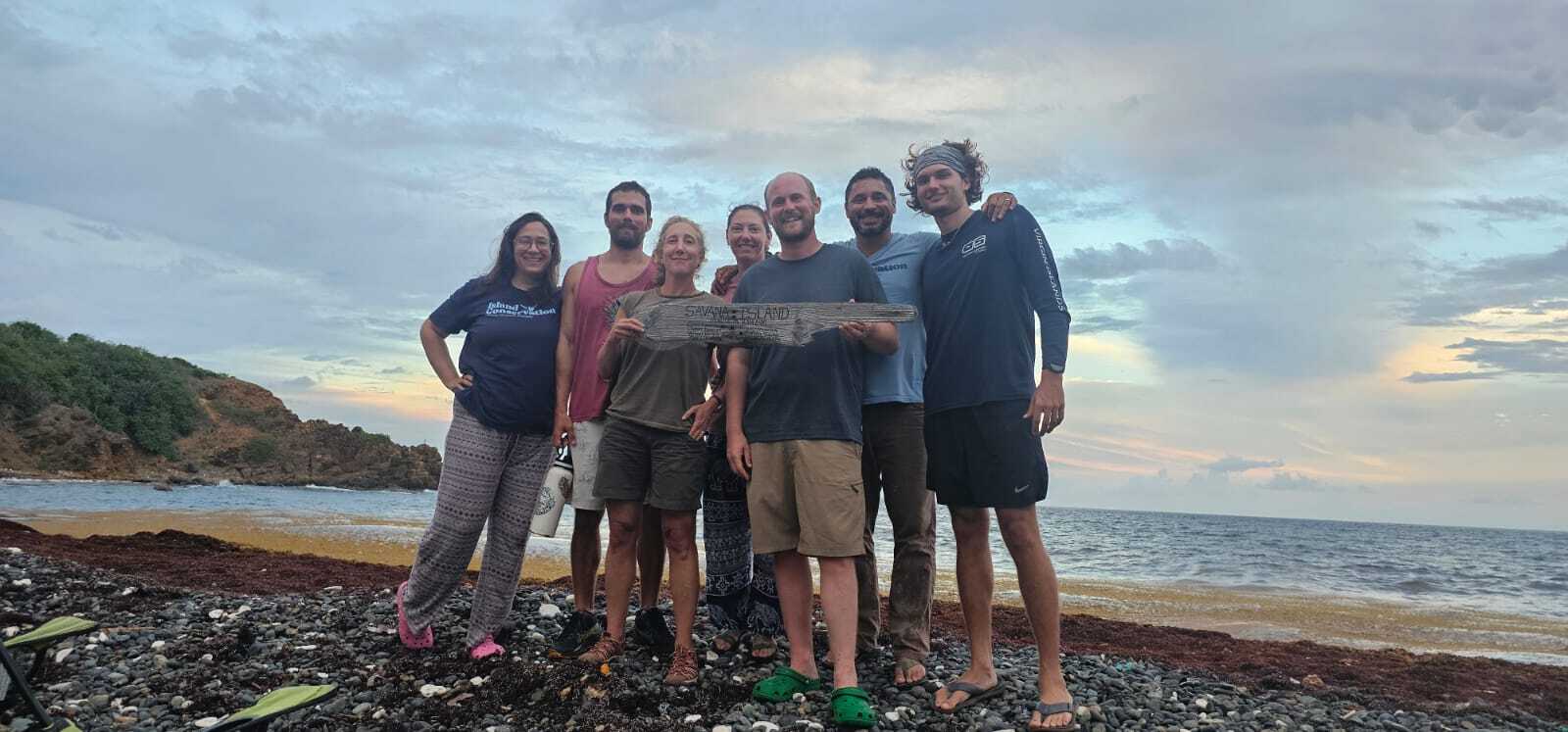
But then, despite my trepidation, the day came, and the group congregated on St Thomas, Virgin Islands: two staff, Lindsey and Mike from the Greensboro Science Center (one of six institutions breeding the Virgin Island Tree Boa for this reintroduction), a camp manager, Miguel, and our fearless leader, Cielo. Later, our team will be rounded out with the addition of Project Manager, Jose Luis Herrera, and Drake, a Fellow from DPNR.
In the past, when conducting studies, my colleagues arrived on Savana via boat. Without any piers or calm-water landings, the last hundred yards must be done by swimming through the high surf and sargassum, hauling all the camping gear through the not insignificant waves, including food, fresh water, and scientific equipment. Really tough. Luckily, this time, we all got the thrill of a lifetime arriving instead by helicopter.
As we began our work building camp and re-cutting a trail across the nearly trackless island, the island’s hazards soon became apparent. Despite the heat, we wore layers of clothing, neck gators, and heavy boots to protect us from the unwelcoming plant life. In addition to prickly bushes, spiky vines, two species of cactus, including jumping cactus (well-named), and broad leaf tree with fiberglass-like hairs, there were also scorpions (large and small), wasps (two species, maybe more), fire ants, biting termites, small but mighty gnats, and of course, the ubiquitous mosquito.
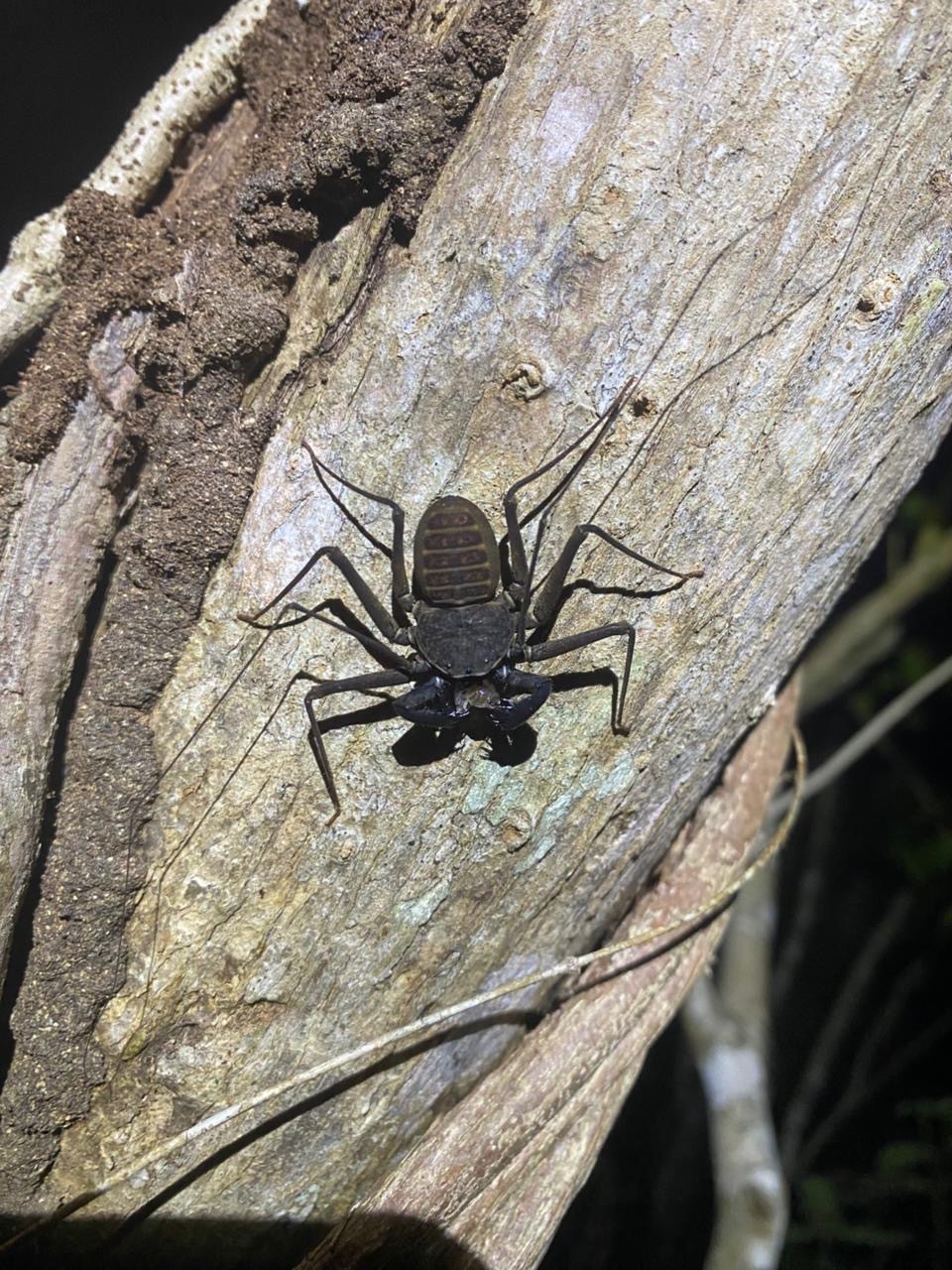
But the beauty and surprises of Savana Island began to make themselves known. When we began doing reptile surveys, we found several species of anoles, a prolific gecko species, and a species of ground lizards. We also frequently came across the brown racer snake, a ground-dwelling species. Crab surveys proved that hermit crabs are prolific, crawling through the forest and up in the trees. Other rare land crabs made an appearance, too. Nighttime trips into the island’s interior revealed a plethora of moth species (some quite large!) and Whip Scorpions (not true scorpions) that gave me a fright, though they were beautiful and whimsical in their own way.
Seabird surveys were a little disheartening, with scant seabird sightings. But with restoration and social attraction, brown boobies, frigate birds, ruddy turnstones, oystercatchers, and other seabirds could return in multitudes. For me, taking part in these scientific monitoring activities was satisfying, but they were also a personal revelation. A unique chance to slow down, observe, and revel in this wild place, with its wild weather, starry skies, and intricate marine and terrestrial life.
This was not the Caribbean of postcards and cocktails, but for the Virgin Island Tree Boa it promises to be an ideal habitat. The native palm forests and the mean thorny trees of the coastal shrub will make a perfect home, with plentiful lizards on which to feast. Our work means that for centuries to come it can be a hot, muggy, all-inclusive resort for the Virgin Island Boa. If you’d like more information about Savana, the Tree Boa, or our work across the Caribbean, reach out to me at Jennifer.Sachs@islandconservation.org
There’s more than one way to make an impact. Join our collective of dedicated supporters by donating today or signing up for our newsletter to stay informed.
The Savana Island Restoration Project is supported by the Department of Planning and Natural Resources Division of Fish and Wildlife (DPNR-DFW) and the Greensboro Science Center.
Check out other journal entries we think you might be interested in.
September 1, 2026
Linden Brown shares the incredible things he saw and experienced while working to restore islands in Sonsorol State, Palau!
August 18, 2026
Meet Evelyn, one of the people who holds the wisdom of Sonsorol State, Palau in her lived experiences and stories.
August 4, 2026
Indigenous-led conservation takes a leap forward with Rapa Nui (Easter Island)'s new partnership with Island Conservation!

July 31, 2026
We interviewed artist Laura Shape to learn about the luminous abstracts she creates from leather sourced from invasive species!

July 28, 2026
Happy World Nature Conservation Day! Read Penny Becker's article published by the Outreach Network for Gene Drive Research.
July 2, 2026
Invasive species have caused over $12 billion in damages to island ecosystems, creating an urgent need for strengthened biosecurity measures!
June 23, 2026
The Island-Ocean Connection Challenge announced four new restoration projects—Lehua, Tavolara, Grand Rouveau, and Zembra—at London Climate Week, expanding its global effort to restore 40 island-ocean ecosystems by 2030!
June 18, 2026
A new project to expand the range of an endangered Tree Boa is one step closer to completion!

June 18, 2026
The Island Restoration Storytellers Circle is a new initiative designed to elevate islander voices in the global conversation about holistic restoration!
June 8, 2026
A world-first controlled experiment shows connection between seabird activity and marine health on Ulong Island!