September 17, 2026
Island Conservation and Robinson Crusoe Island, Chile: Growing Hope Together
On the island of Robinson Crusoe in Chile, a greenhouse feeds both a community and an islander-led conservation movement!
 Island Conservation
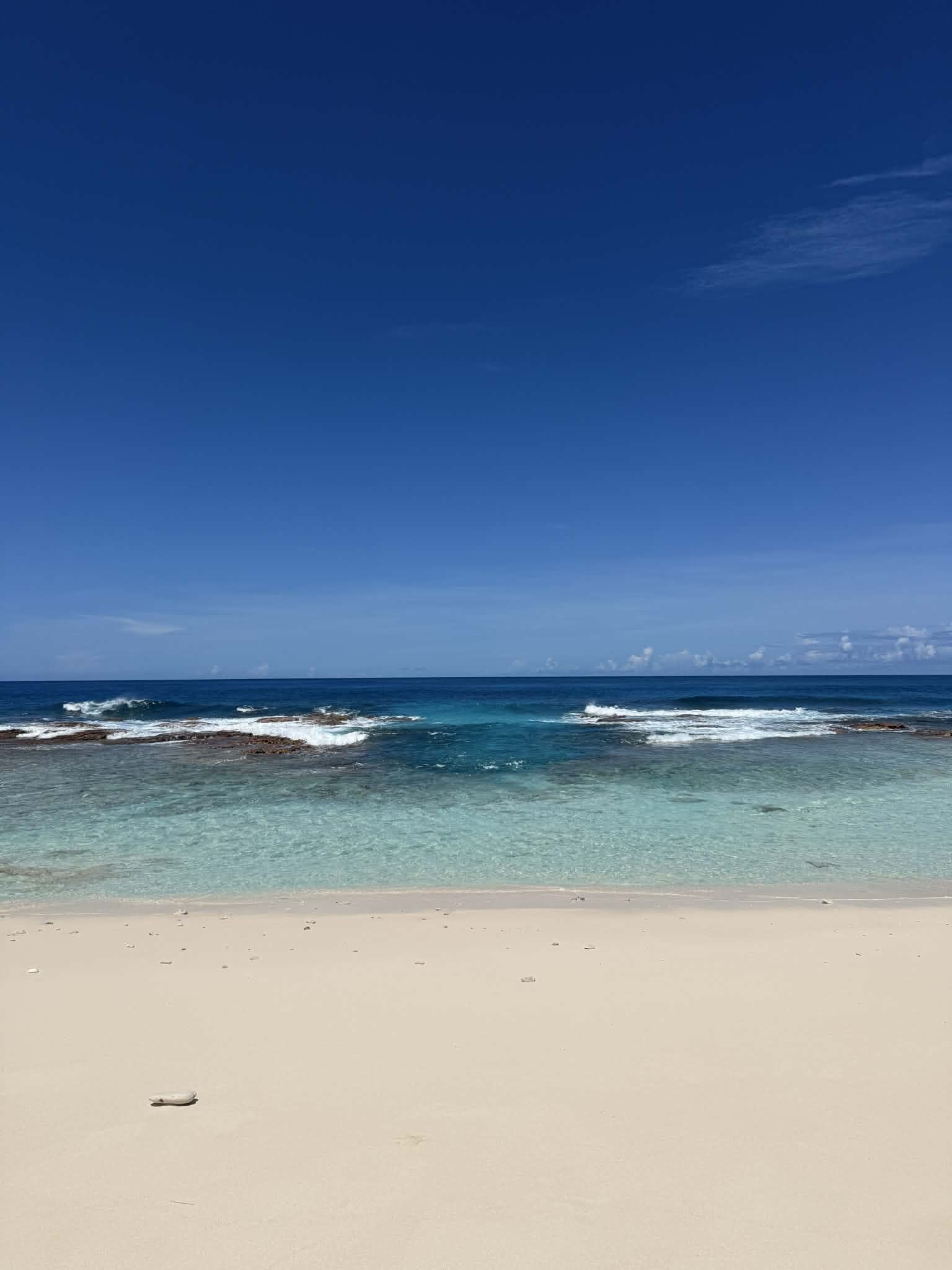
Few places on Earth feel as physically distant—and as globally significant—as Tuvalu. Scattered across the vast Pacific Ocean, this nation of nine low‑lying coral islands is home to just over ten thousand people and rises only a few meters above sea level in most places. Life here is inseparable from the ocean, coconut palms, coral reefs, and a deep sense of community shaped by generations of living on small islands with finite resources.
Before this year, Tuvalu existed for me mostly as a place name in articles about climate change and sea‑level rise. I never imagined I would one day stand on one of its most remote islands—let alone call it home for a month. Yet through my work with Island Conservation, I was given the rare opportunity to live and work on Niulakita, Tuvalu’s southernmost island.
The journey to Niulakita is about 13 hours by boat from the main island of Funafuti. Ask almost any Tuvaluan and you’ll discover of the most well-known things about getting to Niulakita is getting to shore. There are no ports on the island, and the low-lying atoll is almost completely surrounded by coral that prevents boats from reaching the shore. Only two openings in the coral exist that provide a passage for small boats to access the shore. Passageways that are relatively small, just big enough for a relatively small dinghy to pass through surrounded by shallow rough coral with very strong currents and occasionally large waves depending on the tide. I had been told that many Tuvaluans were afraid to travel to Niulakita because of the dangerous landing, and that there have been fatal accidents in the past. That fear was echoed when I returned to Funafuti—two people I spoke with immediately said they were afraid to travel there due to landing site conditions. Luckily, the ocean was kind enough to give us calm conditions on arrival and departure, but I witnessed landings during my stay that made me cringe for everyone on board.
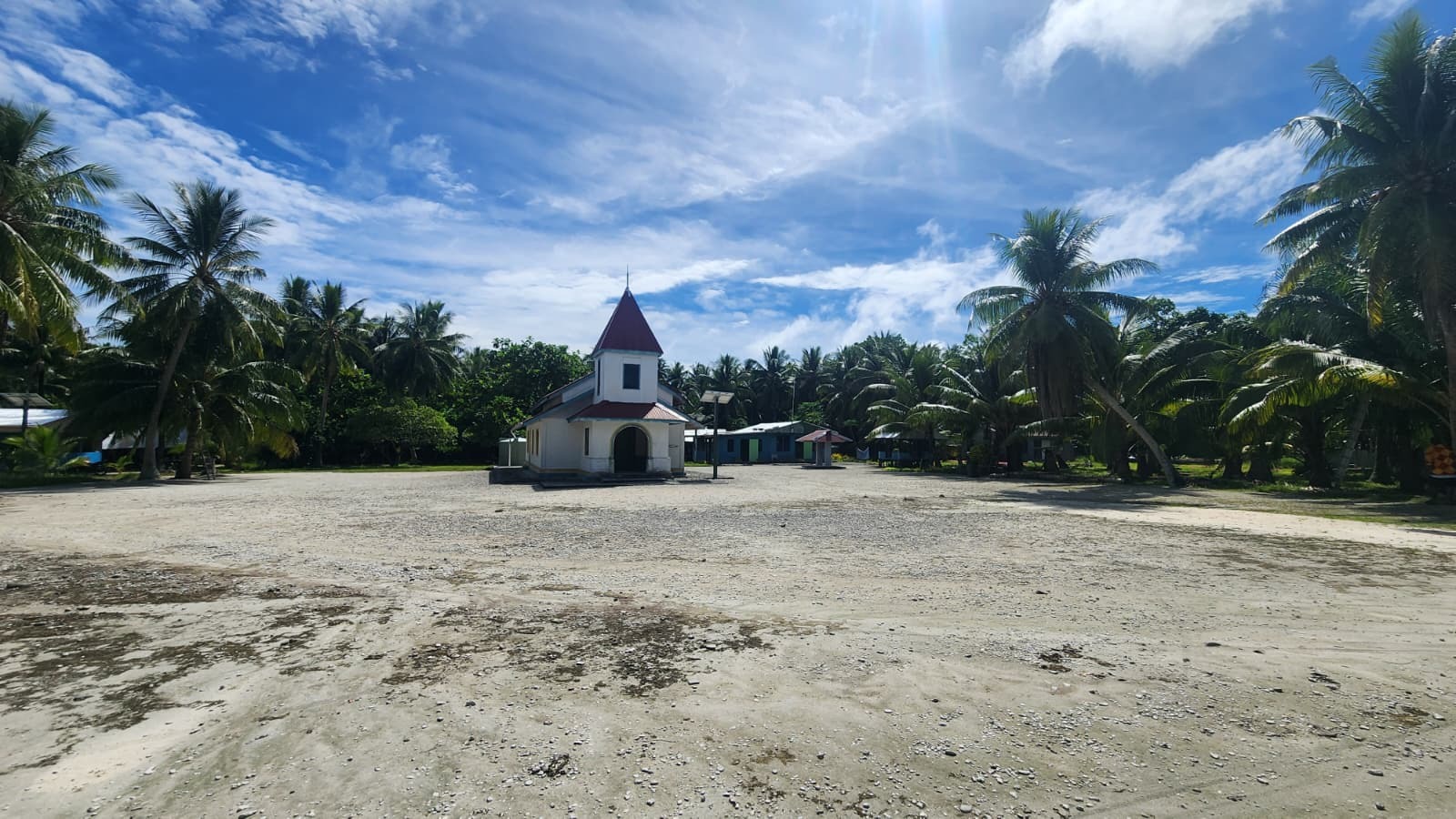
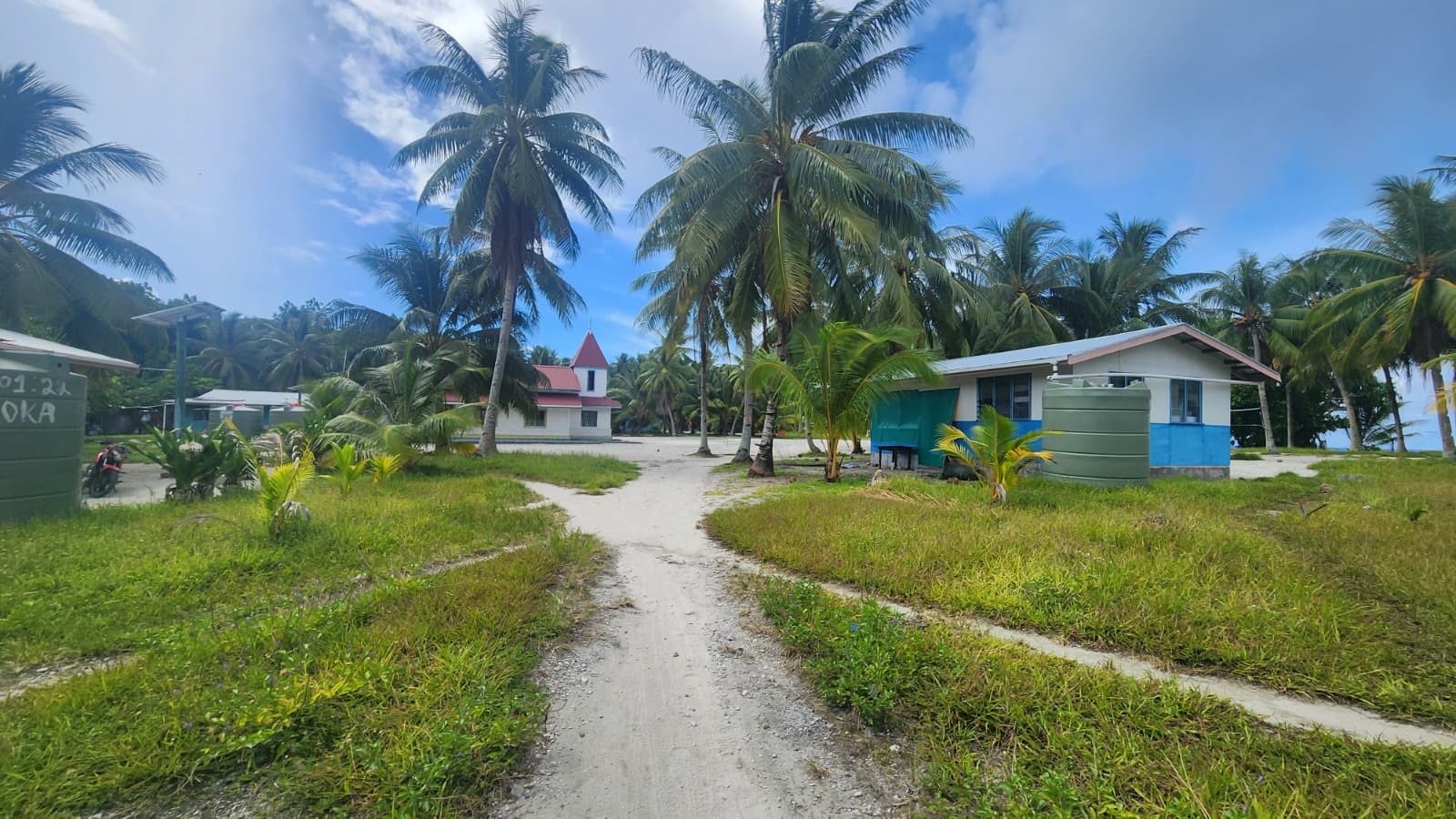
During my time in Niulakita, there were about 11 households on the island with anywhere from 4-8 people per household. Some families are permanent or long-time residents on the island while others are newer to the island or individuals with their families that have been contracted for work on the island and perform a duty for a fixed amount of time. There is a school, a church, and a large event tent where community gatherings are held. One dirt pathway goes around the entire island and connects with smaller pathways that lead both to the shore and inland. Locals travel around the island with small motor bikes as an island of only about 40 hectares doesn’t really lend itself well to cars. In my conversations with community members on Niulakita many people described life there as “simple”, and many seemed to prefer it this way! Activities on Niulakita include school during weekdays for kids, multiple weekly church services and devotion times, community gatherings for birthdays, holidays and other festivities, bingo, fishing, crab hunting, volleyball, collecting fresh fruit, cleaning up the island, helping neighbors with cleaning and construction projects, cooking, and hanging out with neighbors, friends, and family. There is one activity that happens every single day at almost all hours though. An activity that the island is well known for and is the main/only source of income for many island residents. This is the collection of syrup from coconut trees locally known as “toddy”.
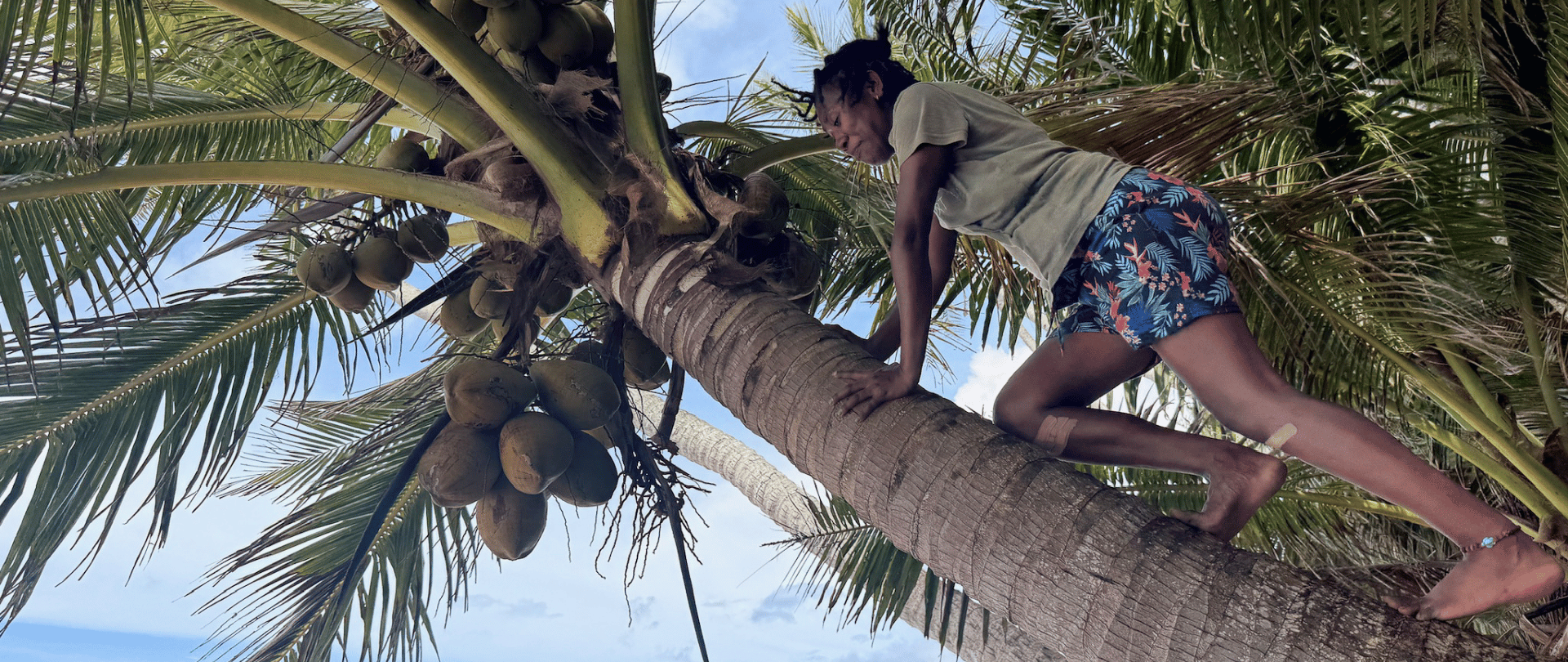
Toddy is collected by cutting the fruiting branches of coconut trees below the area where the fruit is produced. A thin rope is then tied tightly around the freshly cut part of the branch. A small strip of coconut frond is then placed on the fresh cut, and that is used to guide the thick syrup that drains from the cut on the branch into a container that hangs from a rope on the tree. The product is a white sweet tasting somewhat viscous syrup. This syrup is consumed by the Niulakita community, but there is one additional step required to make the product that is exported for profit. The white syrup from the tree is then collected in a very large pot and boiled for many hours over a fire fueled by coconut husk until a thick red syrup is formed. This syrup is known as “red toddy”. In my time there I saw (and myself consumed) this toddy most often mixed with water and cooled as a refreshing beverage but also was able to try some pieces of coconut dipped directly in the red toddy syrup. That was my favorite way of having it.
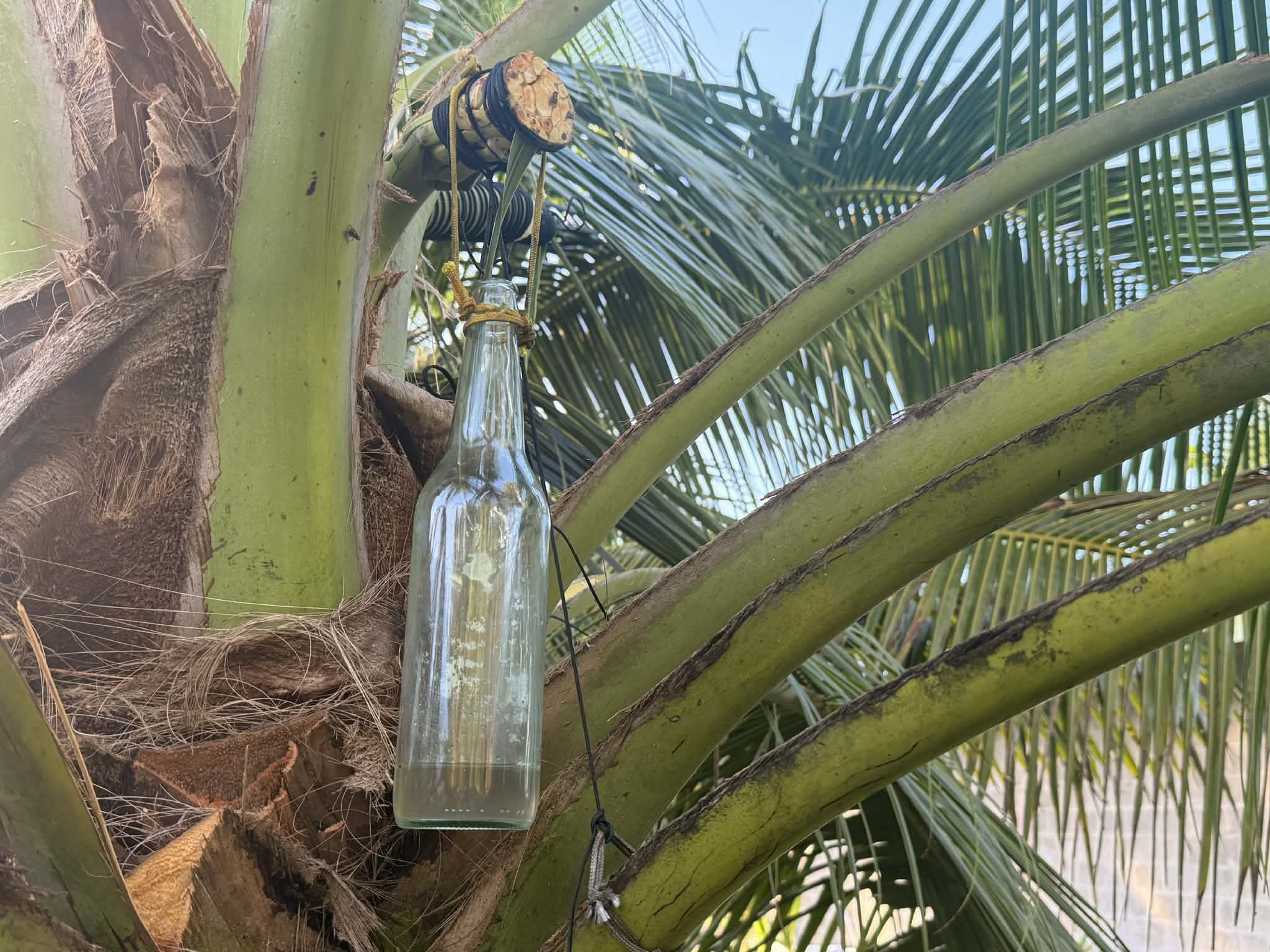
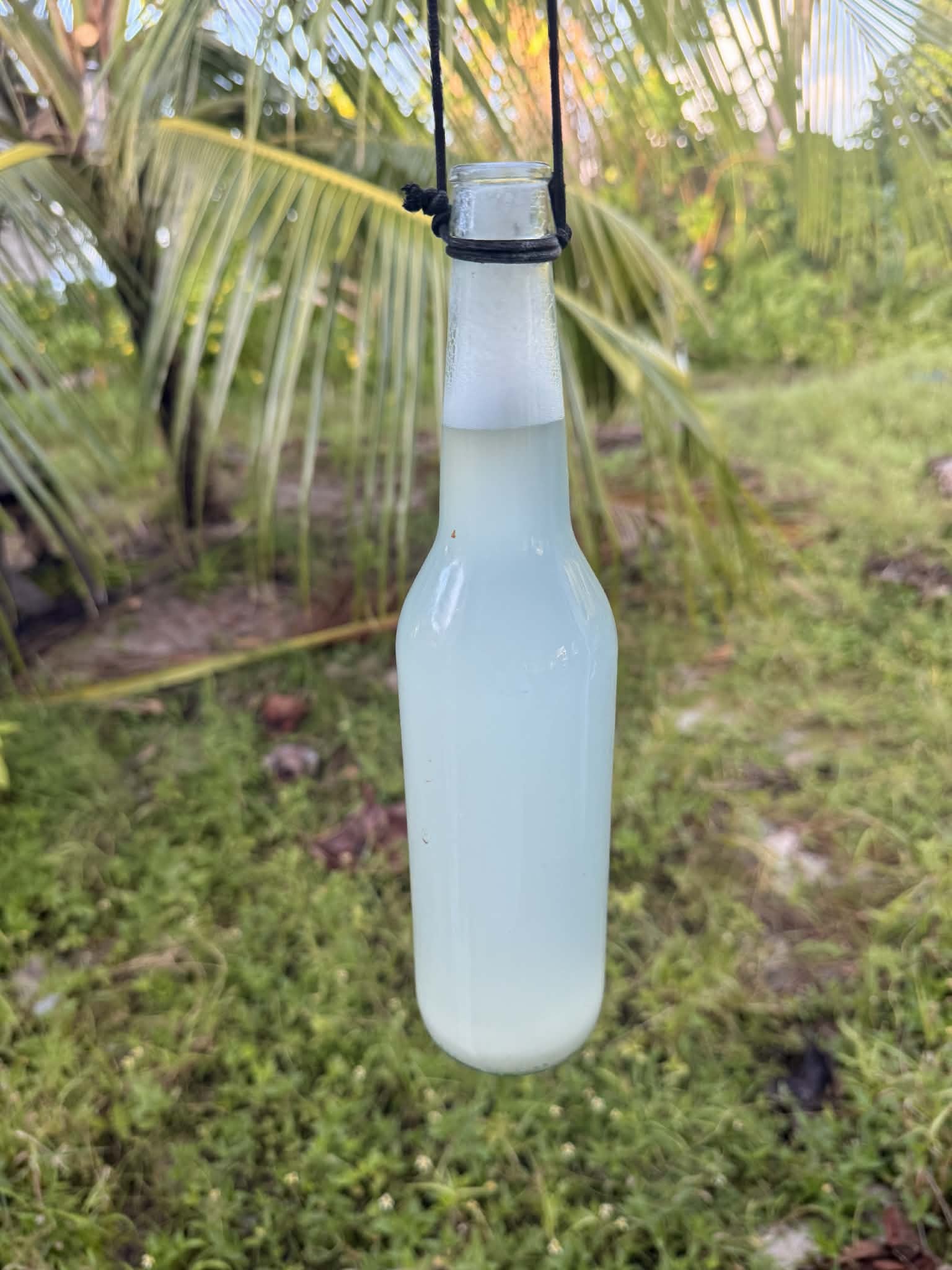
This now brings me to the whole purpose of our stay on Niulakita. Toddy is Niulakita’s main local export. Islanders receive income from sending toddy to Funafuti and other islands to sell. Toddy production is severely affected by invasive rodents. Rats frequently climb coconut palms to chew into bottles with toddy or gnaw through the ropes suspending the bottles, leading to significant losses. Rodents also prey on land crabs and seabirds, which are both essential to subsistence and the overall health of the island. In partnership with the Tuvalu Department of Environment and Tuvaluan local community members, Island Conservation is leading an invasive rodent removal on Niulakita in hopes to put an end to the damaging effects these rodents have on local livelihood and ecological integrity. All in all, I spent a little over a month on the island with local partners and my Island Conservation teammates performing a wide range of tasks to prepare the island for the project. These tasks included outreach to ensure that residents have access to any resources and information that might be needed, conversations on proper waste management to ensure a successful operation, household interviews to understand how food security was affected by invasive mammals, repairing pig pens and chicken coops to keep domestic livestock safe, and an old room in a building was even fashioned into a biosecurity area to inspect incoming cargo for invasive species. We also obtained some baseline ecological data on seabirds, land crabs, vegetation, and rodent activity to track how these populations change after the project is finished.
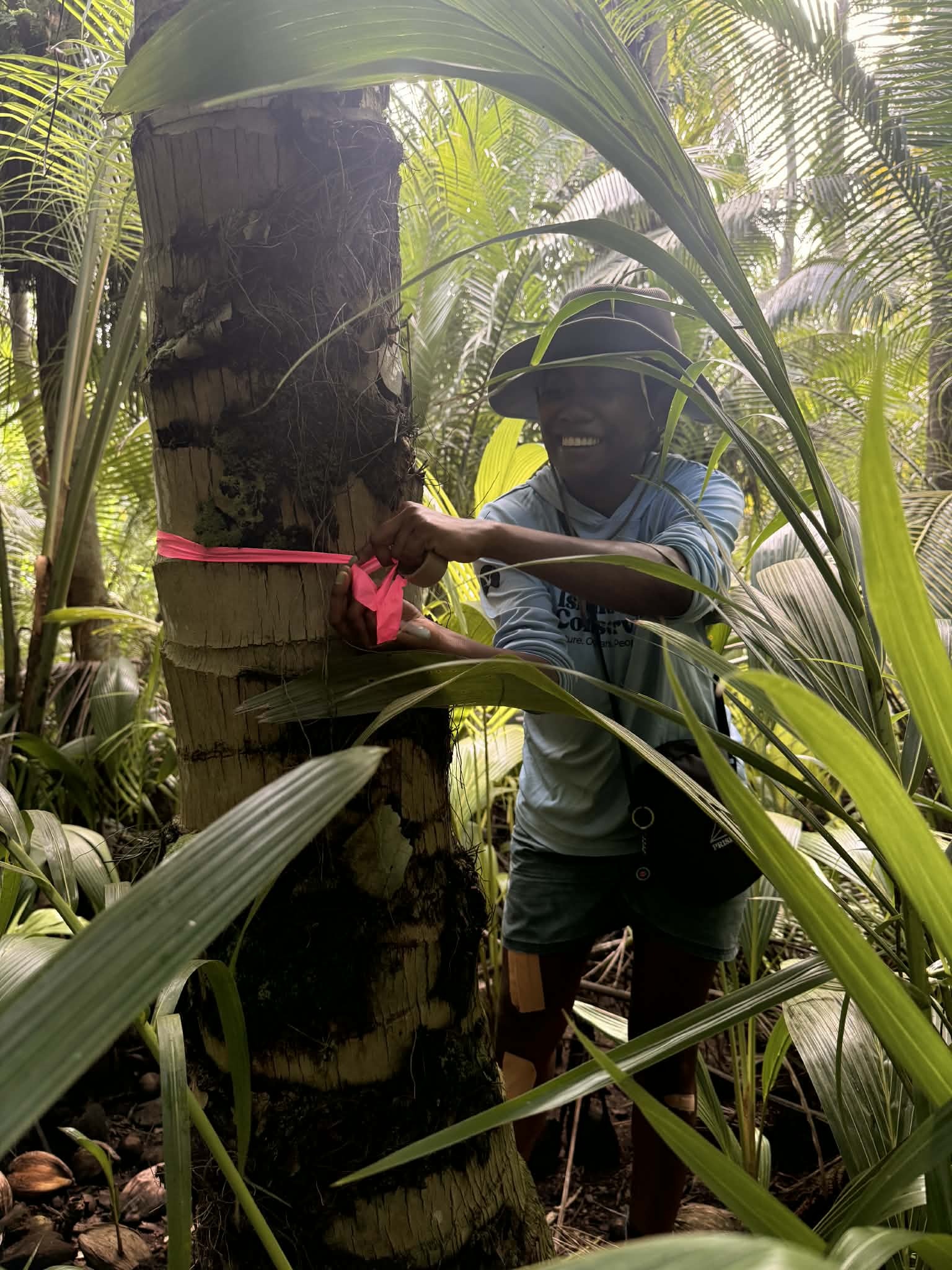
Spending a month on Niulakita made it impossible to separate ecology from everyday life. Invasive rodents here are not just an abstract conservation problem—they impact household income, cultural traditions, food security, and quietly unravel the natural systems that protect the island itself. On small, low‑lying islands like Niulakita, even modest ecological disruptions can ripple outward with outsized consequences.
This is where Island Conservation’s work becomes especially meaningful. By partnering with the Tuvalu Department of Environment and the Niulakita community, the project goes beyond invasive rodent removal alone. It seeks to restore the full island system—supporting biodiversity, strengthening food systems, improving biosecurity, and increasing long‑term resilience for people living on the front lines of environmental change. The outreach meetings, household interviews, livestock enclosure repairs, and ecological surveys I took part in were not side tasks; they were essential steps toward ensuring that the operation is both effective and community‑driven.
It was truly a privilege to work on this project, and I look back at my time on the island fondly. From shared meals to evening volleyball games, birthday celebrations, and Friday morning Zumba after morning devotion, I am deeply grateful for the generosity, hospitality, and kindness the community showed me during my time there. Although I had to leave Niulakita before the operation began, my teammates and local partners remained on the island. As I write this on April 6th—the first scheduled day of the eradication phase—I’m holding both anticipation and hope. Hope that the operation is successful, and anticipation for what lies ahead: healthier coconut palms, recovering seabird populations, more secure livelihoods, and, in time, the possibility of declaring Niulakita rat‑free.
Niulakita may cover only a few dozen hectares, but its story speaks to something much larger. It is a reminder that island restoration is not just about protecting wildlife—it is about sustaining cultures, economies, and futures. And sometimes, meaningful global impact begins on a narrow stretch of reef, where a small boat finds its way safely to shore.
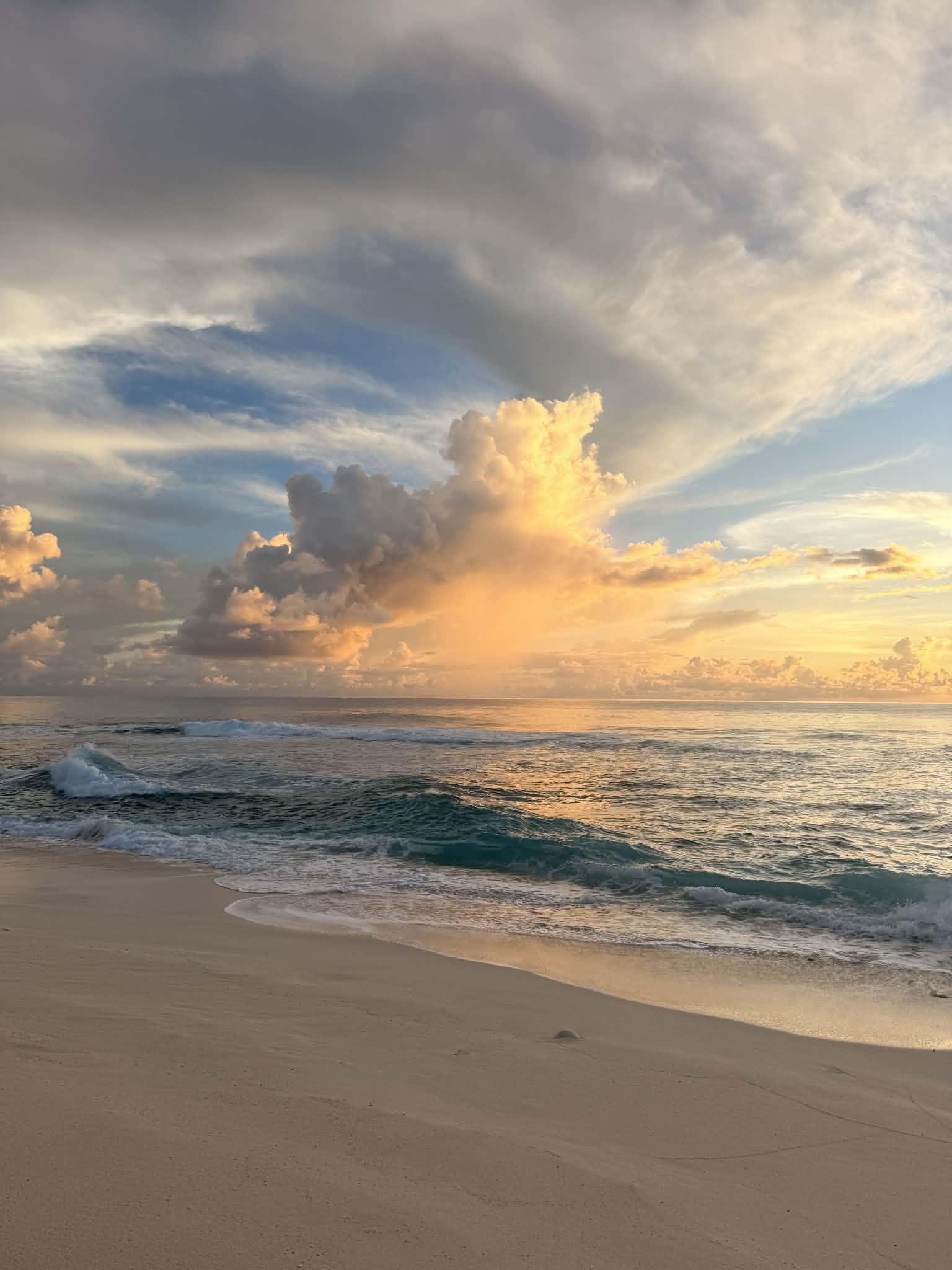
Positionality Statement: Cozette Romero is an Island Restoration Specialist at Island Conservation. She holds a Master of Science in Ecology from Colorado State University and has been working at Island Conservation for nearly 1.5 years. Cozette identifies as a white female Puerto-Rican American. She has spent most of her life raised in the Hawaiian Islands but currently resides in the United States in the state of Washington. Her work has centered on the effects of invasive species on the conservation of threatened and endangered species in tropical island ecosystems. The author has deep respect and admiration for Pacific Island people and culture rooted in her time growing up in Hawai’i and aims to promote ethical and equitable community based natural resource management and amplify Indigenous voices in her work. This article was written from the lens of an outsider’s perspective on her month living amongst the Niulakita community.
There’s more than one way to make an impact. Join our collective of dedicated supporters by donating today or signing up for our newsletter to stay informed.
Check out other journal entries we think you might be interested in.
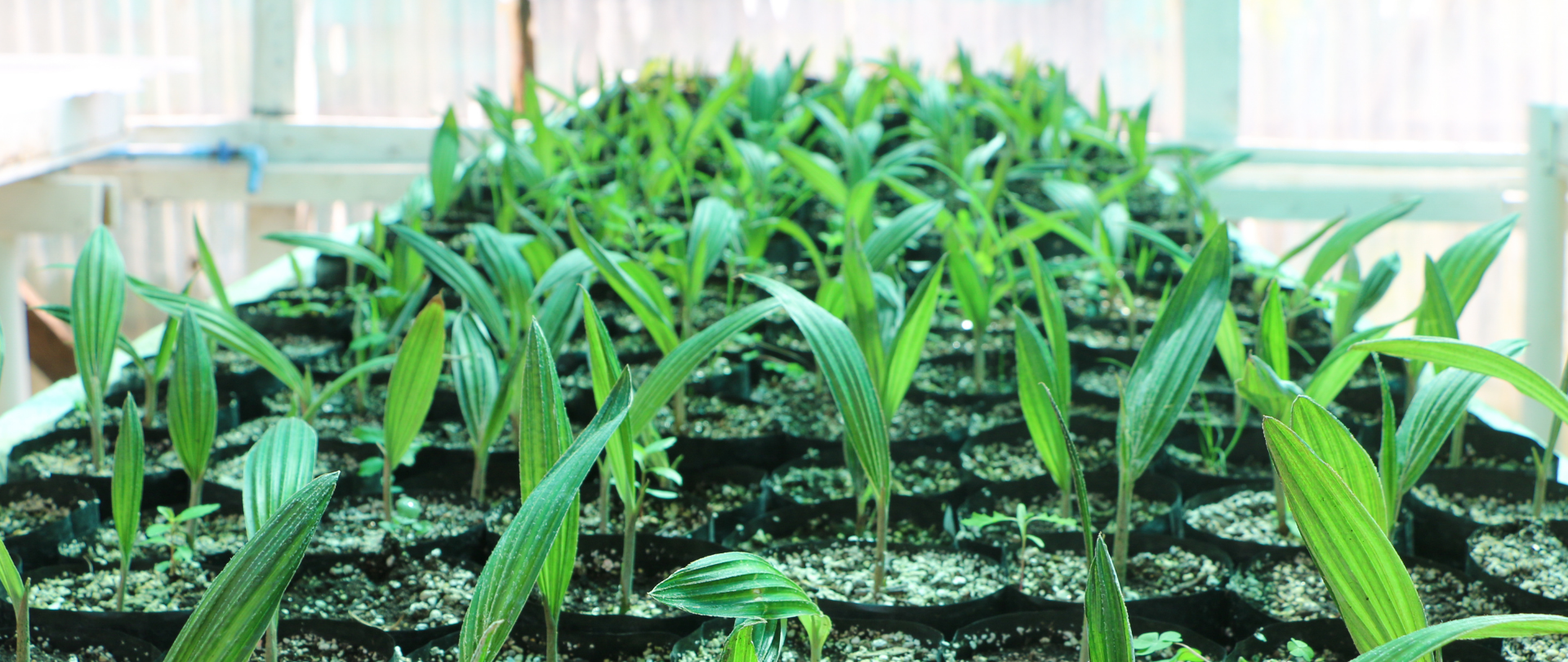
September 17, 2026
On the island of Robinson Crusoe in Chile, a greenhouse feeds both a community and an islander-led conservation movement!
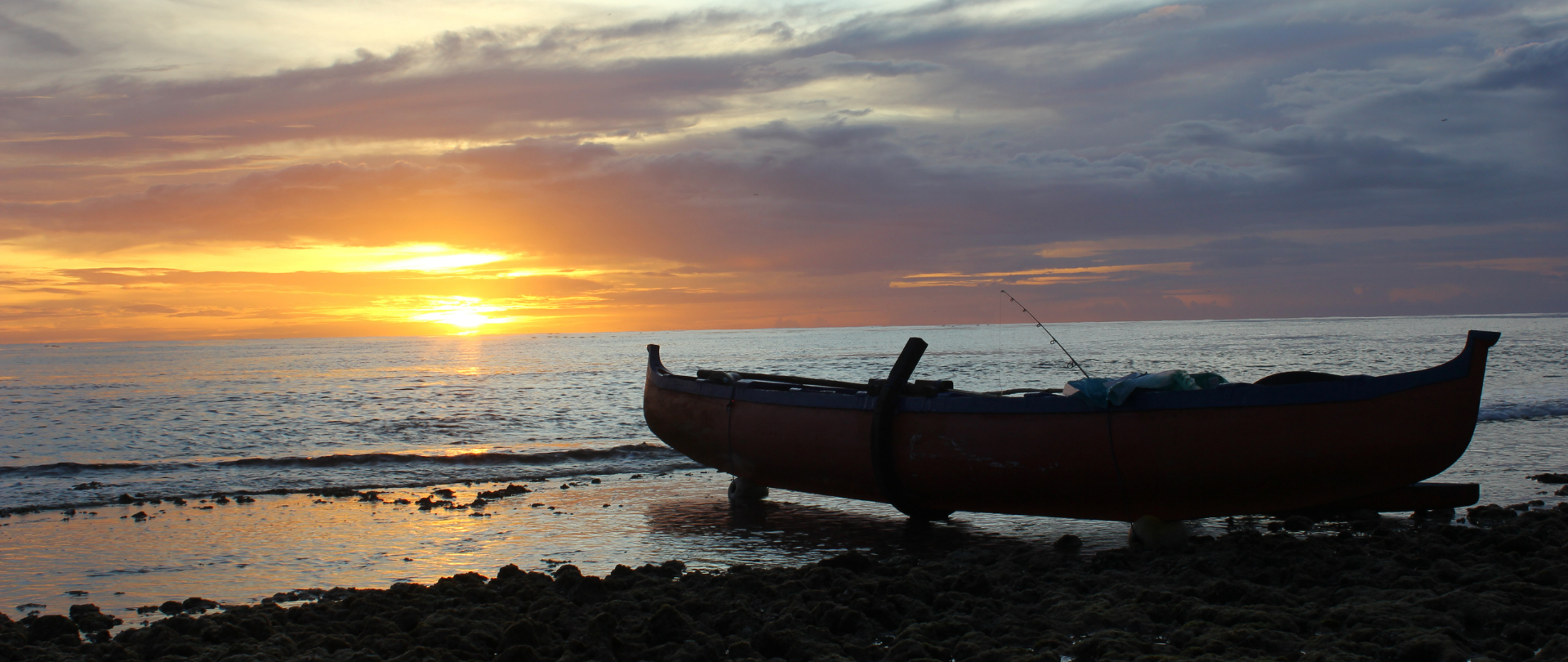
September 1, 2026
Linden Brown shares the incredible things he saw and experienced while working to restore islands in Sonsorol State, Palau!
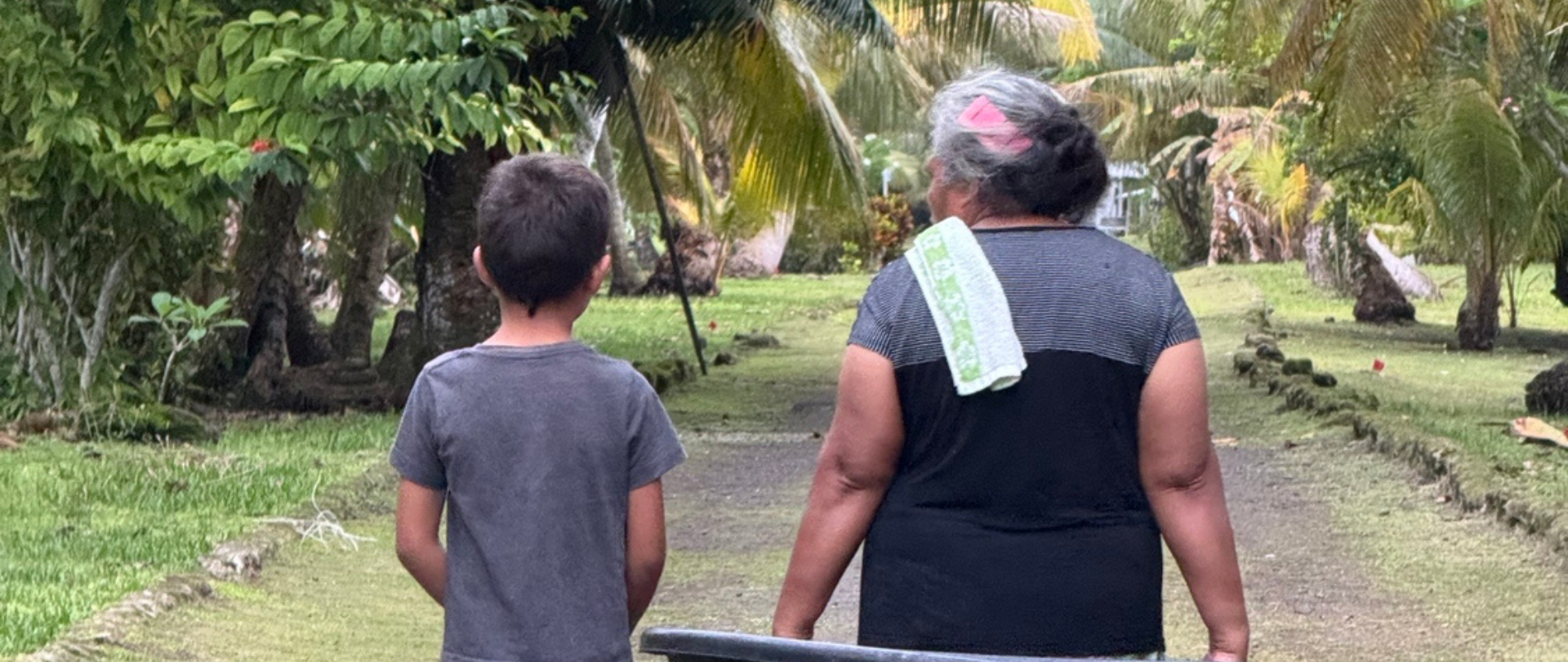
August 18, 2026
Meet Evelyn, one of the people who holds the wisdom of Sonsorol State, Palau in her lived experiences and stories.
August 4, 2026
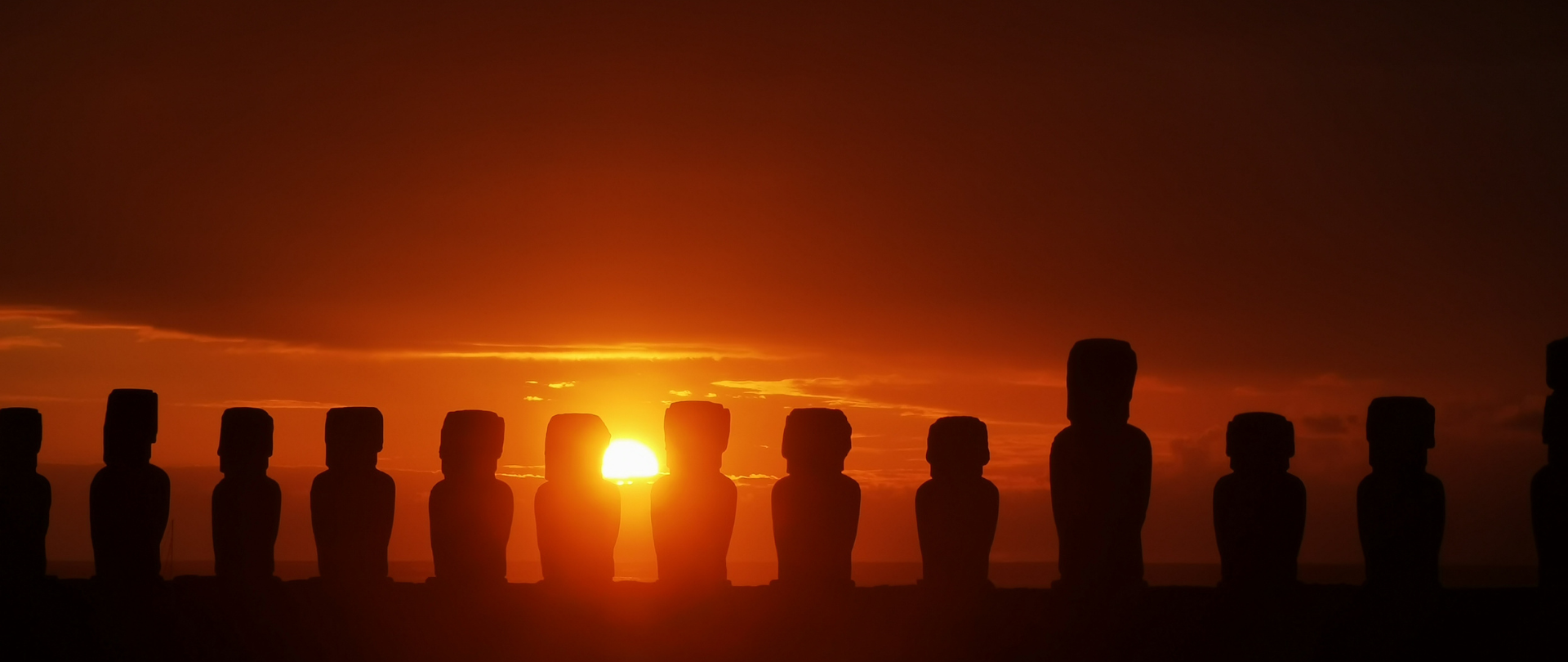
Indigenous-led conservation takes a leap forward with Rapa Nui (Easter Island)'s new partnership with Island Conservation!

July 31, 2026
We interviewed artist Laura Shape to learn about the luminous abstracts she creates from leather sourced from invasive species!
July 9, 2026
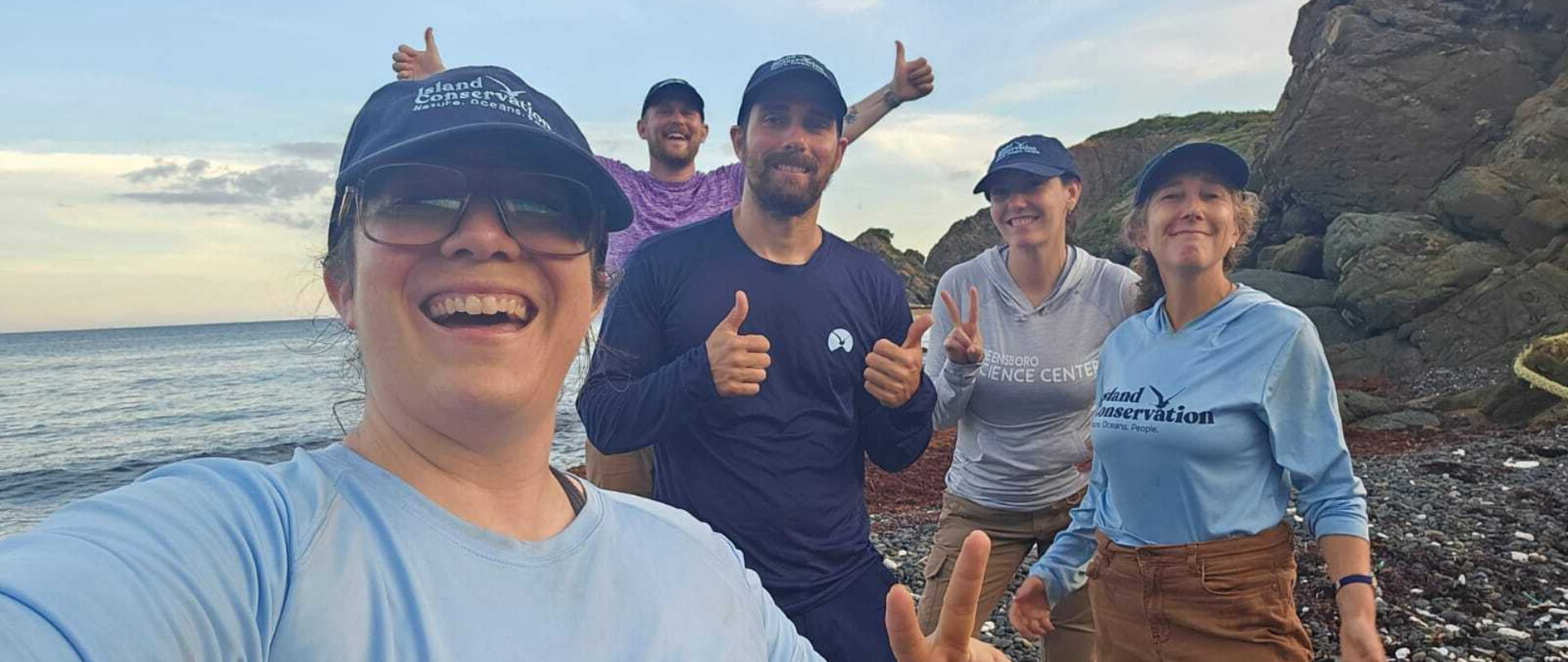
Senior Major Gifts Officer Jen Sachs shares her experience on one of Island Conservation's exciting restoration projects in the US Virgin Islands!
June 23, 2026
The Island-Ocean Connection Challenge announced four new restoration projects—Lehua, Tavolara, Grand Rouveau, and Zembra—at London Climate Week, expanding its global effort to restore 40 island-ocean ecosystems by 2030!
June 18, 2026
A new project to expand the range of an endangered Tree Boa is one step closer to completion!

June 18, 2026
The Island Restoration Storytellers Circle is a new initiative designed to elevate islander voices in the global conversation about holistic restoration!
June 8, 2026
A world-first controlled experiment shows connection between seabird activity and marine health on Ulong Island!