
Science

Tag: Science

Effortless and Extreme: Frigatebirds in Flight

Research reveals incredible details about Frigatebirds and their flying abilities.  A Frigatebird, Fregata magnificens, is a tropical seabird with an impressive 6-foot wingspan. Its feathers are not waterproof–which is surprising for a seabird–and being unable to land on water, they have adapted astounding flying abilities. Frigatebirds spend so much time in the air that scientists have not […]

Written by on July 14, 2016

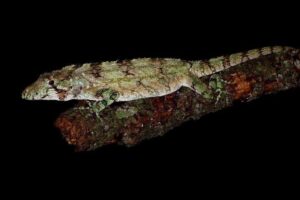
New Lizard Species Discovered in the Dominican Republic

The discovery of a new lizard species in the Dominican Republic by University of Toronto researchers reinforces a theory that lizard communities evolve almost identically on separate islands.  A team from University of Toronto (U of T) has recently discovered a new species of lizard in the Dominican Republic (DR). The Greater Antillean Anole, Anolis landestoyi, is the first […]

Written by on July 1, 2016

Seabird Research Leads to Protection for Malta Islands

Five years of seabird research leads to unprecedented European Union (EU) and local protection of marine areas in Malta. Birdlife Malta has conducted research on seabirds for five years. The findings of the Malta Seabird Project have prompted the protection of marine areas which will benefit native seabirds. Previously, the cliff nesting sites in Malta […]

Written by on June 17, 2016

Higher Biodiversity Increases Disease Resistance

Study finds that higher biodiversity enhances disease-resistance in ecosystems. A recent study published in the journal Ecology by Australian and Chinese researchers from University of Adelaide and Fudan University suggests that higher levels of biodiversity increase an ecosystem’s disease resistance. The researchers studied the relationship between biodiversity and the severity of a fungal disease. Alpine Meadow. Photo: […]

Written by on May 10, 2016

Rare Animal Species are Vital to Ecosystem Functioning

When a rare animal species native to a biodiversity hotspot goes extinct, the entire ecosystem is at risk. The loss of a rare animal species has cascading effects on ecosystems, according to a study by researchers at the National Institute of Amazonian Research in Manaus, Brazil. Rare species occupy important environmental niches. These species often make specialized contributions to the […]

Written by on May 9, 2016

In Evolutionary Twist, Island Foxes are “Genetically Flatlining”

Island Foxes set record for least genetic variation in a sexually reproducing species.  High genetic diversity among individuals in a species is usually optimal for survival, while low levels of genetic variation put a species at risk of extinction. In an evolutionary twist, Island Foxes native to the Channel Islands are challenging this long-standing principle. The […]

Written by on May 9, 2016

Island Conservation’s Science Director in Newsweek

The first of its kind, a global study measuring how invasive species eradication benefits biodiversity was published in the journal Proceedings of the National Academy of Sciences and recently covered by Newsweek. A team of thirty scientists, including Nick Holmes, Director of Science at Island Conservation, found that “596 populations of 236 native species on 181 islands benefited from 251 […]

Written by on March 28, 2016

Conservation Silver Bullet?

New global assessment finds major benefits to biodiversity when invasive mammals are removed from islands

Written by on March 21, 2016

Bright Spots – An Island Restoration Film (Trailer)

[gdlr_video url=”https://vimeo.com/142365832″ ] [gdlr_quote align=”center” ]How would you encourage kids to go into the field of science and conservation?[/gdlr_quote] That’s one of the first questions filmmaker Jilli Rose asked me as part of producing her latest film, Bright Spots. Island Conservation first met Jilli a few years ago when her film Sticky was making the […]

Written by on March 17, 2016