September 9, 2026
Some Island Ecosystems Are More Resilient to El Niño
El Niño doesn't create weak ecosystems; it reveals them. Find out how resilient islands can survive and bounce back from stress caused by El Niño!
 Island Conservation

In ecology, everything is connected. Recent studies have shown how “connector species” that move between land and sea—such as seabirds, sea turtles, and seals—move vital nutrients between these interconnected ecosystems, ensuring their overall health. Nitrogen, in particular, is key to ecosystem health because it plays a central role in the growth and development of plants and animals.
Nitrogen is a major component in DNA, amino acids (the key building blocks of proteins), and chlorophyll (which is needed for plants to photosynthesize). Although approximately 80% of our atmosphere is made up of nitrogen in gas form, plants and animals are not able to use it for these essential biological functions. It must first be converted into a more usable form—a process called nitrogen-fixing. That’s where seabirds come in.
Seabirds have an extremely high-protein diet—more protein than they can use. Their guano, or poop, is rich in nitrogen, which can constitute 15-20% of its content. 12% of the nitrogen in bird poop is readily dissolvable and available for the nearby environment to use—which is why it’s been prized as the “white gold” of fertilizers for centuries! When seabirds drop their guano on islands, it enriches the soil, promoting plant growth.

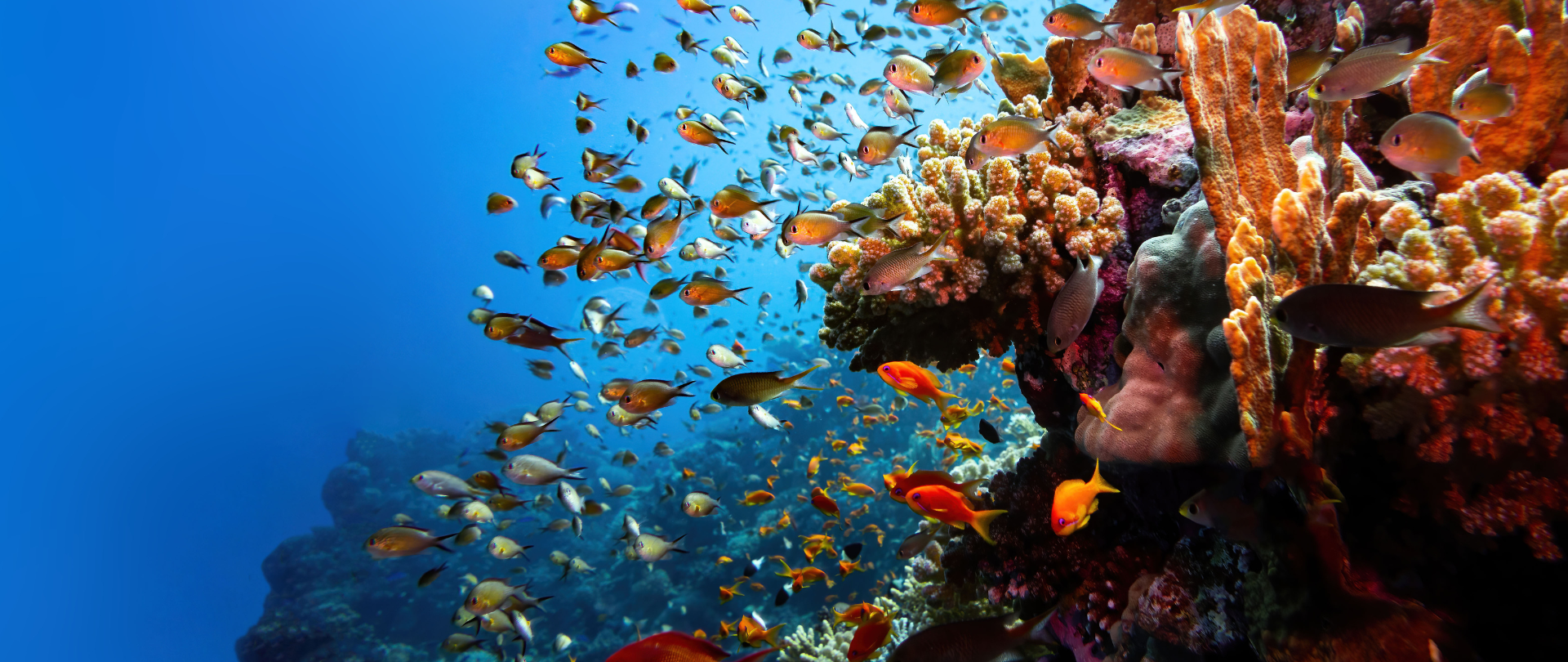
Seabird guano also plays a crucial role in the nutrient dynamics of near-shore environments such as coral reefs. The nutrients from guano leach into the ocean, enriching the water and providing sustenance for macroalgae (such as kelp), sponges, and other reef organisms. Reef waters generally have very little biologically available nitrogen, but the algae living symbiotically inside corals need it to photosynthesize and feed the coral. In addition to helping nourish the corals, an nitrogen from seabird guano can also lead to increased growth rates in herbivorous fish and greater overall biomass in fish communities.
Studies on nutrient recycling and nitrogen fixing show again and again that the common assumption that the land and sea are disconnected is, of course, incorrect. But the flow of nutrients that keep islands and their surrounding near-shore environments healthy is in danger as seabird populations around the world decline. But, luckily, this is a problem with a solution. Studies have found that islands free from invasive species (which prey on seabirds and their chicks) have higher seabird densities—and, consequently, higher rates of nitrogen deposition.

Nutrient recycling underscores the importance of preserving seabird populations and their habitats, as they contribute significantly to the health and productivity of surrounding ecosystems. Conservation efforts aimed at removing invasive species on islands can thus have far-reaching benefits, restoring natural nutrient flows and supporting the resilience of coral reefs.
And the benefits don’t stop in the nonhuman world, either. Healthy soil means island and coastal communities can farm more reliably, and healthier reefs mean a more bountiful supply of fish to eat. Stronger reefs and kelp forests can also protect coastlines from extreme weather, and seabird guano is also linked to landmass buildup which can help combat sea level rise. Preserving our world’s ecosystems by maintaining healthy nutrient flows is the key to ensuring sustainable futures for communities of plants, animals, and humans alike!
Check out other journal entries we think you might be interested in.

September 9, 2026
El Niño doesn't create weak ecosystems; it reveals them. Find out how resilient islands can survive and bounce back from stress caused by El Niño!

August 25, 2026
A new study reveals the role fungi play in the restoration and recovery of rare, resilient atoll ecosystems!

July 17, 2026
Three different animals show how connector species prop up island-ocean ecosystems!
April 9, 2026
We made a list of easy ways you can show your support for the environment--during April and all year long!
March 3, 2026
What is holistic restoration? Read all about this incredible method to restore ecosystems for people and nature!
February 6, 2026
¡Mira el video de Solange y lee una entrevista sobre Robinson Crusoe! Watch Solange's video and read an interview about Robinson Crusoe!

January 22, 2026
Our Senior Director of Impact & Innovation, David Will, explains the importance of the Circular Seabird Economy for nutrient transfer!

January 15, 2026
Not all Marine Protected Areas are equally effective. A new study shows how high-quality, well-implemented MPAs provide outsized impacts for biodiversity!
December 22, 2025
Elke Windschitl, our Conservation Impact Data Specialist, gives us the lowdown on
December 4, 2025
A new study reveals how seabirds, connector species between land and sea, play a huge role in the health of coral reefs!