Invasive Species

Tag: Invasive Species

Endangered Woodhens on Lord Howe Island Have Been Reintroduced to the Wild

Endemic birds are thriving on Lord Howe Island after the Island’s biggest conservation project, removing invasive mice and rats. An estimated 150,000 rats and 210,000 mice were found on Lord Howe Island, until the largest project of its kind on an inhabited island took place. This Island is a UNESCO World Heritage Site that sits near […]
Written by on February 5, 2020

In Search of Galápagos Short-eared Owls on Floreana Island

Island Conservation’s Paula Castaño shares her experience trapping and tracking Galápagos Short-eared Owls to learn their flight and behavior patterns in preparation for restoring Floreana Island. The Galápagos Islands are famously known as the Enchanted Isles due to the treacherous currents and swirling mists that often cause the islands to disappear right in front of your eyes. […]

Written by on November 27, 2019

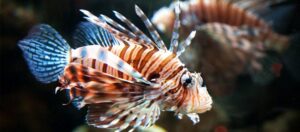
Technology Helps Control Invasive Lionfish Population

As invasive lionfish reach uncontrollable depths in the Atlantic, conservationists turn towards technology to control the population. The problem began in 1992 when Hurricane Andrew washed an aquarium tank out to sea, releasing six lionfish into Biscayne Bay. Since then, the invasive Atlantic population has grown exponentially, threatening the native marine ecosystem. Lionfish lay on […]

Written by on November 8, 2019

Personal Biosecurity: Stop the Spread of Invasive Species

Ecosystems around the world are at risk due to the spread of invasive species, it is our job to protect them by taking personal biosecurity precautions. Each ecosystem is comprised of a unique set of species: plant, fungi, insect, bird, and the list goes on. Introducing species from other parts of the world that don’t […]

Written by on May 30, 2019

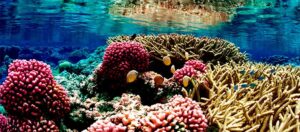
Seabirds Enhance Coral Reef Growth: New Scientific Research

New scientific evidence highlights the correlation between islands with large seabird colonies and increased coral reef growth rates.   While scientists have long known that seabird presence is necessary for supporting marine ecosystem health, no previous study had looked at the effects of seabird nutrients on coral growth rates. A collaborative research effort brings to light […]

Written by on May 14, 2019

Climate Research: Climate Change and Invasive Species Introduction

New research demonstrates how field work and climate change mitigation can lend a hand to ecosystem resiliency and conservation. Building ecosystem resiliency on islands is a crucial aspect of protecting the biodiversity contained within these wild places from both climate change as well as invasive species. There have been many climate studies that have explored […]

Written by on March 1, 2019

A Message of Hope for Endangered Island Wildlife

For almost 25 years, Island Conservation’s work has been a bright spot that provides a touch of hope for endangered island wildlife. Islands are home to almost half of the world’s highly threatened species, most of which are threatened in part by invasive species. Luckily, there is hope. Over the past almost 25 years, Island […]

Written by on December 11, 2018

Accounting for Species Origins in Biodiversity Assessments

Island Conservation staff and board members contribute to a formal comment published in PLOS One to emphasize the importance of separating native and non-native species in global biodiversity assessments. Recent global efforts in biodiversity accounting, such as those undertaken through the Convention on Biological Diversity (CBD) and Intergovernmental Science-Policy Platform on Biodiversity and Ecosystem Services (IPBES), are vital […]

Written by on December 3, 2018

Breakthroughs and Innovation – The Future of Island Conservation

As Island Conservation approaches our 25th year of impact in 2019, it is clear that the future of island restoration requires breakthroughs and innovation to prevent further biodiversity loss. By: Karen Poiani By all counts, we are on the verge of a mass extinction crisis with detrimental and lasting consequences for our planet and future generations. […]

Written by on November 19, 2018