February 25, 2026
A Homecoming for Floreana
Roger McDonough from our partners at Galápagos Conservancy explains the process behind raising hybrid tortoises for Floreana!
 Island Conservation
By Cozette Romero, Seasonal Monitoring Specialist at Island Conservation
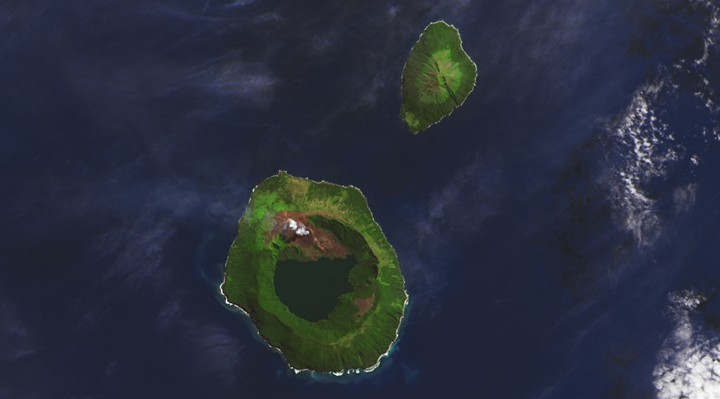
If asked to live in close proximity to an active volcano, some might have reservations. However, about 161 km from Tonga’s main island lies an active stratovolcano called Tofua Island, where a community of Tongans call this place at least a part-time home. From the sky, Tofua Island is a ring of land with a caldera that is a whopping 5km wide. This caldera was formed by a geologic collapse at the center of the volcano. Within this ring, you can regularly see plumes of smoke emanating from the island’s only active cinder cone, located within the caldera and known as Lofia. What makes this island even more unique is that at least half of the basin of this caldera is covered by a lava lake. It doesn’t end there, though. Tofua’s next-door neighbor? Oh, just the tallest mountain in the entire country, the island of Kao, sitting regally, just 6 km off the shore to the northeast. Having grown up most of my life in Hawaiʻi and attended college in close vicinity to the very active Kilauea volcano, hearing of eruptions and volcanic activity was a somewhat regular occurrence. Having developed an affinity for volcanoes, when I found out that I was going to Tofua to visit and work alongside the people who steward the land, you could probably guess that I was incredibly excited.
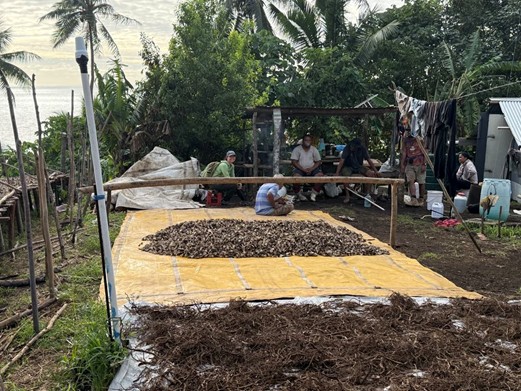
The Tongan farmers who regularly live on the island tend to spend anywhere from 3-6 months on Tofua per year farming various crops on the island. Many of these people are from the neighboring island of Kotu, but some farmers travel even further to live on the island and take care of their crops. Some of the commonly planted crops include taro, cassava, banana, and sweet potato, but the most widely farmed crop and one of the island’s “claim to fame” is a root known as kava. The kava root is used to make a drink that is widely popular not just in Tonga but in many Pacific islands. Tongans have a deep cultural connection with this plant, having used kava for ceremonial and medicinal purposes for thousands of years. The drinks’ anti-anxiety and relaxing properties have also been gaining popularity in other parts of the world, with drinks, tonics, and even kava bars popping up in places all around the world. Here on Tofua, these farming families’ livelihoods are inextricably connected to this plant as well as all the other crops farmed on the island.
The journey to Tofua involves a 12-hour ferry ride, and two more 2-6 hour boat rides depending on wind conditions and how big the swell is. Needless to say, this journey can sometimes be a bit rough if you’re not used to it, and as someone who recently discovered that she needs Dramamine more than she’d like to admit, waking up from a nausea-induced nap to Tofua Island in the distance came as a great relief. It also came with great excitement from the whole team as we could see clouds of smoke from Lofia and the beautiful beach where we would be living throughout the next 12 days.

Island Conservation has been working in collaboration with local Tongan environmental organizations such as the Tongan Ministry of Meteorology, Energy, Information, Disaster Management, Environment, Climate Change and Communication (MEIDECC) and the Vava’u Environmental Protection Association (VEPA) to help restore islands all around the country to benefit people and the environment with several successful projects to date. Tofua is one of the islands that Island Conservation hopes to help protect from problem species that wreak havoc on the biodiversity of the islands and the livelihoods of community members. Island Conservation’s Impact and Monitoring team visited Tofua in previous years to begin the process of data collection, to help inform a potential future restoration project on the island. This year, we headed back to collect devices that were set out in previous years and to continue to build relationships, monitor, and collect data. Our team on the island consisted of two staff members from Island Conservation, two staff members from MEIDECC, and one local farmer who was contracted to help guide us during our time on the island. Our goal for this trip was to speak with local farmers about how invasive species were impacting their lives, to foster relationships with community members and local partners, and to monitor the state of terrestrial and marine habitats in terms of biodiversity, nutrient availability, and native species, which serve as connectors between terrestrial and marine environments.
On our first day out in the field, I was delighted to be led by Joe, our local guide, on a beautifully cleared trail along the coast of the island made by the farmers. Trails that have been cleared are often a luxury in many field sites where hacking your way through thick brush with a machete is a more common method of travel. After about 20-30 minutes of hiking up and down coastal valleys with a picturesque vista of the ocean on one side, we came upon what we ended up referring to as “the kava camp”. You could see acres and acres of land where kava crops were planted. This land outstretched up the side of the mountain far past where the eye could see. Multiple families live scattered throughout the island intermittently, but the kava camp was a central hub where multiple farmers grew their crops, and other farmers on the island would come and gather to socialize. As we stood in awe at the extent of this farm, it was mind-boggling to think about all the hard work that must have gone into planting and tending to these crops. Tofua farmers often come to the island with a set amount of food and supplies from home, but stay there for months, subsisting just on what they bring and what they can find or grow right there on the island. It was truly inspiring to see, and I couldn’t help thinking what it would be like if we all learned to grow our food and live in community with our neighbors like these farmers. Throughout our time on the island, we would regularly stop at the kava camp to rest and chat with other kava farmers. Sometimes Joe would even offer delicious apple bananas from the camp as a snack, which, after a lot of hiking, was always greatly appreciated.

For the rest of our trip, most days we would wake up, have a quick breakfast, pack our bags and some lunch or snacks, and be out in the field collecting data until late that evening. Collecting devices that were set out to record seabird vocalizations, picking up cameras that recorded wildlife, collecting information on the island’s vegetation, and counting birds in the day and crabs late at night. We had visited another one of our Tongan island project sites a few weeks before this and it was a stark difference in terms of biodiversity. You could see how invasive species were likely influencing this island. For seabirds, we had many bird counts where we recorded a big fat 0 whereas on our previous island you could see flocks of various species of seabird circling in the sky in pretty much every bird count. Similarly, in our search for land crabs, a good number of our searches were unfruitful, while most others recorded one to three individuals. In conversations with local farmers, some told us about how rats would damage their kava crops that they worked so hard to produce, and they often spoke of rats getting into their food stores which was the food they needed to help sustain them on the island. They also mentioned the pigs on the island and how if someone wasn’t there to tend to their food crops, a pig could destroy everything in as little as two months. Our guide mentioned how sometimes farmers wouldn’t have enough food storage to stay on the island, so they couldn’t finish harvesting their crops and would have to return home early. It was clear that these species were a big problem for life on Tofua.
One late night, sitting in a circle around a fire on the beach, Siua, one of our local partners from MEIDECC, told us the story of Tofua. He spoke about how Kao and Tofua had been one mountain in the past. He said if you turn Kao upside down and place it into the caldera of Tofua, it will fit perfectly. The local lore is that a Tongan deity was fighting off demons who were trying to steal the mountain. The demons broke the top of the mountain and threw it at the Tongan deity as a distraction, separating Kao and Tofua. Hearing stories like this and living among the people of Tofua is a beautiful reminder of the generations of culture that exist behind these places and the incredibly strong connection that people have with the land. It’s also a reminder of why I love helping to protect these places and doing what I do. I’ve often found myself joking with colleagues and partners about the crazy things we do for our jobs. Scaling steep mountainsides to collect devices, crawling and macheting our way through thick jungle, suffering stings from numerous insects, blisters from long hours of hiking, facing the elements, sleeping in excessive cold or heat, you name it. At the end of the day, it’s not just about the exotic places and unique experiences, but it’s the feeling that we can work in collaboration with other human beings to improve lives. It’s the hope that we have for places with beautiful people, cultures, and creatures like the ones in Tofua that keeps us going.
Note: You can find Tofua Kava being sold at the airport in Tongatapu so if you’re ever in Tonga and itching to relax and support some hard-working farmers, grab yourself a bag!
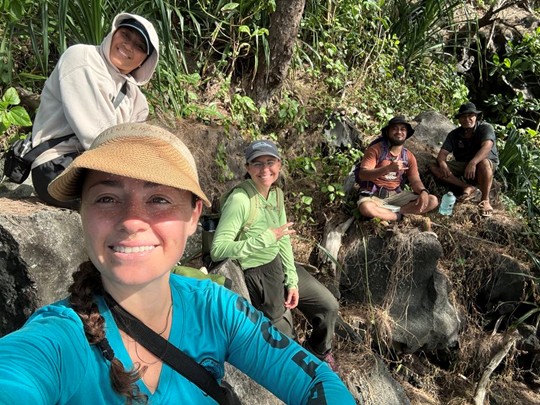
You can support Cozette and the rest of our field team by making a donation today, and keep up with our projects by joining our newsletter now!
Check out other journal entries we think you might be interested in.
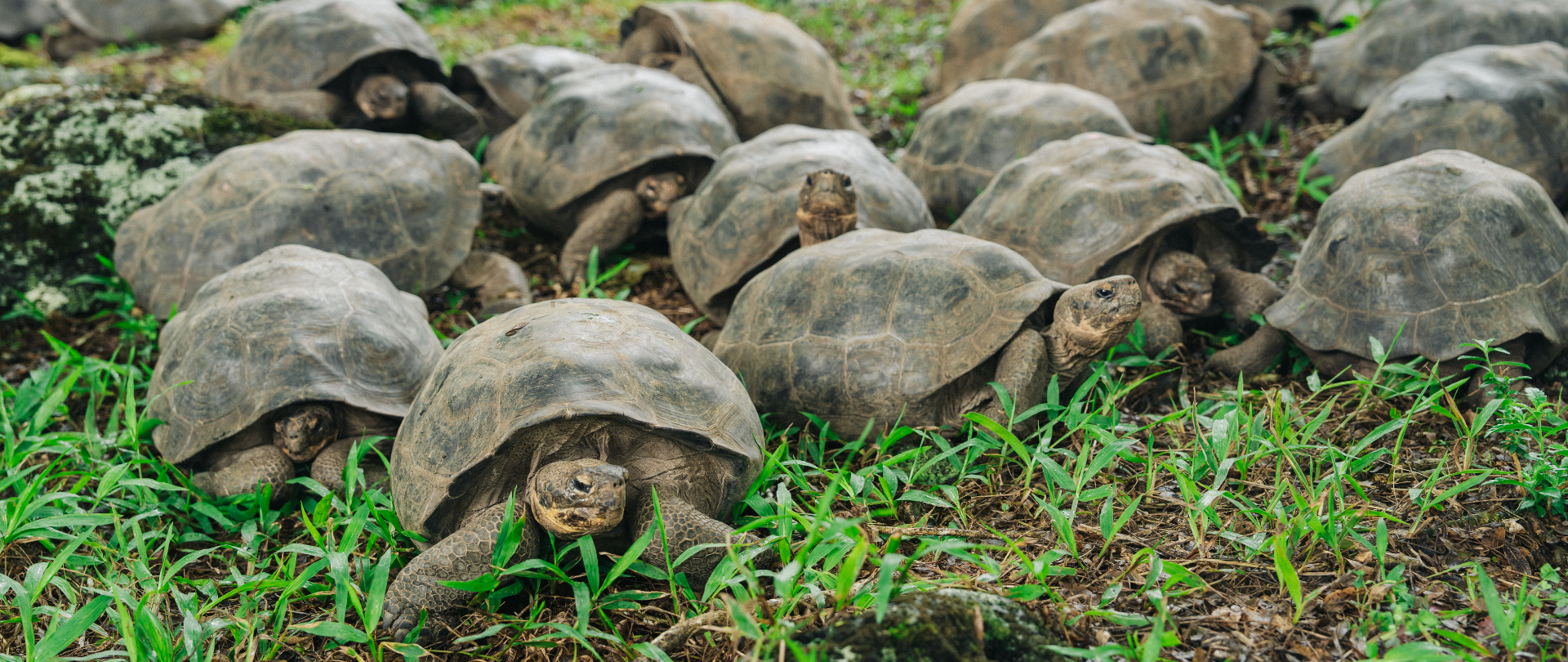
February 25, 2026
Roger McDonough from our partners at Galápagos Conservancy explains the process behind raising hybrid tortoises for Floreana!
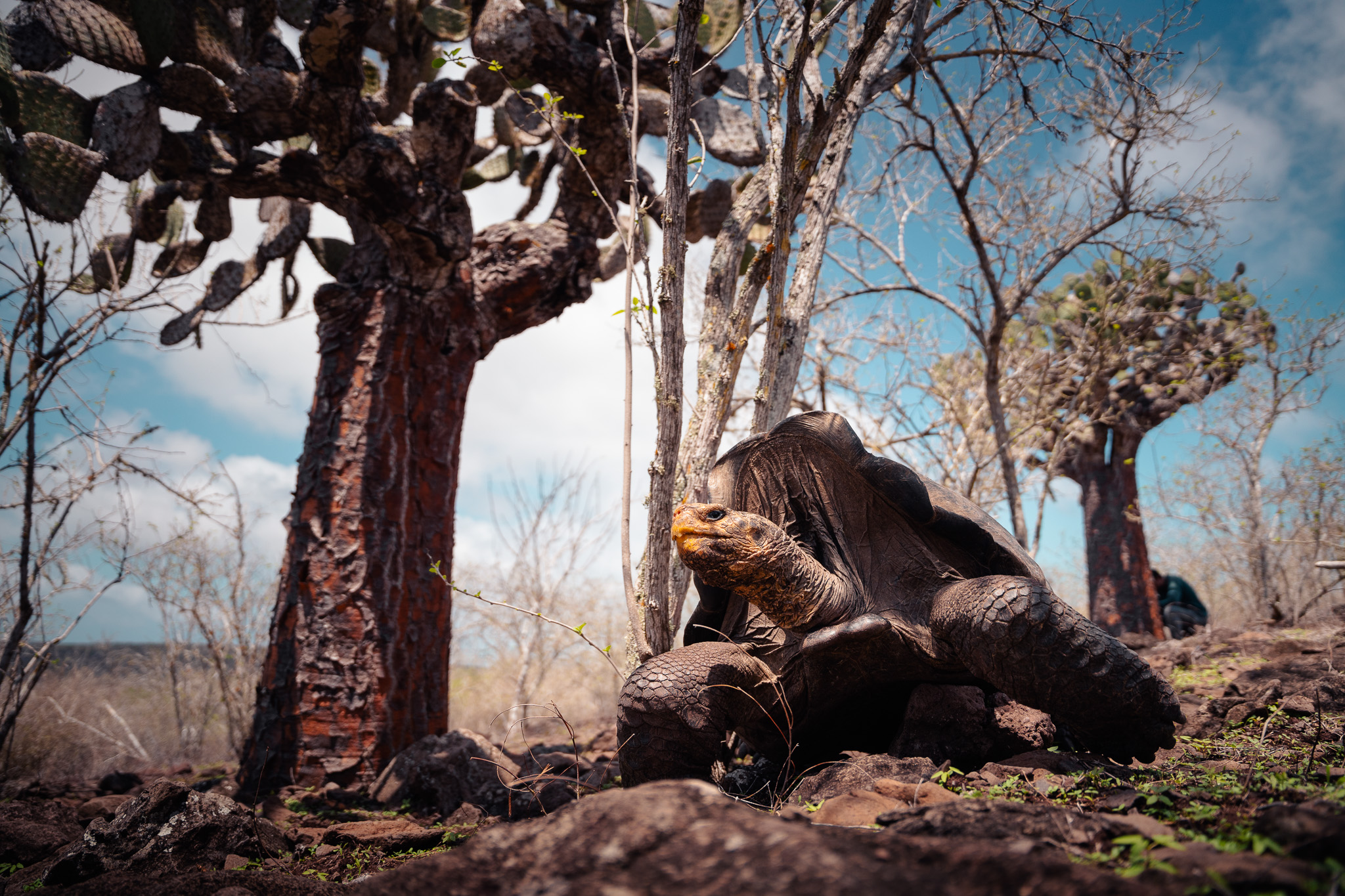
February 20, 2026
For the first time in more than 180 years, giant tortoises are once again walking the landscapes of Floreana Island!
February 6, 2026
¡Mira el video de Solange y lee una entrevista sobre Robinson Crusoe! Watch Solange's video and read an interview about Robinson Crusoe!
January 28, 2026
We worked with Blue Action Fund to expand marine protection in the Eastern Pacific--read about our success!
January 9, 2026
A new podcast episode explains the full benefits of holistic restoration on Floreana Island!
December 16, 2025
Read the full ecological story of Floreana Island in the Galápagos from the early settlements to today.
November 21, 2025
Holistic restoration is at work on Floreana Island, where the largest conservation project in the history of the Galápagos is underway!

October 29, 2025
Astounding evidence of recovery on Ulong Island in Palau after just one year!
September 30, 2025
Astonishing results from our work to restore sites in the Republic of the Marshall Islands, boosting climate resilience and ocean health!
September 24, 2025
Don't let its comparatively small land area fool you--Tokelau is a world leader in conservation!