Invasive Species

Tag: Invasive Species

What Happens when Rare Grasslands Face Environmental Change

A few rare California grasslands have a unique quality–the soil contains the mineral serpentinite. That unusual trait has a surprising advantage for such grasslands. Serpentine soil is low in calcium and other common plant nutrients, while rich in elements toxic to plants. Very few plants, some of which are found nowhere else in the world, can grow in serpentine soil. […]

Written by on April 14, 2016

Channel Islands Flourish After Invasive Species are Removed

Conservation intervention relieved the Channel Island ecosystems from the pressures of invasive species. Island Conservation’s headquarters is located in Santa Cruz, California, so the news about invasive species on the Channel Islands is quite literally close to home. Anacapa Island of the Channel Islands, California. Photo by Island Conservation Invasive species arrived at the islands via human activities, […]

Written by on April 14, 2016

50 Years of Rodent Eradication–Here’s What We Learned

When rats are introduced to islands, the damage they do to the ecosystem is staggering. They become unnatural predators. Ground nesting birds, for example, are directly threatened by the invasive rats. Not equipped to defend against the new predators, these vulnerable species face endangerment and extinction. Brown Booby Parent and Chick on Palmyra Atoll, Line Islands. Photo by […]

Written by on March 29, 2016

Maine’s Islands Return to Normal After Removal of Invasive Hares

When snowshoe hares were introduced by people to Hay Island, Maine, they reproduced rapidly and began to damage the natural habitat. The invasive hares made their way to Kent Island and began to take over there as well. Their presence reduced a dazzling diverse forest to just wood fern and raspberry. The loss of trees was met by […]

Written by on March 29, 2016

Island Conservation’s Science Director in Newsweek

The first of its kind, a global study measuring how invasive species eradication benefits biodiversity was published in the journal Proceedings of the National Academy of Sciences and recently covered by Newsweek. A team of thirty scientists, including Nick Holmes, Director of Science at Island Conservation, found that “596 populations of 236 native species on 181 islands benefited from 251 […]

Written by on March 28, 2016

LA Times Covers Research by Island Conservation’s Director of Science

The LA Times recently covered a new study published in the Proceedings of the National Academy of Sciences that highlights the benefits of invasive species eradication. One of the authors of the paper and Island Conservation’s Director of Science Nick Holmes calls the paper a “story of hope.” The study examined the impacts of eradication projects on islands in New Zealand, Australia, Ecuador, Seychelles, […]

Written by on March 28, 2016

Research by Island Conservation’s Director of Science Hits National Geographic

National Geographic recently covered a study on the impacts of invasive species eradication on biodiversity. The study, conducted by 30 scientists, one of them Island Conservation’s Director of Science Nick Holmes, appears in the Proceedings of the National Academy of Sciences and Global Ecology and Conservation. The study found 596 populations of 236 native species on 181 islands benefited from these eradications. […]

Written by on March 24, 2016

Invasive Species Blamed as Second Biggest Cause of Extinctions

A recent study finds invasive alien species to be the second-biggest cause of extinctions. A 2015 publication states that invasive alien species are the leading cause of extinctions on islands and globally (Tershy et al, 2015). Whether they are identified as the #1 or #2 cause of extinctions, the bottom line is: invasive alien species are […]

Written by on March 14, 2016

Biodiversity is Essential for Sustainable, Productive Ecosystems

New research hones in on the importance of biodiversity for healthy ecosystems. Scientists from all around the world collaborated in intensive data collection to understand the role of biodiversity. They confirmed that higher biodiversity makes for stabler ecosystems more able to rebound from stressors. Native Galápagos Cactus. Photo by Island Conservation This study shows that you […]

Written by on March 14, 2016

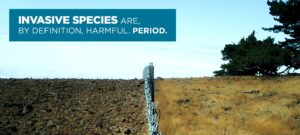
Invasive species are, by definition, harmful. Period.

Erica Goode…recognizes “Islands…are especially vulnerable to damage from invaders because…native species often evolved in isolation and lack natural defenses against predators…” But this article doesn’t go far enough…

Written by on March 9, 2016