October 29, 2025
Data Shows Endangered Palau Ground Doves Swiftly Recovering After Successful Palauan Island Conservation Effort
Astounding evidence of recovery on Ulong Island in Palau after just one year!
Published on
August 1, 2017
Written by
Cielo
Photo credit
Cielo
By: Cielo Figuerola
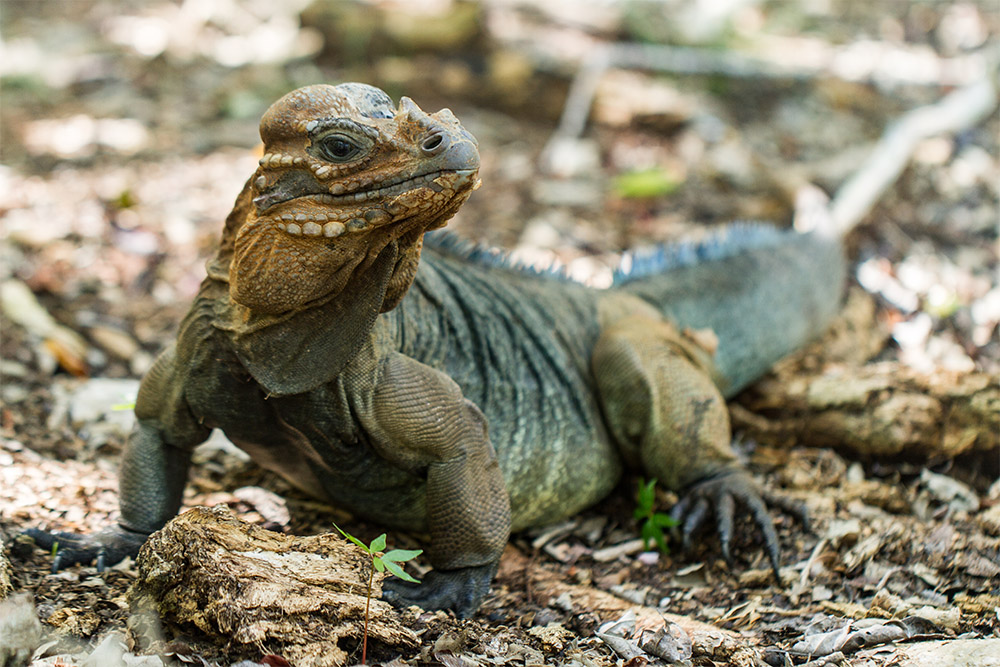
I’m headed to Mona Island to begin implementation of a project focused on restoring nesting sites for the Endangered and endemic Mona Island Rock Iguana by removing the invasive Australian Pine. This project was developed by the US Fish and Wildlife Service through the Coastal Program, the Department of Natural and Environmental Resources of Puerto Rico (DNER), and Island Conservation, with the support of the local NGO Vida Marina.

Australian pines were introduced to Mona in the 1930s so their wood could be harvested and used for various purposes, as for example, utility poles. However, transporting the wood off the island was very expensive and logistically challenging. As the years went by, profits decreased and markets changed, and the pine plantation was abandoned. Unfortunately, the plantation was established on prime nesting habitat for the Mona Iguana, making nesting very hazardous.
Invasive Australian pines have harmful impacts on Mona’s ecosystem in many ways. Through the release of certain compounds they change the chemistry of the soil, preventing growth of native vegetation, they can cause beach erosion in coastal habitats, and they can decrease plant biodiversity, just to name a few. For iguanas specifically, when pine needles fall and cover the ground and form an almost uniform carpet of invasive plant matter in the understory, the sandy substrate iguanas need to excavate to build their nests disappears. The pine needle carpet prevents them from nesting in these areas. Another problem is the constant shade produced by the pines–iguanas need to build their nests in areas with sun exposure because their eggs need heat to develop. In the shady pine forest this is not possible.
Invasive Australian pines have harmful impacts on Mona’s ecosystem in many ways.
These pine impacts combined with the ongoing invasive vertebrate species impacts (like egg and hatchling predation by feral pigs and cats) put Mona Iguanas at risk, especially during their most vulnerable life stages.

Our main goal with this project is to cut down the pines, remove the pine needle carpet, and then place trail cameras in the restored sites to document iguanas using these newly habitable areas to nest this upcoming nesting season starting in July. We’re hoping that the wood from these trees can be repurposed to repair infrastructure on island. Vida Marina has vast expertise in Australian Pine felling since this is what they do through their coastal restoration efforts in the northern region of Puerto Rico.
We are all very excited for this trip and the possibility to start restoring a habitat through the removal of an invasive plant!
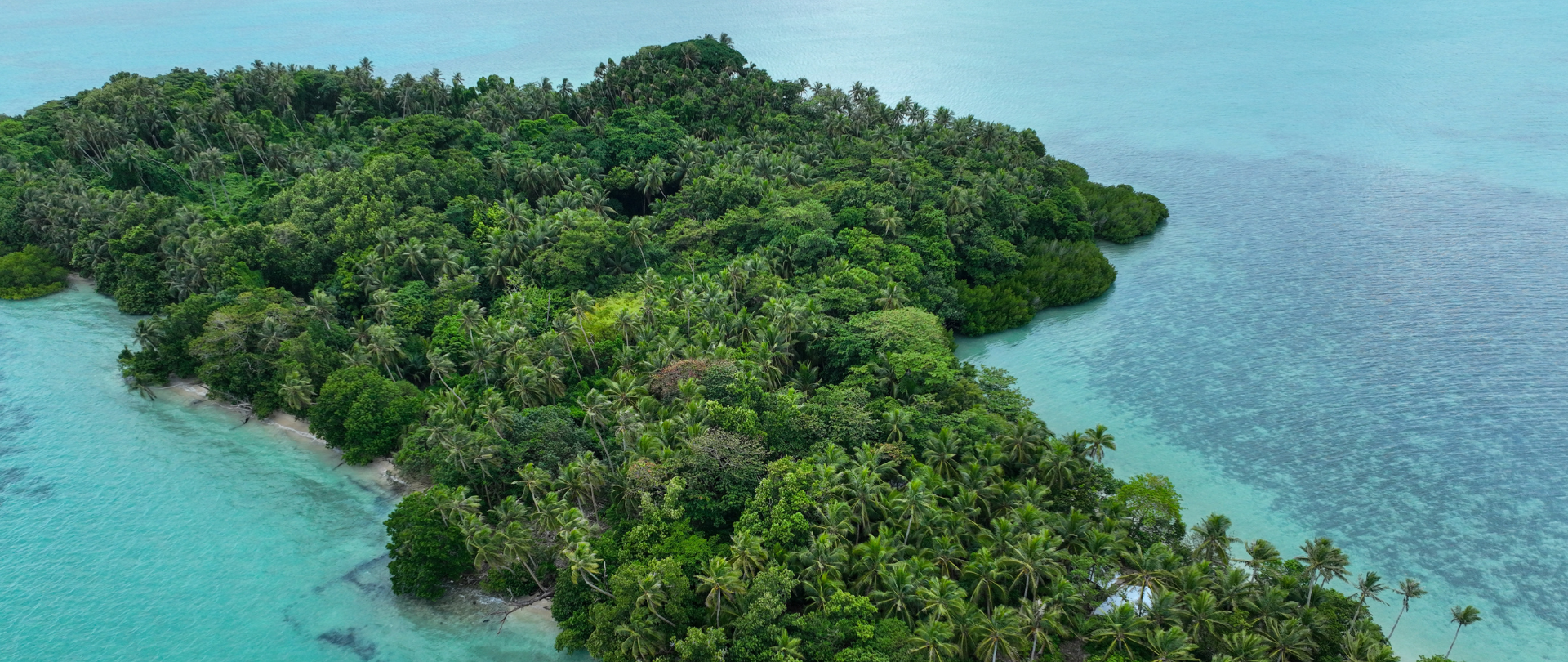
Featured photo: Aerial shot of Mona Island, Puerto Rico. Credit: Tommy Hall/Island Conservation
Versión en Español/Spanish transcript
Check out other journal entries we think you might be interested in.
October 29, 2025
Astounding evidence of recovery on Ulong Island in Palau after just one year!
July 31, 2025
Our Seasonal Monitoring Specialist, Cozette Romero, shares her experience on Tofua in Tonga!
May 19, 2025
Read our position paper on The 3rd United Nations Ocean Conference (UNOC 3) to see why we're attending and what we aim to accomplish!
December 4, 2024
Ann Singeo, founder of our partner organization the Ebiil Society, shares her vision for a thriving Palau and a flourishing world of indigenous science!
November 22, 2024
This historic agreement aims to protect the marine and coastal areas of the Southeast Pacific.
November 18, 2024
Our projects to restore key islets in Nukufetau Atoll forecast climate resilience and community benefits in Tuvalu!
October 3, 2024
Island Conservation and partners have published a new paper quantifying ecosystem resilience on restored islands!
September 10, 2024
Climate Week NYC: what is it and why is it important? Read on to find out why Island Conservation is attending this amazing event!
September 5, 2024
With sea levels on the rise, how are the coastlines of islands transforming? Read on to find out how dynamic islands really are!
August 27, 2024
Three Island-Ocean Connection Challenge projects in the Republic of the Marshall Islands bring hope for low-lying coral atolls!