September 17, 2026
Island Conservation and Robinson Crusoe Island, Chile: Growing Hope Together
On the island of Robinson Crusoe in Chile, a greenhouse feeds both a community and an islander-led conservation movement!
 Island Conservation
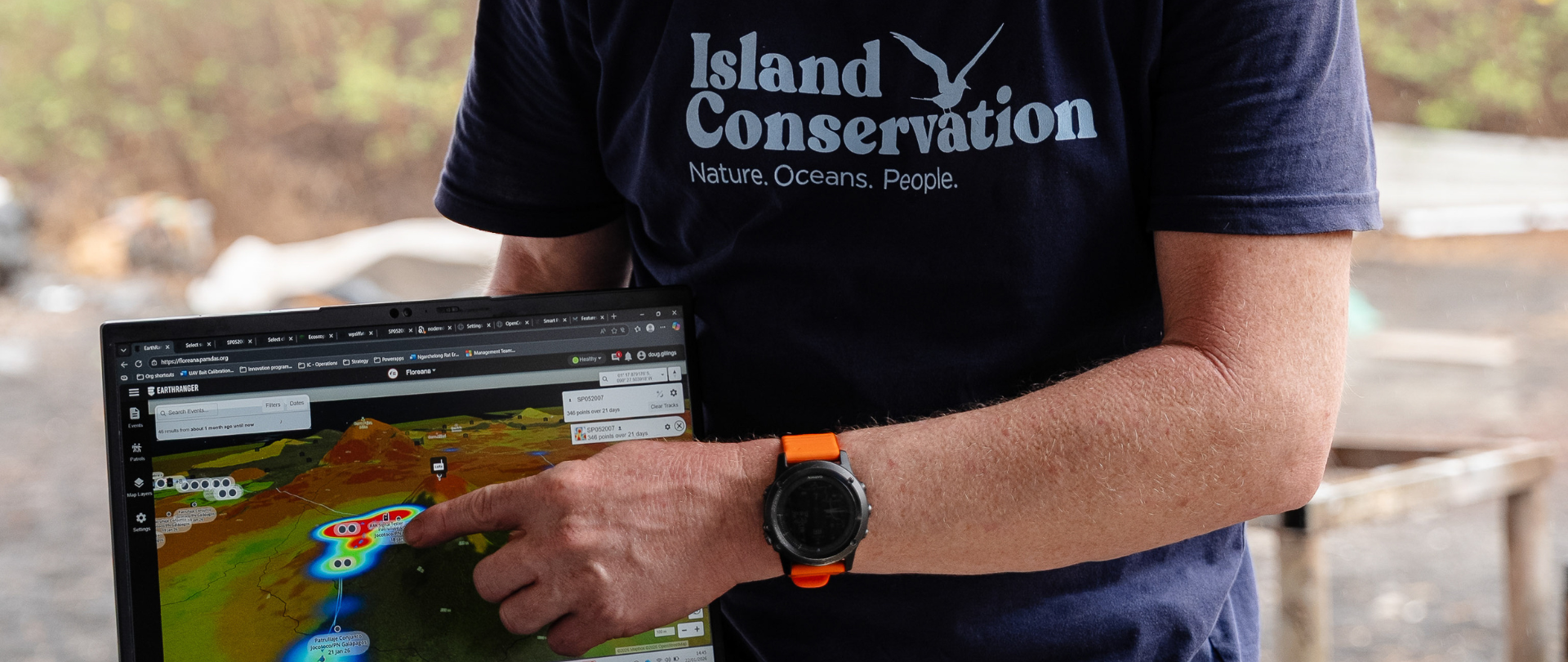
Floreana Island, Galápagos — [May 5, 2026] — Floreana Island, Galápagos is one of the world’s first to launch a Smart Island Monitoring system, using innovative real‑time technology that is transforming how island ecosystems are monitored and managed. The initiative is part of the Floreana Island Ecological Restoration Project, which is led by the Galápagos National Park Directorate as the environmental authority, together with the Galápagos Biosecurity Agency. The Smart Islands Monitoring initiative is led by Island Conservation, in coordination with Fundación Jocotoco, with support from the German Development Bank (KfW) and the CoMoN Foundation through the Charles Darwin Foundation.
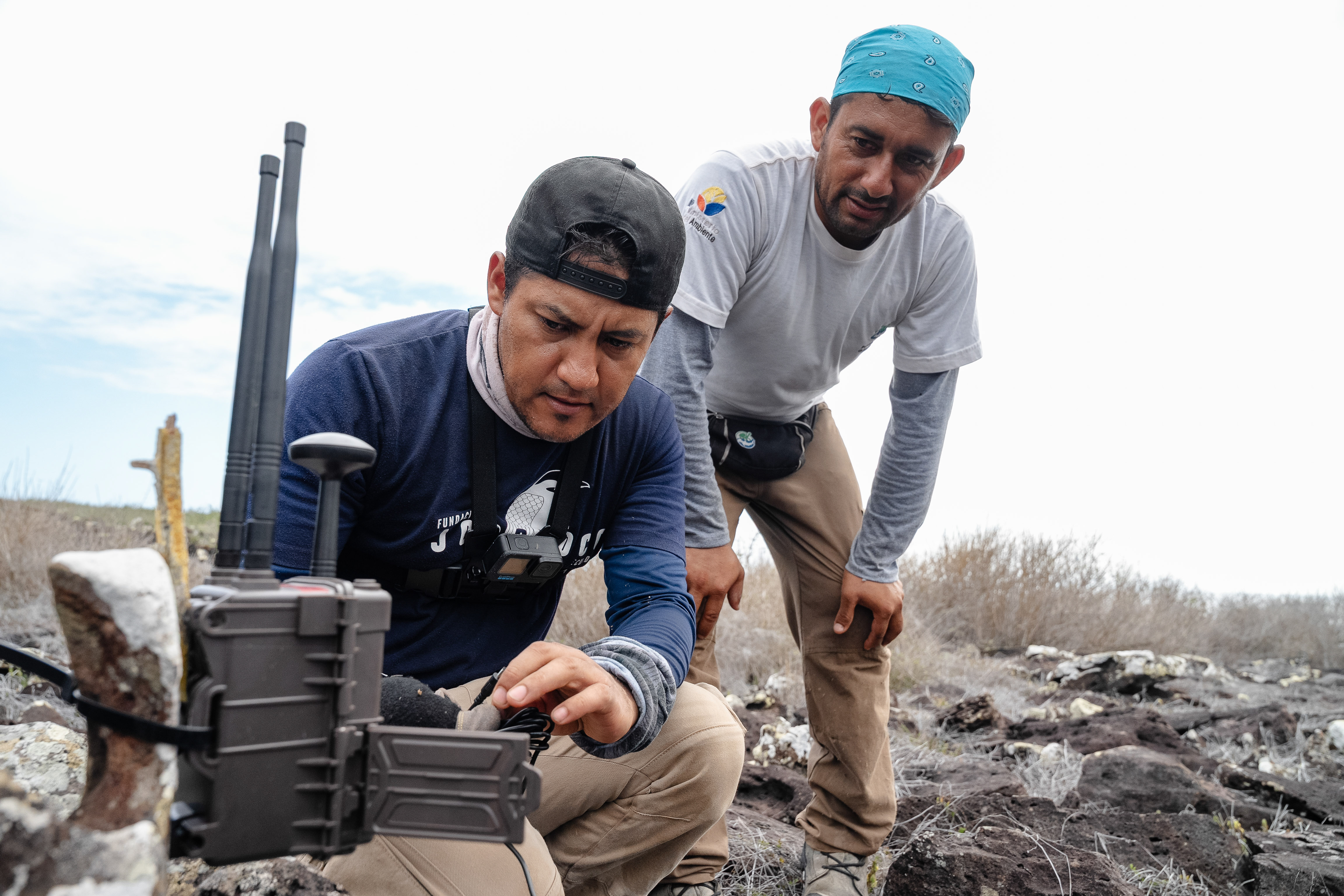
The Smart Island Monitoring system integrates an island-wide LoRaWAN Internet of Things (IoT) network, autonomous AI-enabled camera traps, smart traps, animal trackers, and real-time data visualization platforms. The result is an unprecedented ability to detect wildlife activity and inform conservation decisions instantly, even in rugged, inaccessible terrain.
Since the system was activated, it has captured and automatically reviewed more than 81,000 images in just over two months, flagging 1,500 wildlife detections that required follow–up by conservation teams. By filtering out routine or empty footage, the technology has reduced the amount of manual monitoring work by 98%, saving the equivalent of 110 staff hours (~83 days of effort per year) that would otherwise have been spent reviewing images manually.
By replacing manual monitoring that once took weeks with automated alerts, the Smart Island Monitoring model shifts conservation from reactive to proactive—translating timely data into on‑the‑ground action on Floreana, strengthening restoration in the Galápagos, and demonstrating a scalable approach to island conservation across the region and beyond.
José Luis Cabello
Head of Operations in Latin America, Island Conservation
Island Conservation leads the design and deployment of the Smart Island Monitoring system, while Fundación Jocotoco’s teams on Floreana are using these tools in the field to inform faster decisions and support ongoing restoration work across the island and archipelago.
“The implementation of the Smart Island Monitoring model on Floreana marks a strategic shift in how we support the management of ecological restoration in Galápagos,” said Eliécer Cruz, Director of the Galápagos Program at Fundación Jocotoco. “Access to real-time information allows us to make more informed decisions, optimize resources, and respond more effectively in the field. Innovations like this strengthen our commitment to restoring ecosystem functionality, in close coordination with authorities and the local community.”
The Smart Island Monitoring system was made possible through close collaboration with technology partners Wildlife Protection Solutions (WPS), Smart Parks, and EarthRanger. Together, these partners brought world-class tools and expertise to Floreana at a fraction of the cost and time that would normally be required to establish and maintain such a system. By sharing proven technologies and adapting them to local needs, the partnership helped overcome one of the biggest challenges in conservation: limited resources in remote places.
“The Galápagos must continue to consolidate itself as a living laboratory of innovation for conservation. These types of initiatives demonstrate that it is possible to integrate technology, cooperation and public management to strengthen the protection of fragile and unique ecosystems in the world. As the Government of Ecuador, we promote actions that not only improve environmental management in the territory, but also position Galápagos as an international benchmark in innovative solutions for the conservation of biodiversity,” said Lorena Sánchez, Director of the Galapagos National Park.
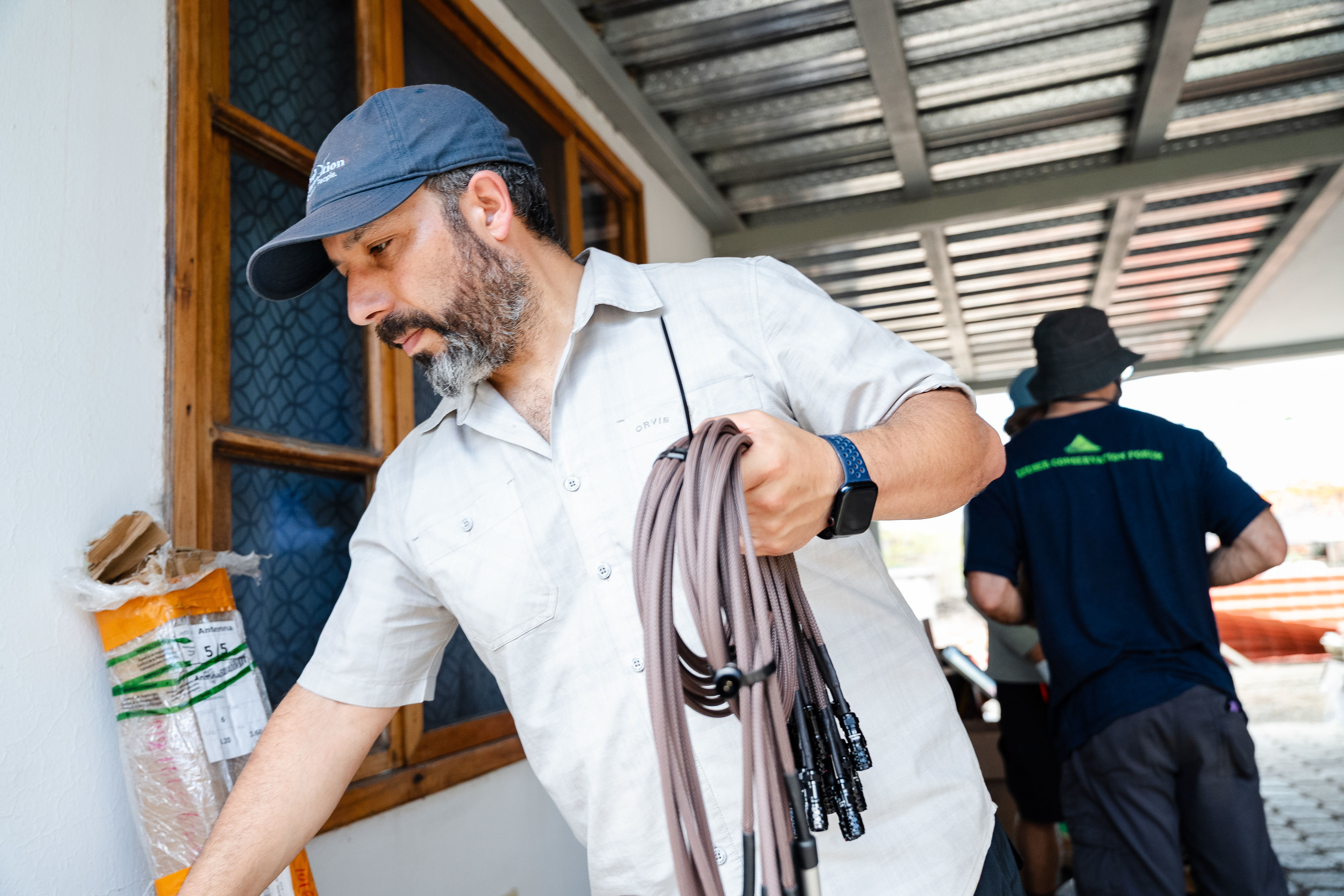
On an island like Floreana, where there is no cellular coverage, one of the main challenges was developing a connectivity system capable of operating in such remote conditions. The system includes two communication towers—one grid-powered and one solar-powered—dozens of camera traps, smart traps, and wildlife tracking sensors, all connected through satellite links. Working quietly in the background, these tools provide conservation teams with timely, actionable insights without adding complexity to their daily work.
“Through the diverse partnerships behind this initiative, we have combined operational experience with emerging technologies to quietly connect data and tools in the background—providing rangers and island teams with clear, automated, actionable insights without adding complexity,” said Doug Gillings, Innovation Manager at Island Conservation.
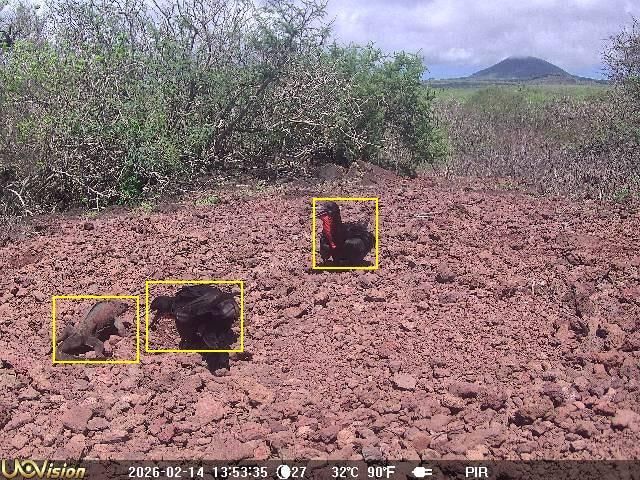
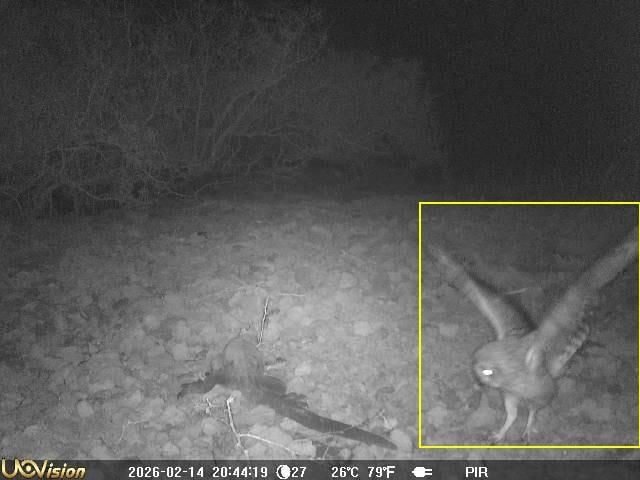
Already, the system has made it possible to map the movements of endemic species such as the Galápagos Short-eared Owl across the island and observe rare interactions between owls, frigatebirds, and marine iguanas. Observations like these would have required weeks of effort in the past, if they were possible at all. Now, they are captured automatically—offering new understanding of Floreana’s ecosystem and strengthening efforts to protect it.
“Smart Parks feels very much aligned with the mission of this Smart Island Monitoring initiative,” said a Smart Parks representative. “This pushes us to utilize and develop new technologies to the extreme.”
With this solid foundation now in place, the Smart Island Monitoring system is designed to grow. The next phase will scale the network to support up to 450 cameras and more than 200 monitoring and tracking sensors. As automated spatial and AI-based analysis are added, clear data visualizations will help teams spot patterns sooner, plan interventions more strategically, and act with greater confidence.
The success of this initial deployment proves that real-time, island-wide intelligence is possible, setting the stage for faster, more effective restoration not just on Floreana, but on islands worldwide.
Photos and B-roll video: https://drive.google.com/drive/folders/1Yiul-4vFRJhuyA2Yfl7ehSOw8ug1sO2p?usp=sharing
Interviews available upon request.
Island Conservation
Sally Esposito, Senior Communications Director
sally.esposito@islandconservation.org
Fundacion Jocotoco
Isabel Grijalva, Communications Coordinator, Fundación Jocotoco
isabel.grijalva@jocotoco.org.ec
There’s more than one way to make an impact. Join our collective of dedicated supporters by donating today or signing up for our newsletter to stay informed.
Floreana Island is one of the oldest islands in the Galápagos Archipelago and home to a community of approximately 160 residents. Once rich with unique wildlife, Floreana experienced dramatic ecological decline following the introduction of invasive mammals in the 18th and 19th centuries. The island is historically significant for its role in early human settlement in the Galápagos and is recognized today as a priority site for global biodiversity recovery.
Wildlife Protection Solutions contributed wpsWatch, a platform that simplifies how camera traps are managed across the island. Instead of manually checking equipment, rangers can now see which cameras are working properly and which may need attention. The system automatically reviews images with customized AI to detect wildlife activity and sends alerts to rangers via WhatsApp and EarthRanger when targeted animals are detected, helping teams focus only on what matters most. Smart Parks supported the design and setup of the island’s LoRaWAN communication network and TrapEdge smart trap sensors. This allows conservation staff to see the location and status of traps and tracking devices in near real time, without needing to physically visit each one. As a result, issues can be identified early, equipment stays operational for longer, and field teams can work more efficiently.
All information from cameras, sensors, and ranger patrols is brought together in EarthRanger, a software platform provided by Ai2, a Seattle-based nonprofit research institute. EarthRanger turns complex streams of data into a clear, visual picture of what is happening across the island, helping rangers and managers make informed decisions quickly and confidently.
The Floreana Island Ecological Restoration Project is led by the Galápagos National Park Directorate along with the Biosecurity and Quarantine Agency for Galápagos. It is part of the Island-Ocean Connection Challenge, an international collective with the goal of beginning holistic restoration on 40 globally significant islands from ridge to reef by 2030. It is coexecuted by Fundación Jocotoco, the Charles Darwin Foundation, and Island Conservation, with the support of several partner organizations, including Galapagos Conservancy, which is leading on the tortoise release.
Working closely with the Floreana community and local and international allies, the project aims to achieve the island’s full ecological restoration through the eradication of three invasive mammal species, the restoration of habitats, and the reintroduction of 12 endemic species, restoring the ecological functionality and resilience of this unique island ecosystem.
Countless individuals and the following organizations generously supported this monumental project along the way: Bell Laboratories, Inc., Blue Action Fund, Global Environmental Facility, Charities Aid Foundation Canada, Conservation International Foundation, Corporacion Andina de Fomento (Development Bank of Latin America), Durrell Wildlife Conservation Trust, Ecoventura, Fondation Ensemble, Fondo Especies Invasoras Galápagos,Fundación Galápagos, Galápagos Conservation Trust, Global Environment Facility, Konrad Lorenz Research Center – Vienna University, Kreditanstalt für Wiederaufbau (German Development Bank), Lindblad Expeditions-National Geographic Fund, The Mohamed bin Zayed Species Conservation Fund, Once Upon a Time Foundation, Scripps Institution of Oceanography, Silversea Cruises, Texas Parks and Wildlife Foundation, The Conservation Foundation, The David and Lucile Packard Foundation, The International Galápagos Tour Operators Association, The Leona M. and Harry B. Helmsley Charitable Trust, the U.K. Government (through The Darwin Initiative), Tourism Cares, Re:wild, The Raptor Center, Unigalapagos, Willow Grove Foundation, and other anonymous donors.
Island Conservation’s mission is to restore islands for nature and people worldwide. We are a United States–based 501(c)(3) charitable organization with a globally distributed team—often made up of local islanders who bring deep knowledge and connection to the places where we work. Together, we collaborate with local communities, government management agencies, and conservation organizations to holistically restore islands by bringing back biodiversity, the foundation of all healthy ecosystems. We do this by removing a primary threat (introduced, damaging invasive species) and accelerating the return of native plants and animals. We utilize innovative technology and techniques to work more efficiently and showcase the many benefits of holistically restored islands for biodiversity, climate resilience, ocean health, and sustainable development across the globe.
Fundación Jocotoco is an Ecuadorian conservation organization dedicated to protecting the country’s most threatened ecosystems and species through science-based conservation, habitat restoration, and strong local leadership. Since its founding in 1998, Jocotoco has established and manages a network of protected areas across mainland Ecuador and the Galápagos Islands, safeguarding critical habitats for endemic and endangered species.
In the Galápagos, Fundación Jocotoco plays a key role in large-scale restoration initiatives, including the Floreana Island Ecological Restoration Project, working closely with local communities, government authorities, and national and international partners. Through long-term planning, research, and community engagement, Jocotoco supports the recovery of ecological processes that sustain both biodiversity and human well-being. For more information please visit: https://jocotoco.org.ec/
Wildlife Protection Solutions
https://www.wildlifeprotectionsolutions.org/ Wildlife Protection Solutions (WPS) is an international nonprofit that uses technology to help protect endangered species, ecosystems, and the communities connected to them. Through AI-enhanced monitoring, camera traps, remote sensors, real-time alerts, and immersive education experiences, WPS gives conservation teams better tools to monitor landscapes, respond to threats, and build public support for wildlife protection.
Smart Parks
https://www.smartparks.org is a nonprofit technology organization that helps conservation teams monitor and protect wildlife more effectively in remote and challenging environments. By developing and deploying open, field-ready systems such as LoRaWAN communication networks and smart sensors, Smart Parks enables real-time visibility into traps, tracking devices, and other critical conservation tools. On Floreana, Smart Parks supported the design and setup of the island’s communication network and TrapEdge smart trap sensors, helping teams detect issues earlier, reduce manual field checks, and keep essential equipment operating reliably. Through practical, scalable technology, Smart Parks strengthens conservation efforts by making it easier for field teams to respond quickly and work more efficiently.
EarthRanger
EarthRanger is a data visualization and analysis platform provided at no cost by Ai2, a Seattle-based nonprofit research institute. It gives conservationists the real-time information they need to keep wildlife, habitats, and communities safe. It collects, integrates, and displays remote sensing data and field reports to effectively monitor collared wildlife, rangers, enforcement assets, and infrastructure within protected areas and landscapes. The application of EarthRanger is diverse and varies relative to the primary needs of the area or organization. Among them, the platform is used to monitor vast areas, track and study wildlife, coordinate ranger units, and proactively mitigate human-wildlife conflict.
The EarthRanger program has been in place for over 10 years and has reduced threats to biodiversity and habitats in over 900 protected areas across 90 countries and on six continents. It has facilitated the reintroduction and restoration of diverse species and ecosystems that deliver global environmental and socioeconomic benefits. Follow EarthRanger’s work on LinkedIn, Instagram, Facebook, X, and YouTube.
Check out other journal entries we think you might be interested in.
September 17, 2026
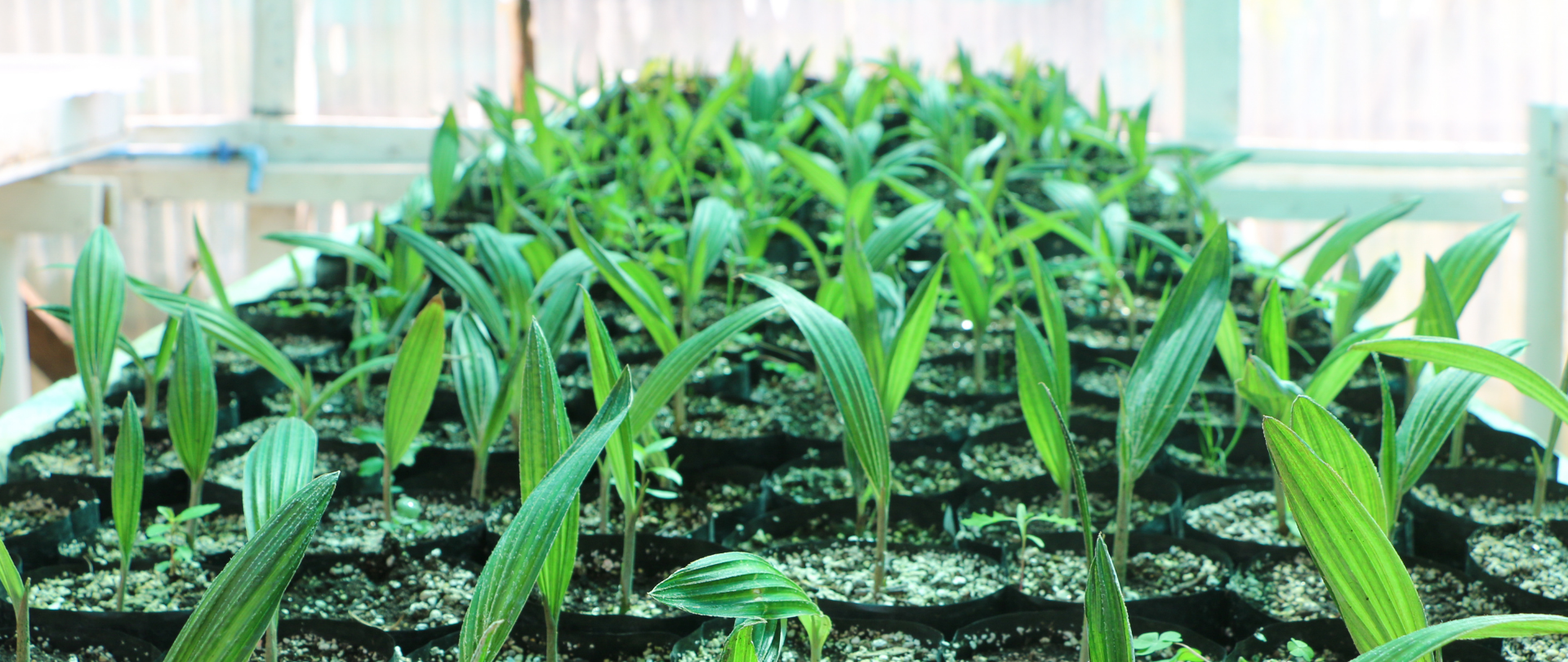
On the island of Robinson Crusoe in Chile, a greenhouse feeds both a community and an islander-led conservation movement!

September 9, 2026
El Niño doesn't create weak ecosystems; it reveals them. Find out how resilient islands can survive and bounce back from stress caused by El Niño!
September 1, 2026
Linden Brown shares the incredible things he saw and experienced while working to restore islands in Sonsorol State, Palau!

August 25, 2026
A new study reveals the role fungi play in the restoration and recovery of rare, resilient atoll ecosystems!
August 18, 2026
Meet Evelyn, one of the people who holds the wisdom of Sonsorol State, Palau in her lived experiences and stories.

August 12, 2026
The new Phoenix Species Project highlights species on the brink of extinction that are primed for recovery--and a lot of them live on islands!
August 4, 2026
Indigenous-led conservation takes a leap forward with Rapa Nui (Easter Island)'s new partnership with Island Conservation!

July 31, 2026
We interviewed artist Laura Shape to learn about the luminous abstracts she creates from leather sourced from invasive species!

July 28, 2026
Happy World Nature Conservation Day! Read Penny Becker's article published by the Outreach Network for Gene Drive Research.
July 9, 2026
Senior Major Gifts Officer Jen Sachs shares her experience on one of Island Conservation's exciting restoration projects in the US Virgin Islands!