February 25, 2026
A Homecoming for Floreana
Roger McDonough from our partners at Galápagos Conservancy explains the process behind raising hybrid tortoises for Floreana!
 Island Conservation
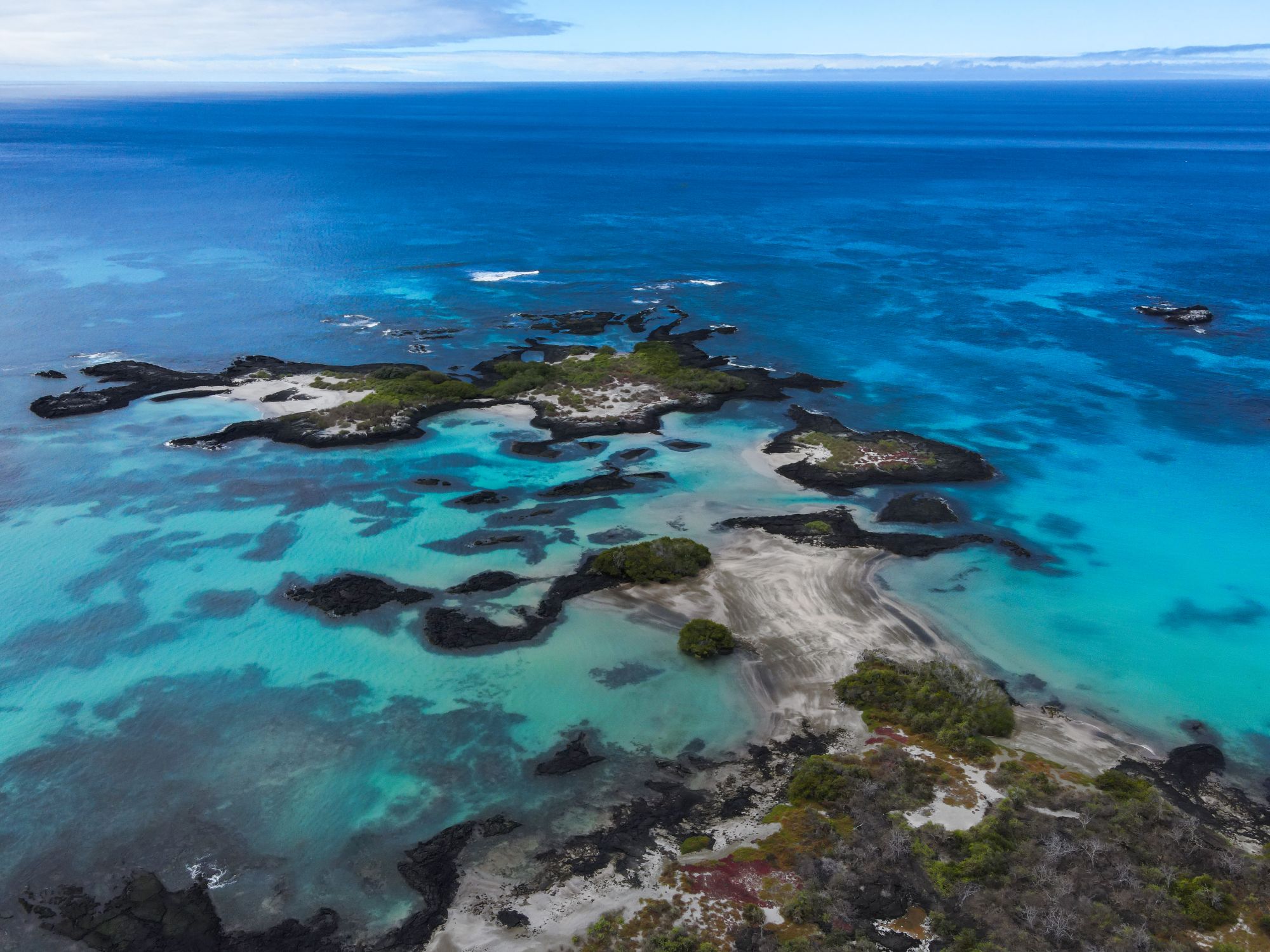
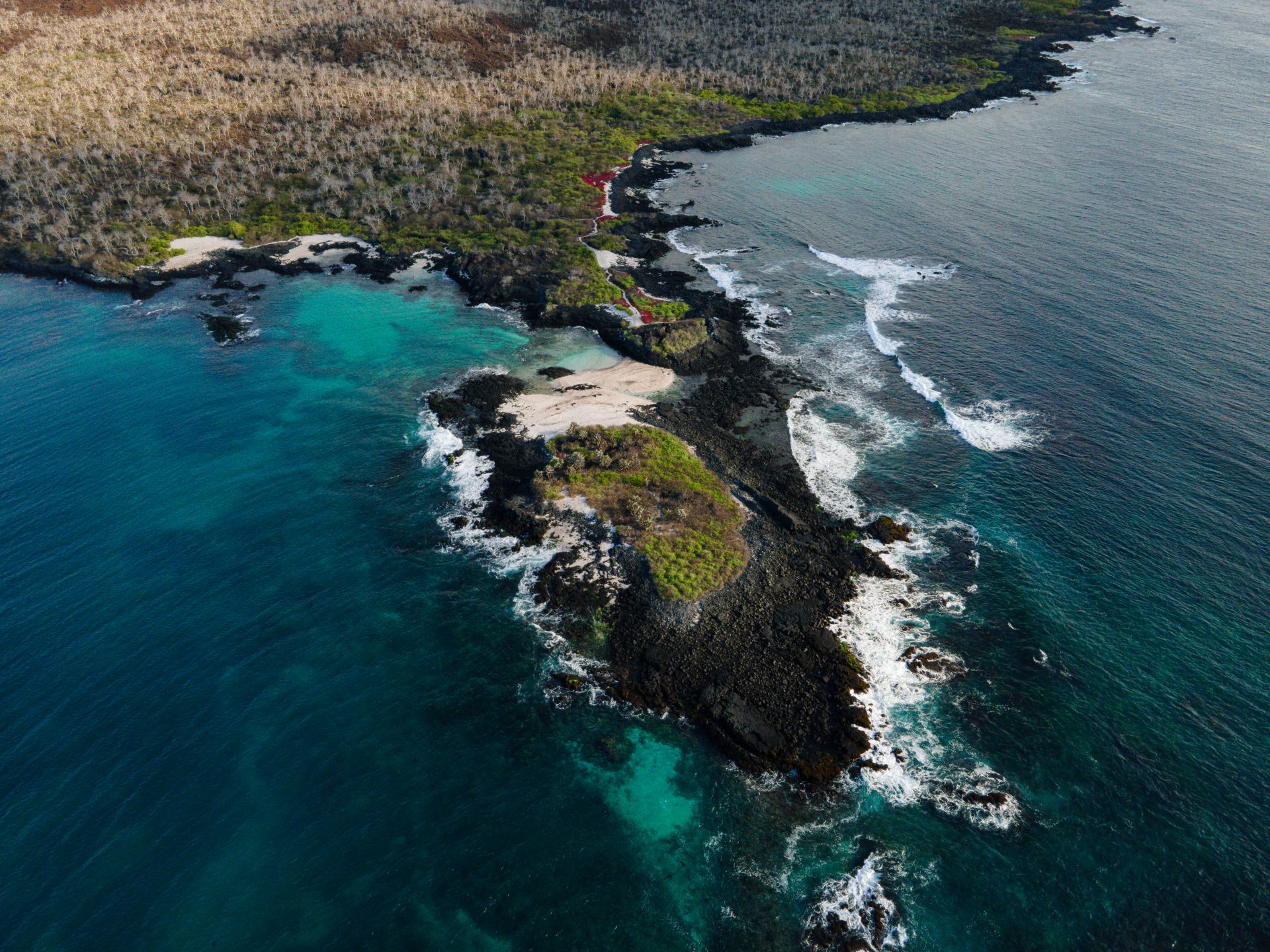
On Floreana Island, restoration is no longer about small experiments or isolated plots. It is about something far more ambitious: helping an entire island recover.
In a recent episode of the Charles Darwin Foundation’s podcast, The Station, listeners were taken inside the Floreana Ecological Restoration Project—one of the most complex conservation efforts currently underway in Galápagos—to explore one of the most overlooked yet essential pieces of the puzzle.
Led by the Galápagos National Park Directorate and the Galápagos Biosecurity Agency, and co-executed by the Charles Darwin Foundation, Island Conservation, and Fundación Jocotoco, the project goes far beyond invasive species eradication and species reintroduction. Its long-term success depends on something less visible, but fundamental: habitat restoration.
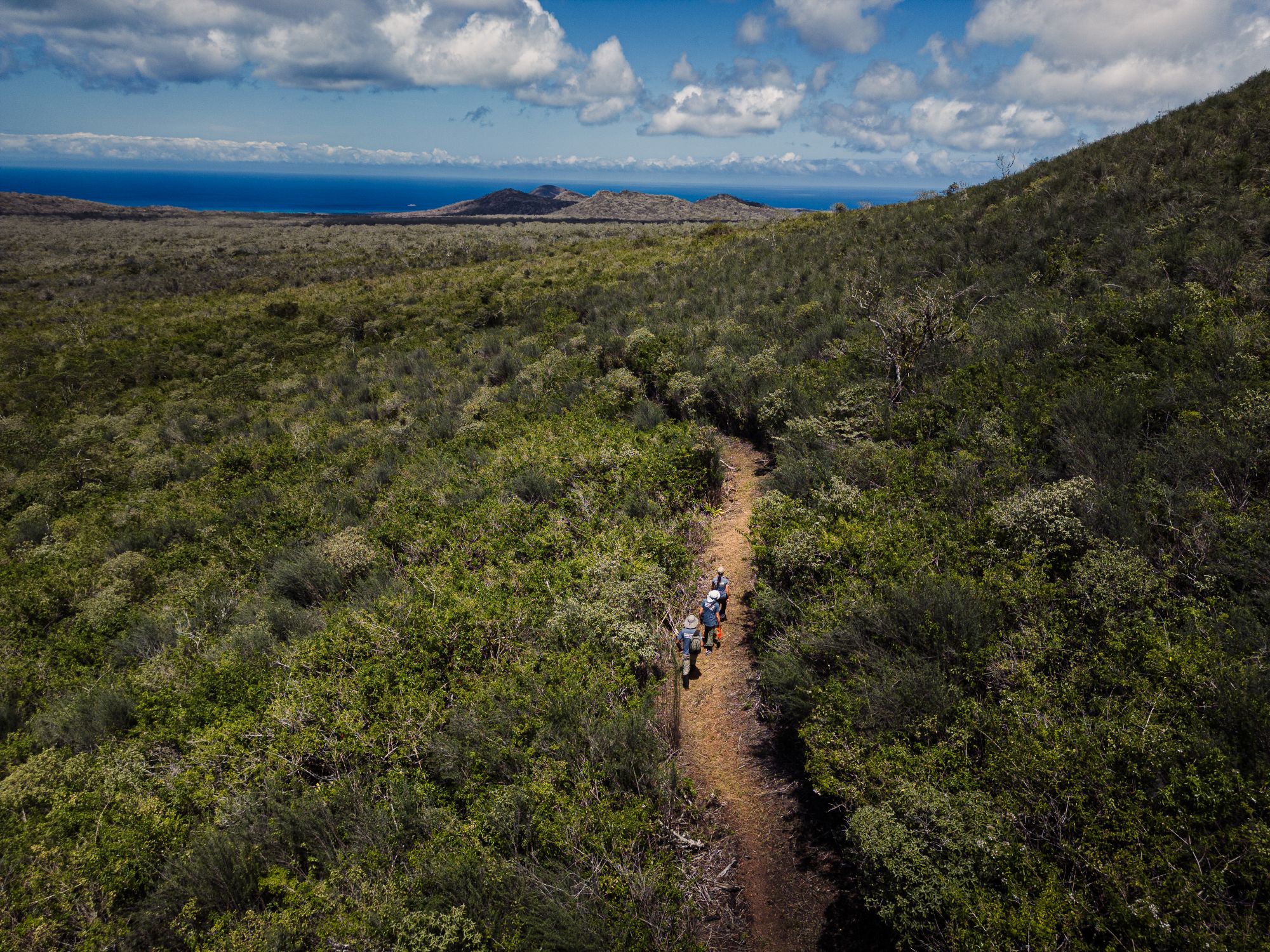
Dr. Rakan Zahawi, a restoration ecologist specializing in tropical forest ecosystems and the Executive Director of the Charles Darwin Foundation, explains in the episode that habitat restoration is what allows everything else to work. It is like fixing a home—the roof, the walls, the plumbing, the furniture—before anyone can move back in. Species reintroductions, population recovery, and ecosystem resilience all hinge on having the right conditions on the ground: the right home.
What makes Floreana unique is its scale and context. Most habitat restoration efforts typically focus on small sites, testing techniques across a few hectares at a time. Floreana, by contrast, represents an island-wide restoration initiative on an inhabited island roughly the size of Washington, DC. In the humid highlands especially, decades of agriculture and invasive plant species have transformed the landscape. Plants like blackberry and guava form dense thickets that block light, suppress native seedlings, and gradually undermine the entire ecosystem.
One of the clearest examples of this impact is found in Scalesia forests—an ecosystem built around an endemic tree found only in Galápagos. Scalesia forests grow quickly but are short-lived, typically lasting only 15–20 years, and depend on constant regeneration. When invasive blackberry dominates the understory, young trees cannot establish as there is little space to grow and little light that reaches the forest floor. From the outside, the forest may appear intact, but without intervention, its future quietly disappears.
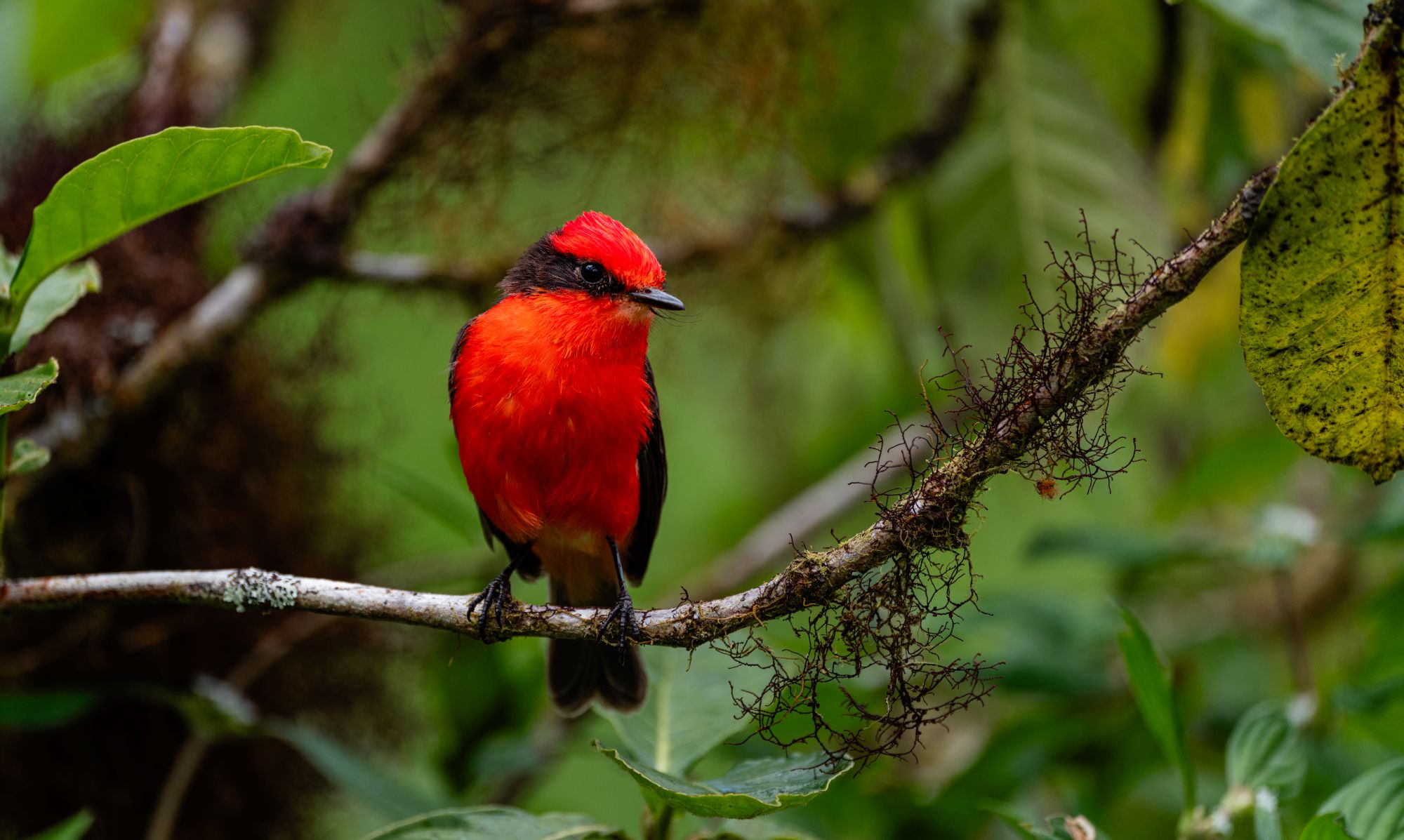
But why does this matter to the Floreana project? Because many of the species slated for reintroduction depend entirely on this habitat. The Little Vermilion Flycatcher is a prime example. This bird relies on Scalesia forests as its home—nesting in them and depending on open clearings to efficiently catch insects, its primary food source. Without healthy forest conditions, reintroducing this native species to the ecosystem simply cannot succeed.
The podcast also pulls back the curtain on what restoration actually involves. Removing invasive plants is highly labor-intensive, particularly in the early stages. Even after clearing, seeds can remain viable in the soil for years, requiring repeated visits and long-term monitoring. New tools, such as biological control agents, are being explored and could eventually reduce the competitiveness of invasive plants—but these solutions take time, testing, and regulatory approval.
Dr. Rakan Zahawie
Executive Director of the Charles Darwin Foundation
Restoration on Floreana is also strategic. Rather than working in isolated patches, the team is developing phased, systematic approaches to restore large, connected areas, making long-term management more effective and sustainable. It is a process measured not in months, but in decades.
The payoff, however, could be transformative, for both nature and people. Healthy habitat dramatically increases the chances that locally extinct species—particularly birds like the Little Vermilion Flycatcher and several of Darwin’s finch species—can be successfully reintroduced and sustained. While iconic species such as giant tortoises are relatively resilient once they’ve reached adulthood, birds depend heavily on intact forests. Restoration creates the home they need to return and thrive.
Beyond Floreana, this work has global relevance. The project is a living experiment—applying ecological science at scale while learning in real time. What succeeds here could inform restoration efforts across Galápagos and serve as a blueprint for island ecosystems worldwide.
🎧 Listen to the full episode of The Station to explore how Floreana is being restored—and why its future matters far beyond its shores.
There’s more than one way to make an impact. Join our collective of dedicated supporters by donating today or signing up for our newsletter to stay informed.
The Floreana Island Ecological Restoration Project is led by the Galápagos National Park Directorate and the Galápagos Biosecurity Agency, with Fundación Jocotoco, Island Conservation, and the Charles Darwin Foundation as co-executing partners. Working closely with the Floreana community and local and international allies, the project aims to achieve the island’s full ecological restoration through the eradication of three invasive mammal species, the restoration of habitats, and the reintroduction of 12 endemic species, restoring the ecological functionality and resilience of this unique island ecosystem.
The Floreana Island Ecological Restoration Project is part of the Island-Ocean Collective Challenge, which aims to restore and rewild 40 globally significant island-ocean ecosystems by 2030.
Check out other journal entries we think you might be interested in.
February 25, 2026
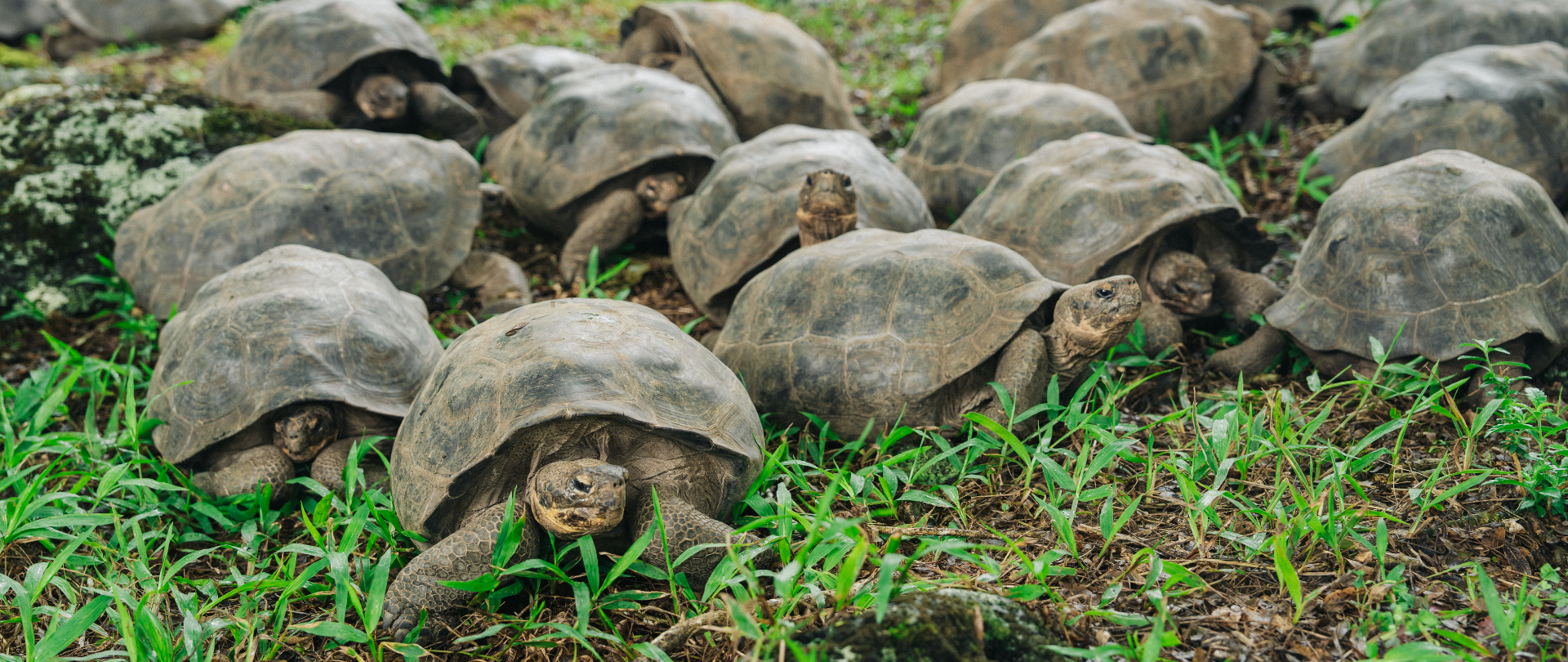
Roger McDonough from our partners at Galápagos Conservancy explains the process behind raising hybrid tortoises for Floreana!
February 20, 2026
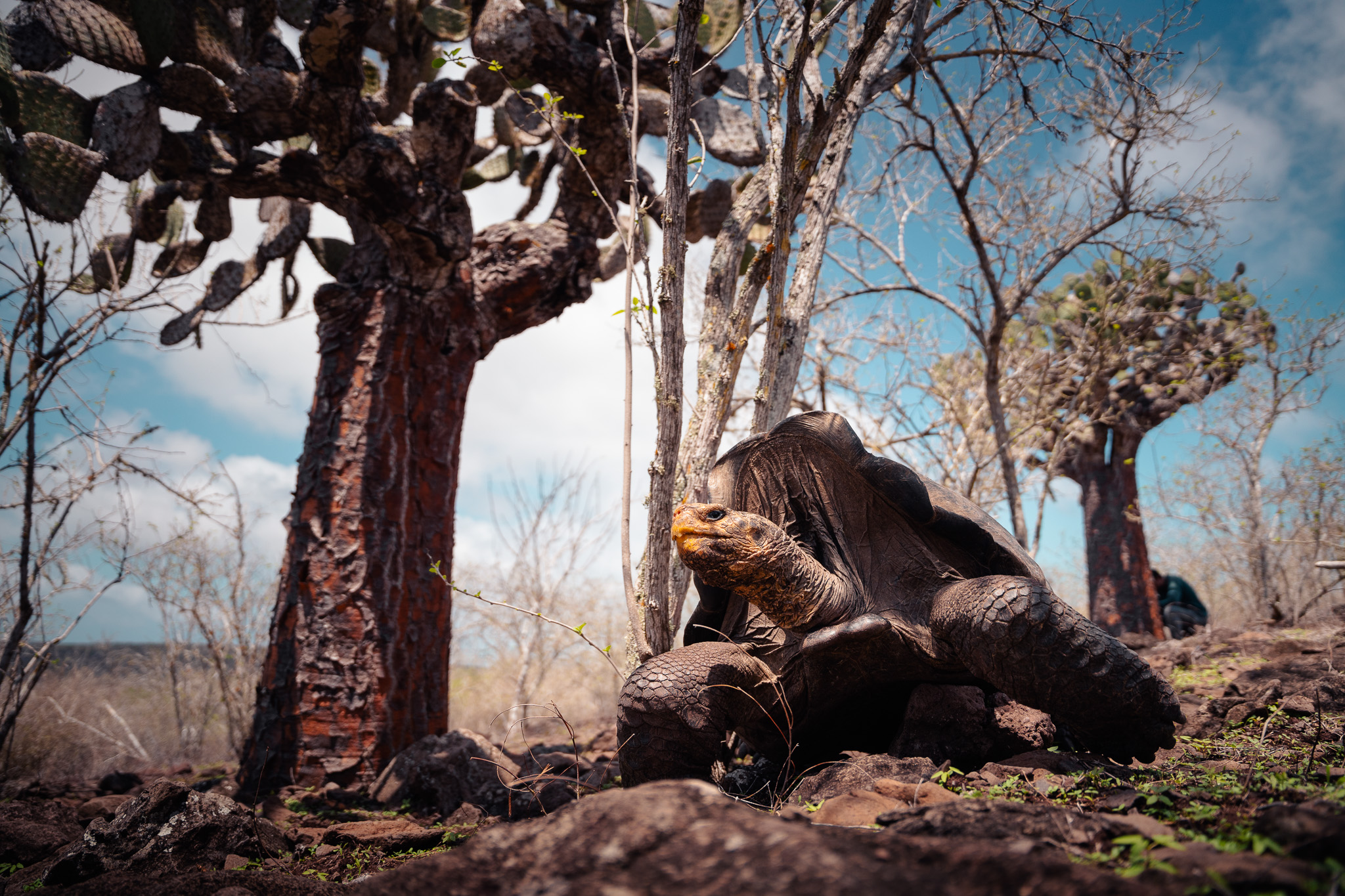
For the first time in more than 180 years, giant tortoises are once again walking the landscapes of Floreana Island!
February 6, 2026
¡Mira el video de Solange y lee una entrevista sobre Robinson Crusoe! Watch Solange's video and read an interview about Robinson Crusoe!
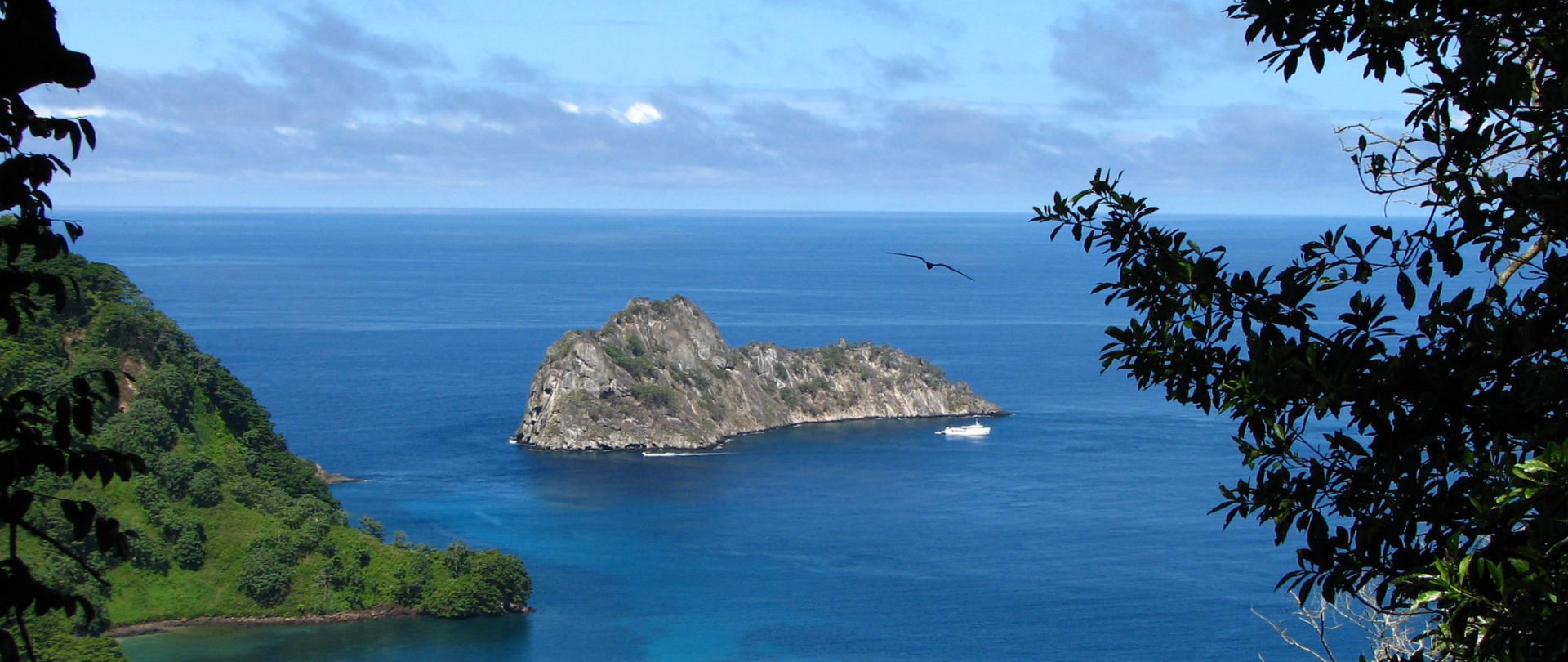
January 28, 2026
We worked with Blue Action Fund to expand marine protection in the Eastern Pacific--read about our success!
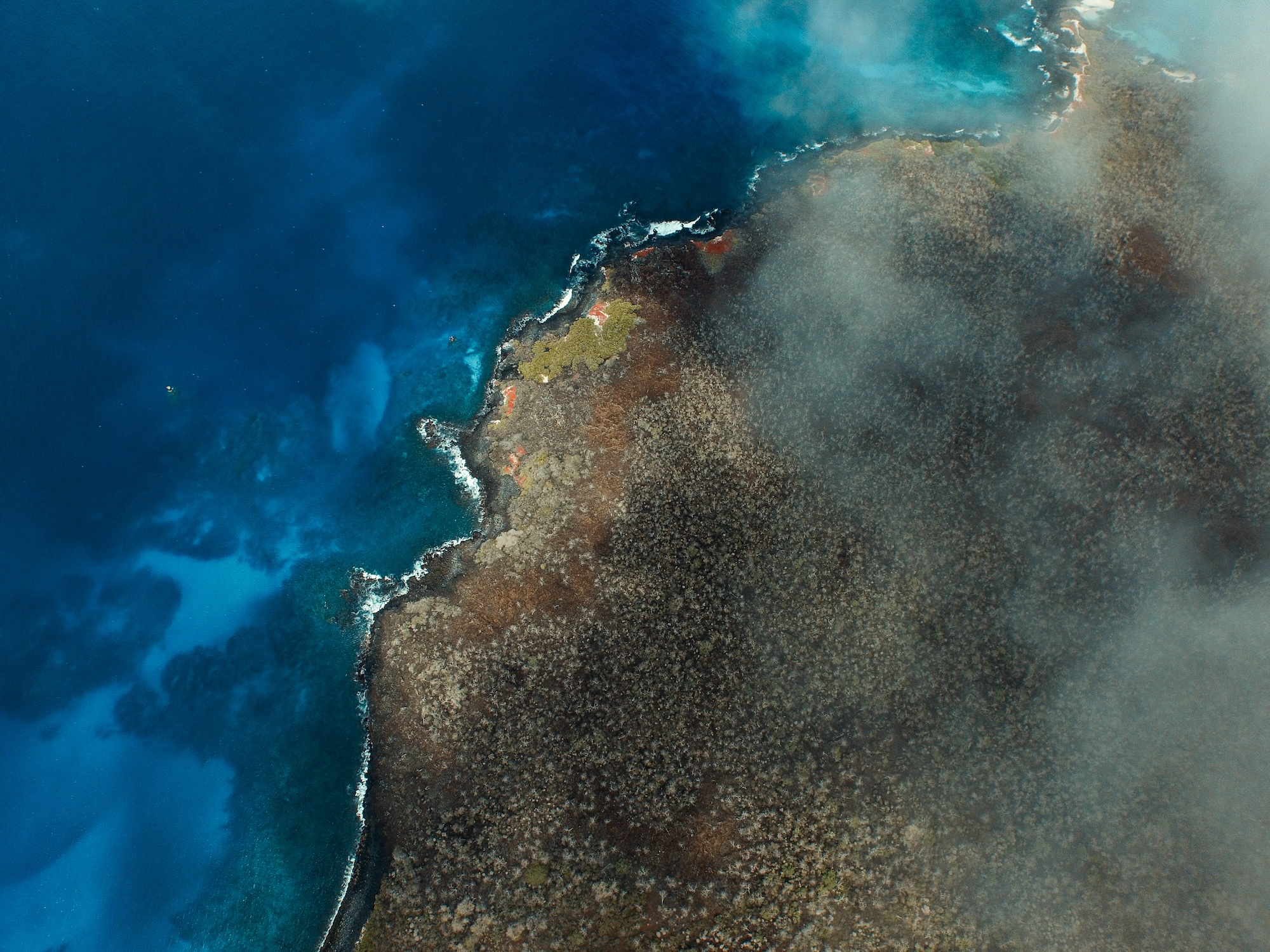
December 16, 2025
Read the full ecological story of Floreana Island in the Galápagos from the early settlements to today.
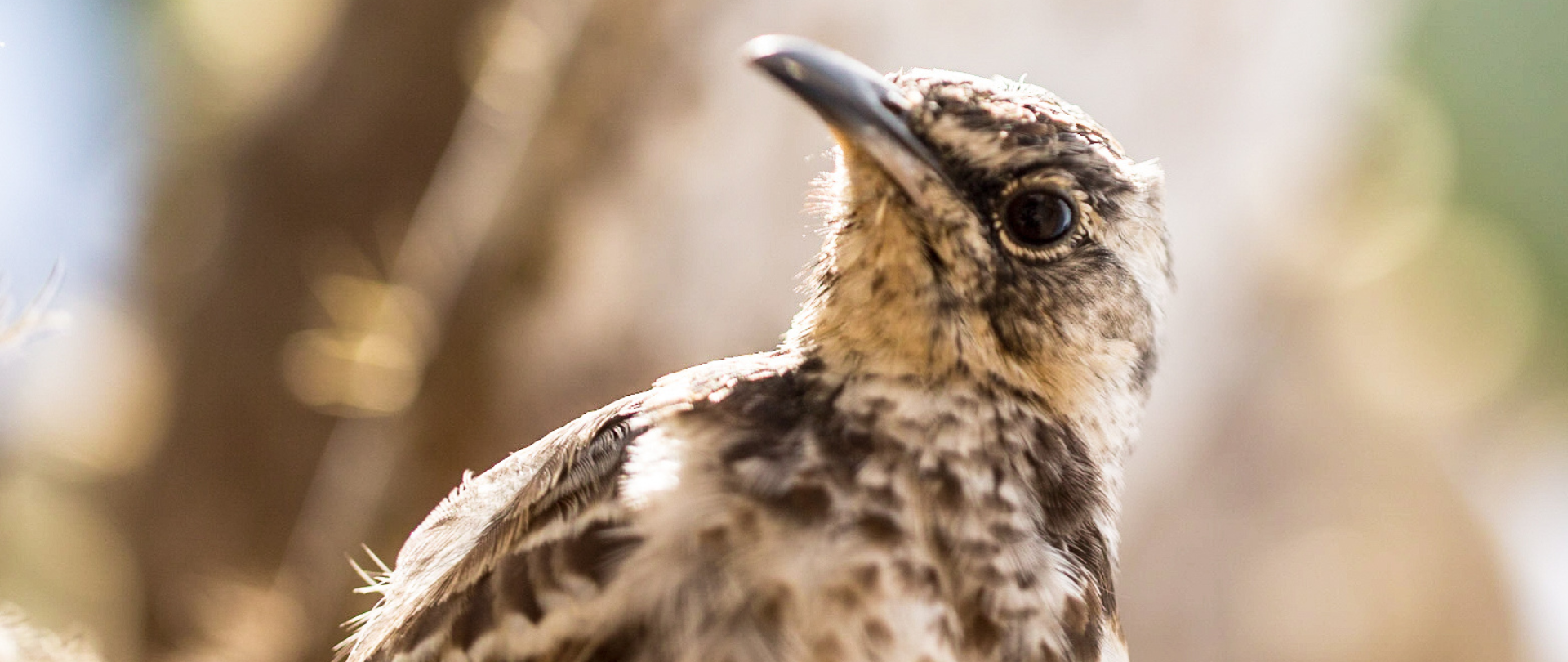
November 21, 2025
Holistic restoration is at work on Floreana Island, where the largest conservation project in the history of the Galápagos is underway!

October 29, 2025
Astounding evidence of recovery on Ulong Island in Palau after just one year!
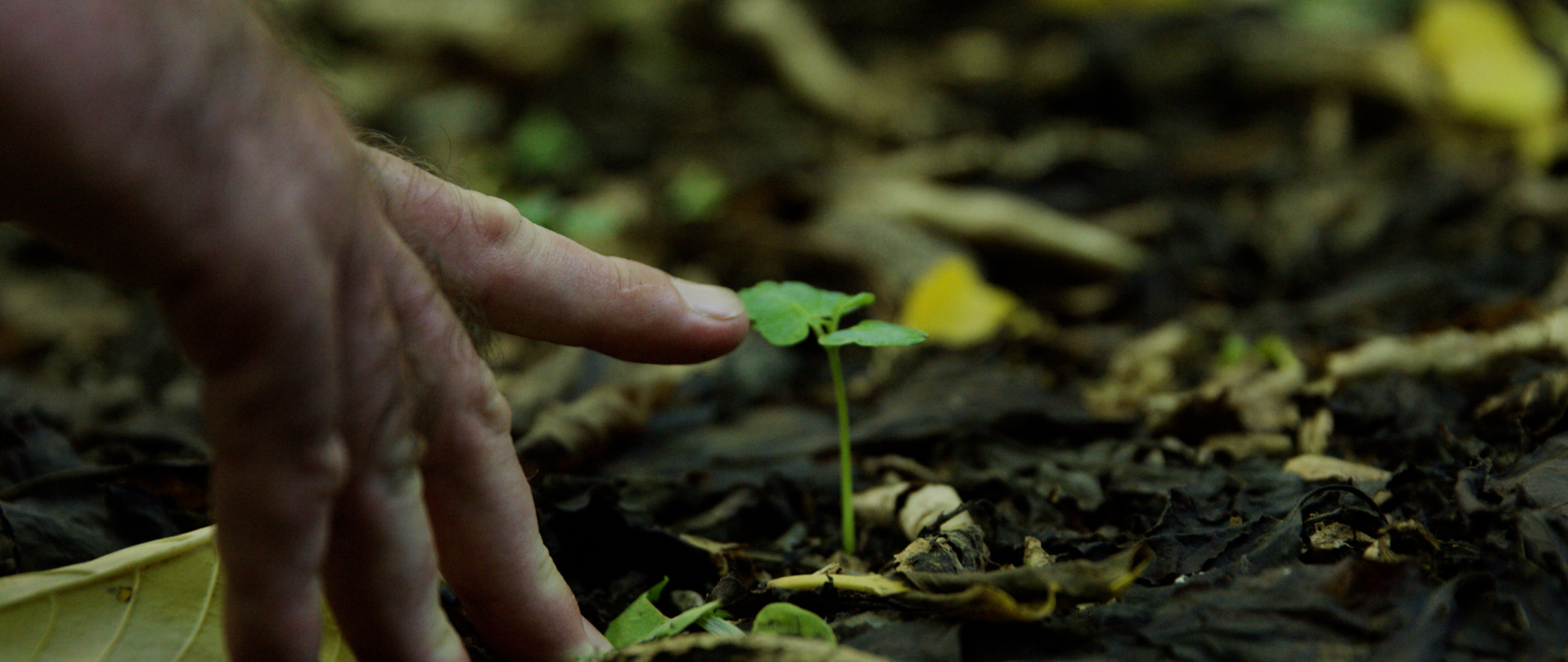
September 30, 2025
Astonishing results from our work to restore sites in the Republic of the Marshall Islands, boosting climate resilience and ocean health!
September 24, 2025
Don't let its comparatively small land area fool you--Tokelau is a world leader in conservation!
September 4, 2025
Incredible collaboration and success in the Juan Fernández Archipelago, with thousands of threatened trees benefiting from bold conservation action!