October 1, 2026
What Mangroves Teach Us about Conservation
Mangrove forests are one-of-a-kind ecosystems--literally! Find out how conservationists can learn from mangroves and why it matters for islands.
 Island Conservation
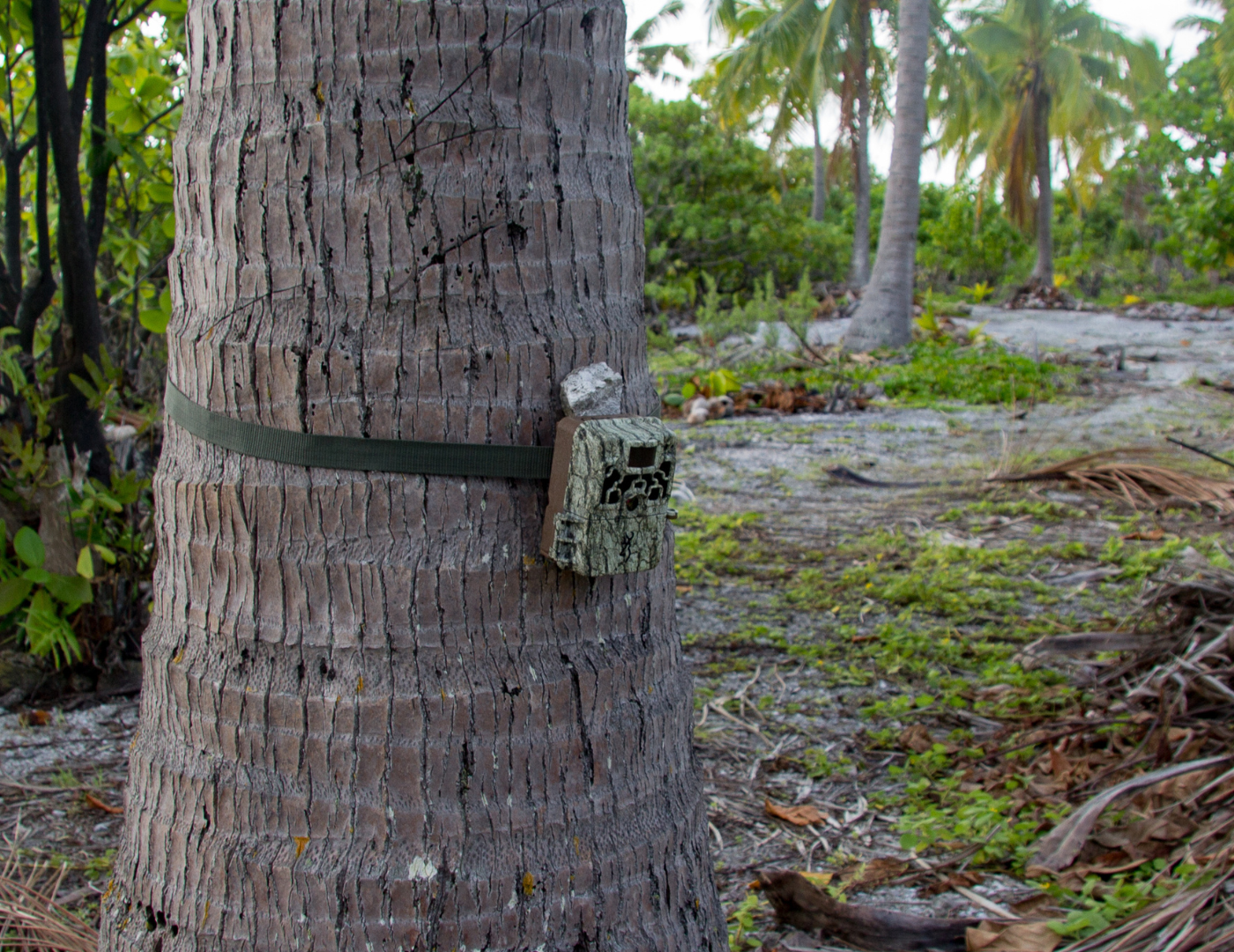
“Remote sensing”–it sounds mysterious and high-tech, and when I tell people it’s a huge part of my job, I sometimes get curious looks. At its core, remote sensing describes the act of observing nature from a distance.
Here at Island Conservation, much of our work to holistically restore islands for nature and people happens on islands that are challenging to access—and physically challenging to work on, at that! So, we use remote sensing, including camera traps, satellites, drones, and acoustic monitoring, to understand how islands are changing over time in response to the work we and our partners do.
Before these technologies, our main method for understanding the health of an island ecosystem was to visit once every few years. We would get snapshots, but not the full story. Remote sensing fills that gap by giving us continuous, long-term data.
This graph gives an example how much richer our data can become when we use acoustic recordings to measure bird presence, rather than sending individual scientists to do point counts:
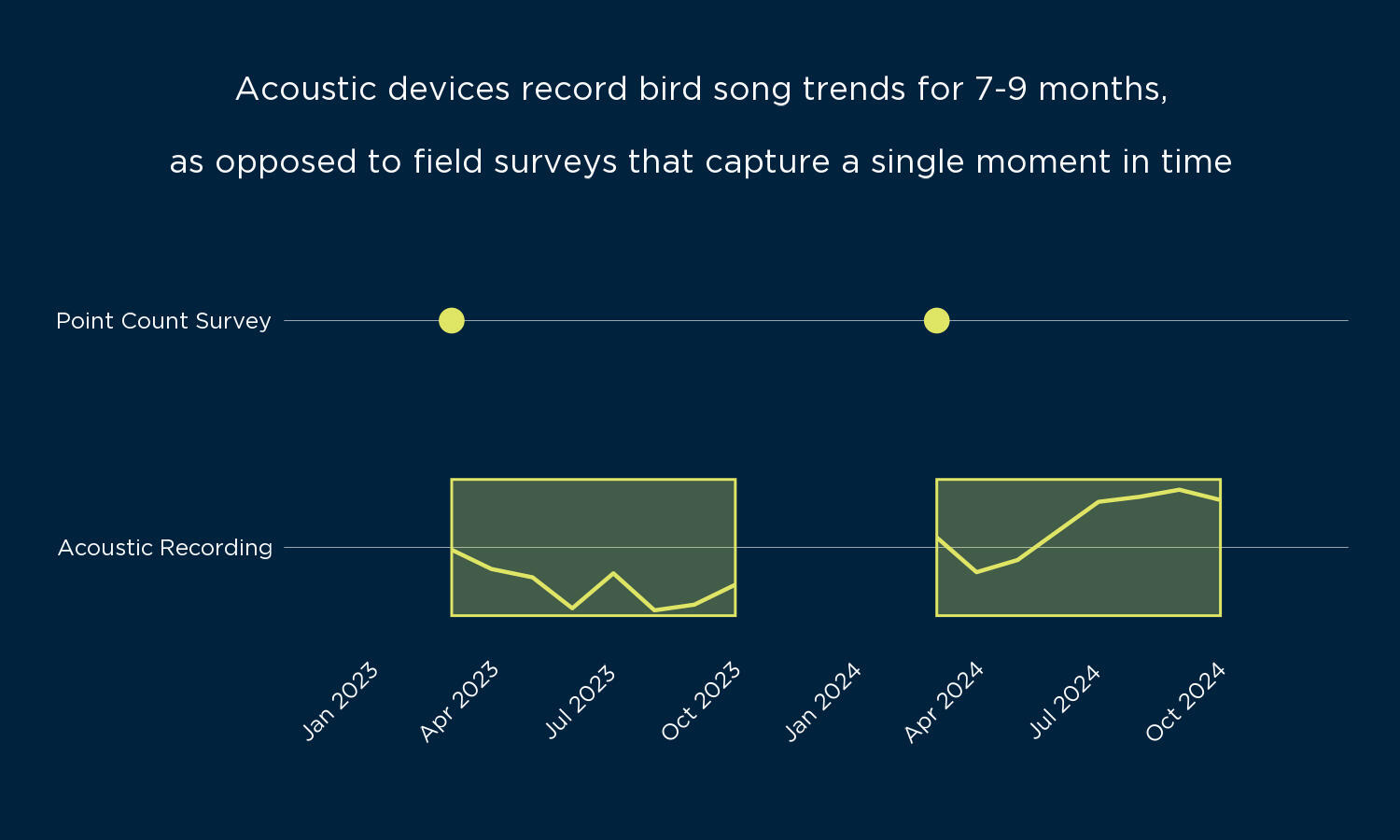
From this long-term data, we can gain insight into answering critical questions. Is native vegetation recovering? Are seabirds returning to nest? Are invasive predators present? Which areas need additional action to meet restoration goals? Remote sensing helps guide Island Conservation’s decisions so we can make island recovery happen more efficiently or in new ways
Our toolkit is diverse:
Each tool has its benefits and challenges. Remote islands often lack internet, so we still rely on SD cards instead of cloud uploads. Dense vegetation means batteries instead of solar panels, so we do have to send in real humans to change out SD cards and batteries. And then there’s the sheer volume of data—hundreds of thousands of images and thousands of hours of audio that need to be processed.
One of my favorite examples of this work in action comes from Ulong Island in Palau. Over three years, we collected 528,310 camera trap images and 14,796 hours of acoustic recordings. That data traveled 6,666 miles from Ulong to our analysis hub in Santa Cruz, California.
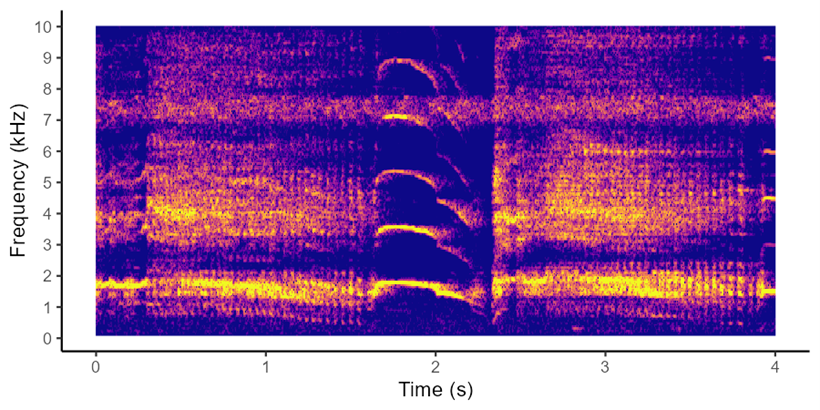
We don’t analyze all this data alone. Partners like Conservation Metrics help us analyze acoustic data using a machine learning technique called a Convolutional Neural Network (CNN), which can detect species-specific calls—like the signature haunting cry of Ulong’s Tropical Shearwater—hidden in thousands of hours of recordings.

For satellite imagery, we collaborate with terraPulse and academic partners to process NASA Landsat Earth observation data into metrics that describe vegetation cover, structure, and function, which give valuable landscape-scale insights to field teams. These ‘birds-eye-view’ datasets allow them to identify areas of interest that are difficult to access, saving them time and energy in the field.
Artificial intelligence plays a huge role in making this work possible. Our AI-assisted workflow for processing camera trap imagery uses Megadetector, a computer vision model that flags images likely to contain animals. After the model identifies potential wildlife, our team reviews each flagged image to confirm the species. This human-in-the-loop approach ensures accuracy while saving countless hours of manual sorting.
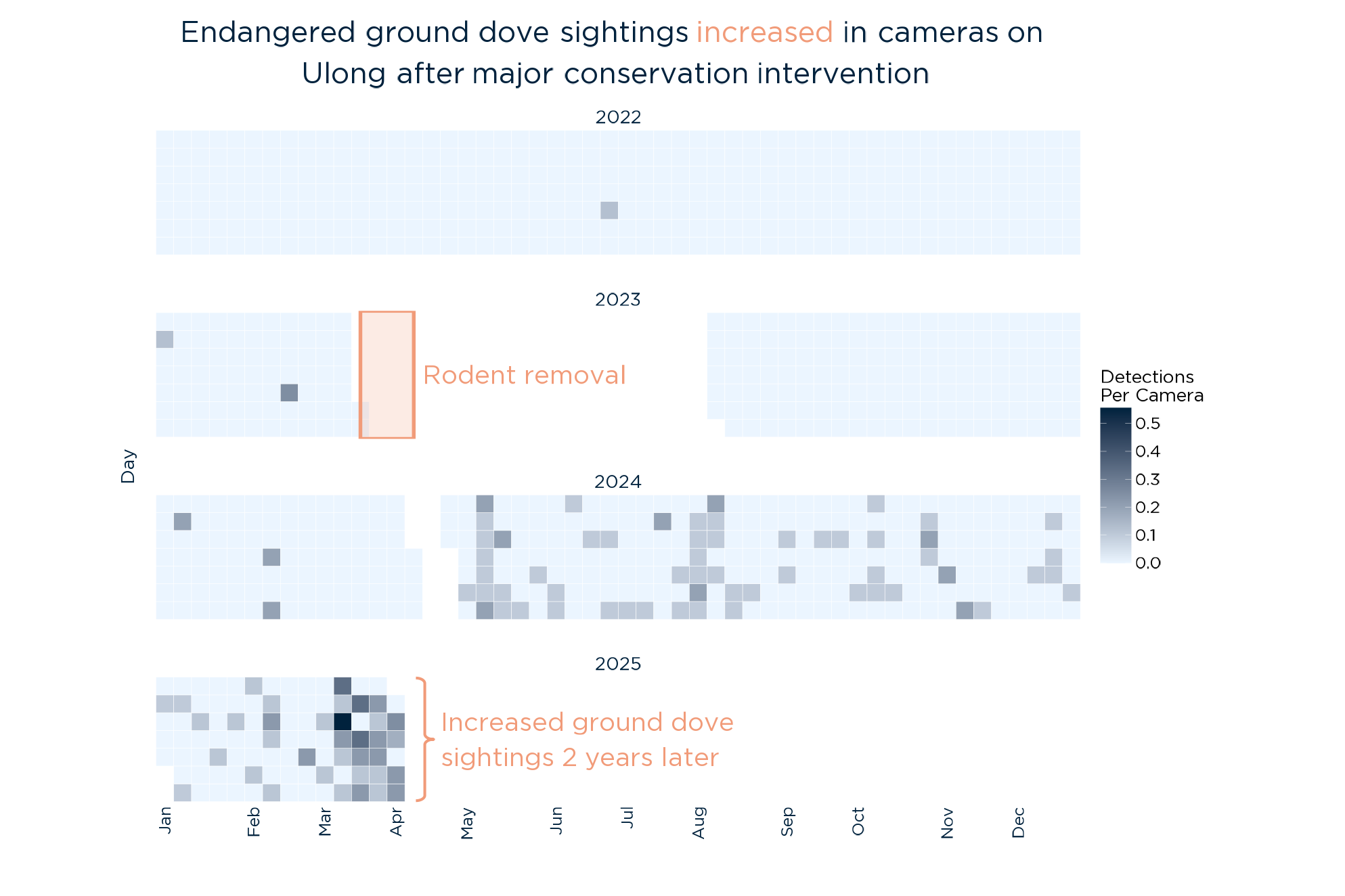
All of this effort—AI models, acoustic sensors, satellite imagery—feeds one overarching goal: reproducible science. By using standardized methods and transparent workflows, we make sure that our findings can be verified, repeated, and built upon. These tools allow us to provide meaningful evidence of the outcomes that can be realized through conservation action on islands.
Island Conservation prides itself on being a leader in conservation science. We’re always piloting new tools and methods to gather data, but it’s the stories that the data tells that make it valuable. And time and time again, it shows that holistic restoration on islands yields outsized benefits for nature and people. I’m glad to be part of a data journey that results in more resilient and biodiverse island ecosystems!
There’s more than one way to make an impact. Join our collective of dedicated supporters by donating today or signing up for our newsletter to stay informed.
Check out other journal entries we think you might be interested in.

October 1, 2026
Mangrove forests are one-of-a-kind ecosystems--literally! Find out how conservationists can learn from mangroves and why it matters for islands.

September 24, 2026
Species extinctions don't just affect the ecosystems where they happen. Economies around the world depend on biodiversity, from local to international!

September 9, 2026
El Niño doesn't create weak ecosystems; it reveals them. Find out how resilient islands can survive and bounce back from stress caused by El Niño!

August 25, 2026
A new study reveals the role fungi play in the restoration and recovery of rare, resilient atoll ecosystems!

July 17, 2026
Three different animals show how connector species prop up island-ocean ecosystems!
May 5, 2026
Thrilling new tech brings conservation solutions to a remote island in the Galápagos!
April 9, 2026
We made a list of easy ways you can show your support for the environment--during April and all year long!
April 2, 2026
Elke Windschitl shares her experience working for Island Conservation and some of the amazing artwork she created!

March 25, 2026
What is Environmental DNA and how is it helping conservationists around the world? Read Gracie Kroos' explanation!
March 3, 2026
What is holistic restoration? Read all about this incredible method to restore ecosystems for people and nature!