Innovation
Program
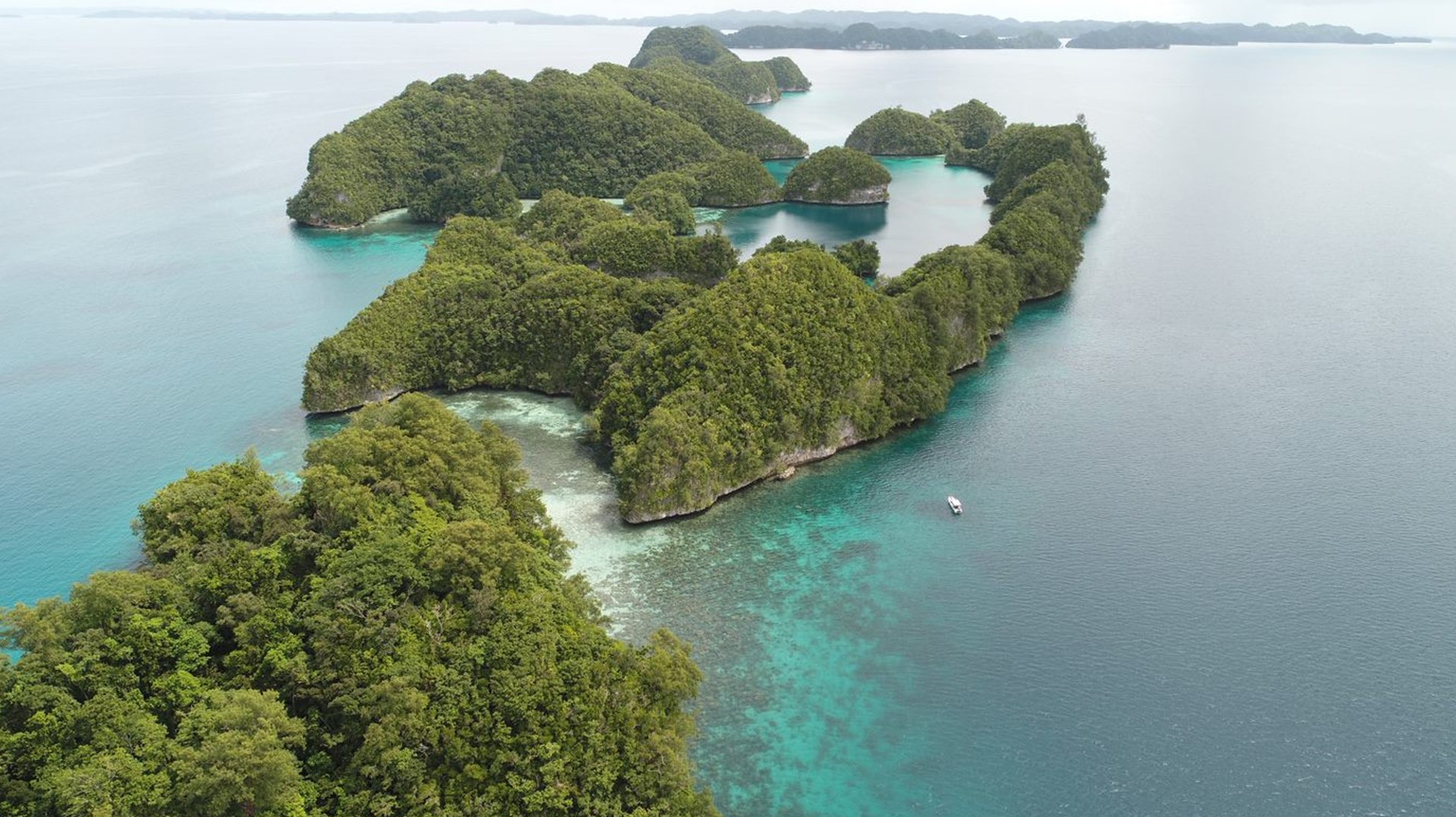
Harnessing the power of innovation to restore islands for nature and people is at the core of what we do.
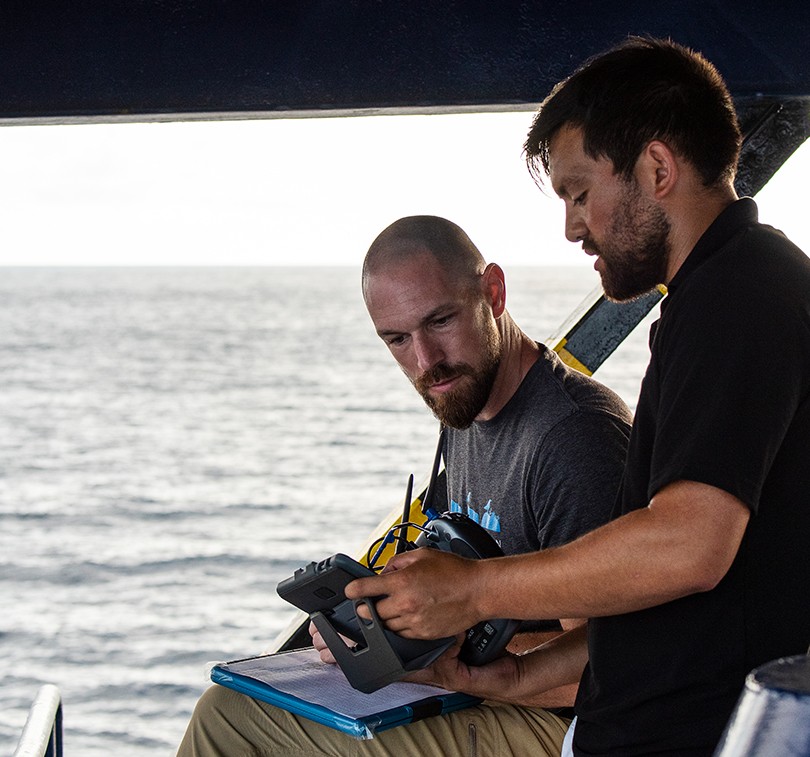
Our cutting-edge tools, including drones, AI, and image recognition, streamline our efforts and make us faster and more efficient than ever. We’re always pushing the boundaries, leveraging advanced conservation tools to create lasting change for ecosystems around the globe.
Drones
The future of island restoration is here.
The use of drones has resulted in exponential gains for global technological island conservation methods. They have proven to be a faster, cheaper, safer, and more efficient method for island restoration tactics compared to traditional methods, like helicopters or ground crews.
We’ve seen incredible improvements in the efficiency and effectiveness in our work, cutting costs and time while supporting island communities.

GBIRd
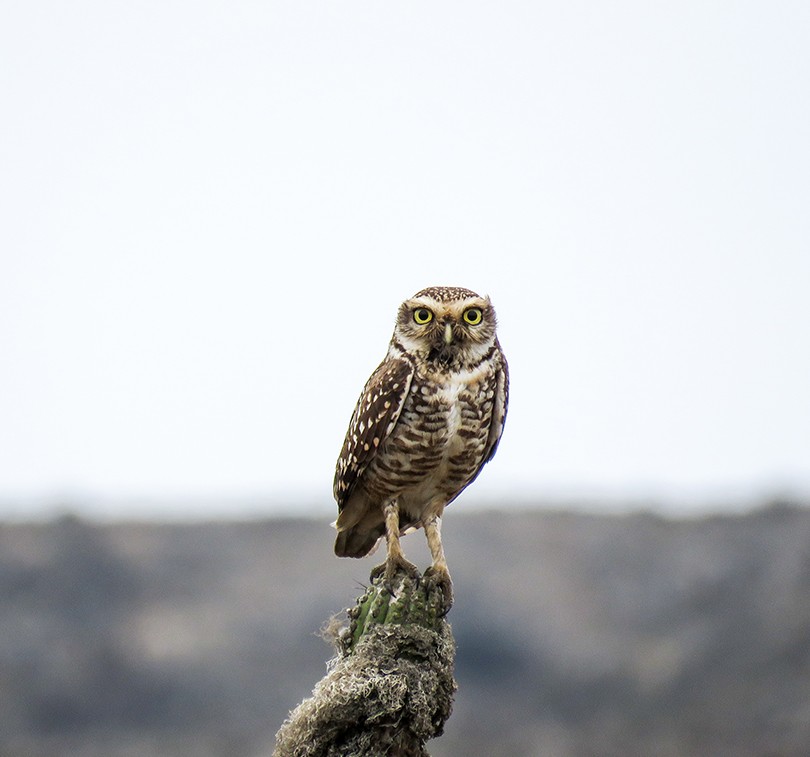
Invasive species pose a major threat to island ecosystems and biodiversity.
The Genetic Biocontrol of Invasive Rodents (GBIRd) program explores gene drive technology as a potential solution for removing invasive rodents from islands. By targeting rodents with advanced genetic tools, GBIRd aims to protect endangered species and restore island habitats, while carefully assessing the social, ethical, and environmental impacts of this innovative approach.
IslandScope
Ecosystem intelligence for healthy islands
Island–ocean ecosystems are deeply connected.
What happens on land directly shapes nearshore marine life. But these connections are often invisible without data.
Communities feel environmental changes, but lack simple tools to measure them. Most marine monitoring requires boats, divers, or laboratories. Many islands have strong local knowledge, but few accessible ways to measure biodiversity patterns or land–sea connectivity.
IslandScope aims to bridge this gap. A lightweight, partner- and community-centered approach to seeing what lives in the water and how land and sea are connected, using shoreline eDNA, fast data return, and participatory interpretation.
Explore Marine Biodiversity
Island Conservation and the Minderoo Foundation have partnered on a two-year initiative to advance locally powered eDNA monitoring across ecologically important islands around the globe.
This dashboard (coming soon!) allows scientific partners and local communities alike to explore the organisms found at marine samples from their regions and worldwide.


DIISE Database
Welcome to the Database of Island Invasive Species Eradications (DIISE), a new tool for conservation practitioners
The database can be viewed here: DIISE DATABASE
Islands are the epicenter of the current extinction crisis and invasive vertebrates are a leading cause of extinctions on islands. However, protection of threatened biodiversity by removing invasive vertebrates from islands is becoming a powerful and widely used conservation tool.
The DIISE is a publicly available resource to help land managers and conservation practitioners learn more about invasive vertebrate eradications on islands around the world. The database provides detailed information on individual eradication projects and also provides opportunities to analyze trends in past eradication projects. To date, we are aware of more than 1200 attempts to remove invasive vertebrates from islands. Of more than 1000 that are classified as successful or failed (and excluding reinvasions), the success rate is ~87%.
As we learn more about where this conservation intervention has been utilized, we expect to update these numbers. We encourage you to review the database and submit edits to existing data or new projects not currently in the database. Details on how to submit comments are provided on the DIISE website, DIISE DATABASE
The DIISE is a collaborative partnership comprising Island Conservation, the IUCN SSC Invasive Species Specialist Group, the Coastal Conservation Action Lab at the University of California, Santa Cruz, Maanaki Whenua-Landcare Research, and the University of Auckland, New Zealand.
Questions? Please contact Island Conservation at science@islandconservation.org
TIB Database
Introducing the global Threatened Island Biodiversity database (TIB).
The TIB is the world’s best compilation of Threatened species (as classified by the International Union for the Conservation of Nature or IUCN), invasive animals, and islands. The database can be viewed here: TIB DATABASE
Islands are…
A special conservation need. Islands represent less than 5% of the earth’s land area yet harbor 80% of known species extinctions since 1500 (Ricketts et al. 2005), and 39% of today’s IUCN Critically Endangered species (TIB Partners 2012). Invasive vertebrates are a leading cause of insular extinctions and remain a critical threat to endangered island species today (MEA 2005).
A special conservation opportunity. Proven techniques to protect island biodiversity exist, including more than 1,000 successful island eradications of invasive vertebrates worldwide, often followed by remarkable recoveries of endangered species and ecosystems (Keitt et al. 2011). The challenge now is to increase the scale and application of these proven restoration tools to reverse this tide of island extinctions.
Prioritizing conservation for threatened island biodiversity. The Threatened Island Biodiversity database is the most comprehensive global review of IUCN Threatened Species breeding on islands and at risk from invasive vertebrates. Our goal is to help guide where conservation intervention can prevent island extinctions. To date the TIB database includes almost 2000 islands for 1300 threatened species, collated from 1800 scientific literature sources and the contribution of more then 500 experts.
TIB partners who will maintain and expand the database over time include Island Conservation, University of California at Santa Cruz – Coastal Conservation Action Laboratory, BirdLife International, and the IUCN Invasive Species Specialist Group.
Threatened Island Biodiversity Database Partners. 2014. The Threatened Island Biodiversity Database: developed by Island Conservation,University of California Santa Cruz Coastal Conservation Action Lab, BirdLife International and IUCN Invasive Species Specialist Group. Version 2014.1 <www.tib.islandconservation.org>. Downloaded on December 2015.
IUCN. 2013. The IUCN Red List of Threatened Species. Retrieved June 15, 2014.
Keitt, B., K. Campbell, A. Saunders, M. Clout, Y. Wang, R. Heinz, K. Newton, and B. Tershy (2011). The Global Islands Invasive Vertebrate Eradication Database: A tool to improve and facilitate restoration of island ecosystems. Pages 74-77 In C. R. Veitch, M. N. Clout, and D. R. Towns, editors. Island invasives: Eradication and management. IUCN, Gland, Switzerland.
MEA 2005. Millennium Ecosystem Assessment. Ecosystems and Human Well-being: Biodiversity Synthesis. World Resources Institute, Washington, DC.
Ricketts, T.H., E. Dinerstein, T. Boucher, T.M. Brooks, S.H.M. Butchart, M. Hoffmann, et al. 2005. Pinpointing and preventing imminent extinctions. Proceedings of the National Academy of Sciences 102: 18497-1850.