What Mangroves Teach Us about Conservation

Mangrove trees create some of the richest, most biodiverse ecosystems in the world. Able to grow above water with roots submerged, mangroves can line coastlines and island shores around the world. They protect coastlines from erosion, provide habitat for wildlife, and store extraordinary amounts of carbon, making them one of the world’s most important nature-based climate solutions. 

Mangroves, like the ecosystems they support, are lushly complex and cannot be understood through simple categories. In some places, mangroves are disappearing and urgently need protection. In others, they have been introduced beyond their native range, transforming habitats and raising difficult questions about what should be restored, protected, or managed. Mangroves are a fascinating case study in how all conservation requires special attention to individual sites and ecosystems. As with most things in nature, no one thing is true everywhere.  

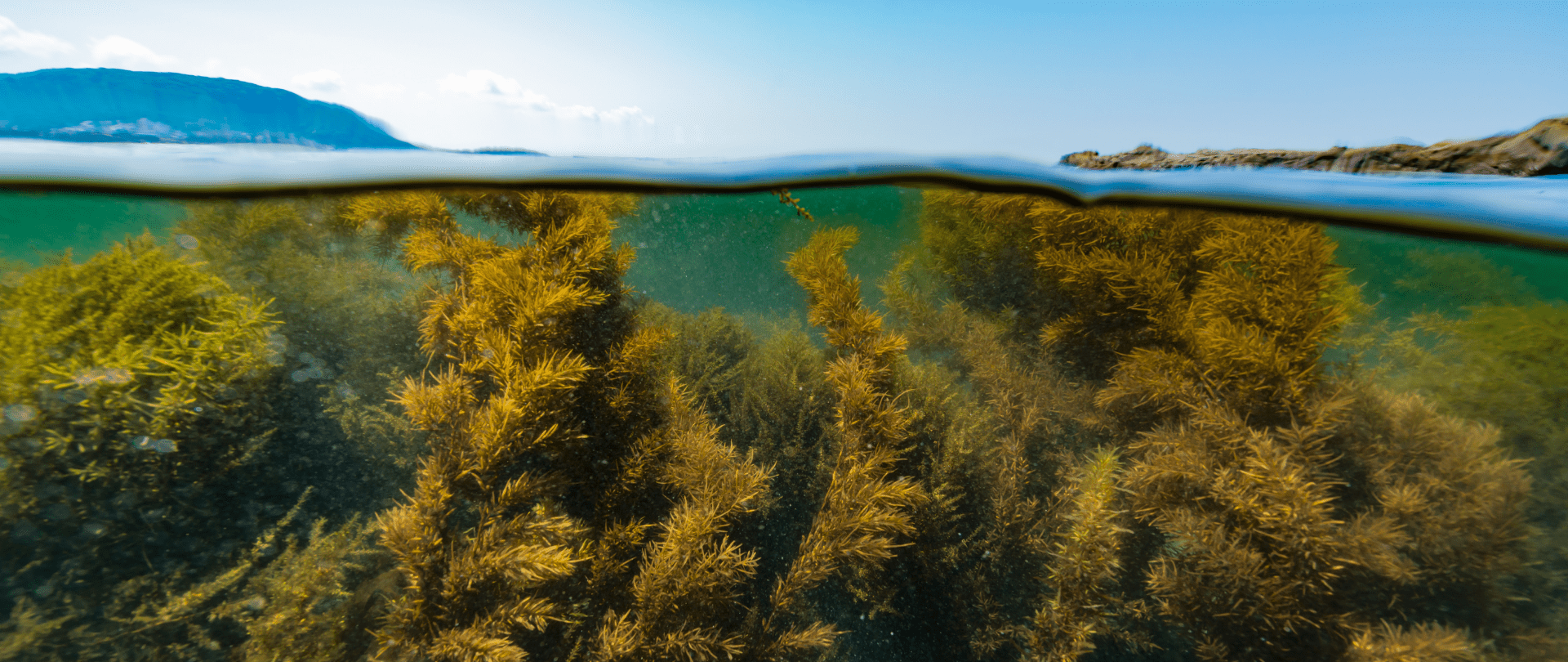
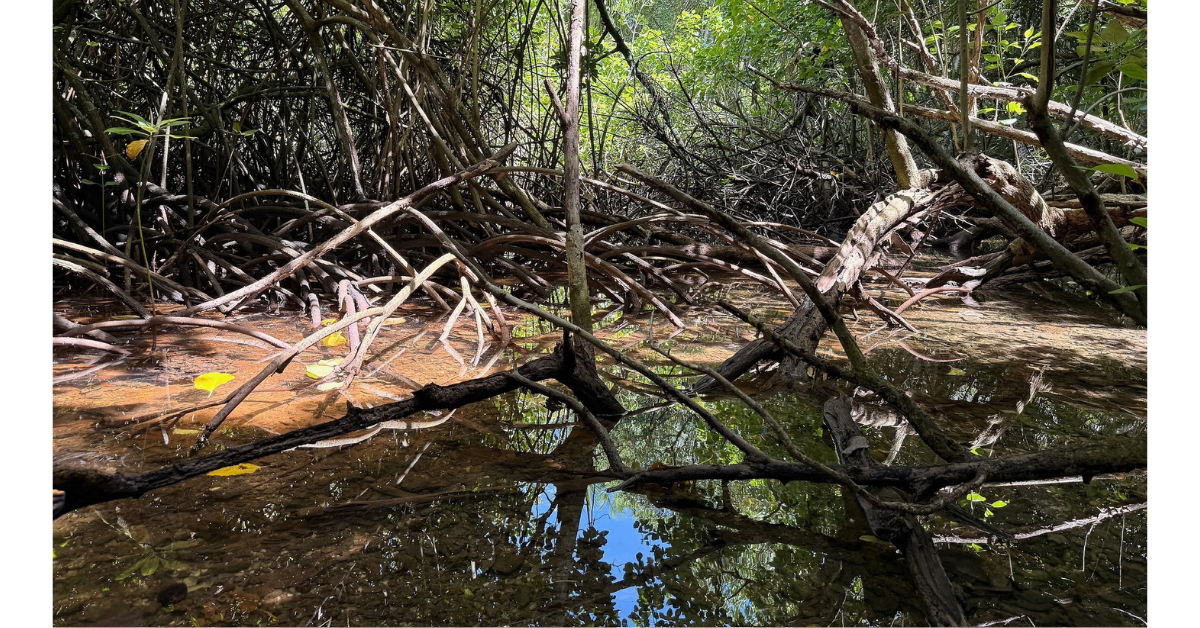
The shallow water protected by these mangroves is an ideal habitat for small fish and crustaceans. Photo Credit: Cozette Romero / Island Conservation

Why Mangroves Matter

Mangroves perform a rich variety of ecosystem functions, acting as a keystone species wherever they naturally occur. Mangroves can: 

  • Protect coastlines from erosion, storms, and rising seas. 
  • Provide habitat for fish, birds, and countless other species. 
  • Filter sediments and pollutants, helping protect coral reefs and seagrass beds. 
  • Capture and store carbon in both vegetation and soils for long periods, making them powerful carbon sinks. 

A 2022 review in Science of the Total Environment highlights mangroves’ ability to capture atmospheric CO₂. Their exploration of mangroves’ high productivity, rapid sediment accumulation, and unique coastal location shows how mangroves not only sequester carbon but also help prevent coastal erosion, support nutrient cycling, and export organic carbon to nearby marine environments. This makes them among the most effective natural blue carbon ecosystems.  

As climate change intensifies, interest in nature-based solutions is growing. While mangroves’ carbon storage and coastal protection benefits are well documented, the ecological value of any restoration or management effort depends on understanding the local environment first. 

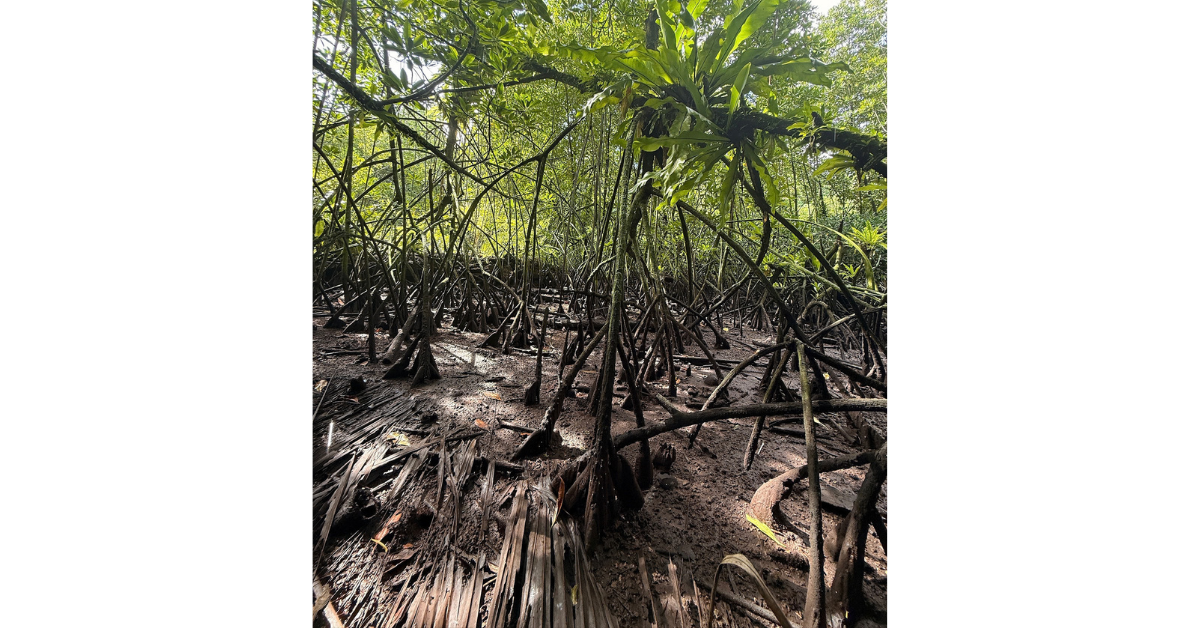
Magnificent aerial roots of mangroves in Tuvalu. Photo Credit: Cozette Romero / Island Conservation

The Same Species, Different Stories 

  A mangrove forest on one coastline may be essential habitat supporting biodiversity, stabilizing shorelines, and storing carbon. On another island, mangroves may occupy areas that historically supported different native species and ecological communities. 

Neither story is inherently contradictory. Instead, they illustrate a central truth of conservation: context matters. 

One example comes from the Society Islands in French Polynesia, where the mangrove species Rhizophora stylosa was introduced in the 1930s and has since spread across several inhabited islands. Researchers found that the mangroves form dense stands along coastlines and estuaries and are gradually expanding into native tidal marshes and rocky shoreline habitats. This has raised concerns because the introduced trees can alter habitats that evolved without mangroves, potentially affecting native plants and animals and changing the character of coastal ecosystems. 

At the same time, many local residents see benefits in the mangroves, creating an ongoing debate about whether they should be managed as an invasive species or accepted as part of a new ecosystem.   

This example illustrates why conservation can be so complex: a species that is celebrated globally for protecting shorelines, supporting biodiversity, and storing carbon can, in a different ecological context, create challenges for native ecosystems and conservation goals.

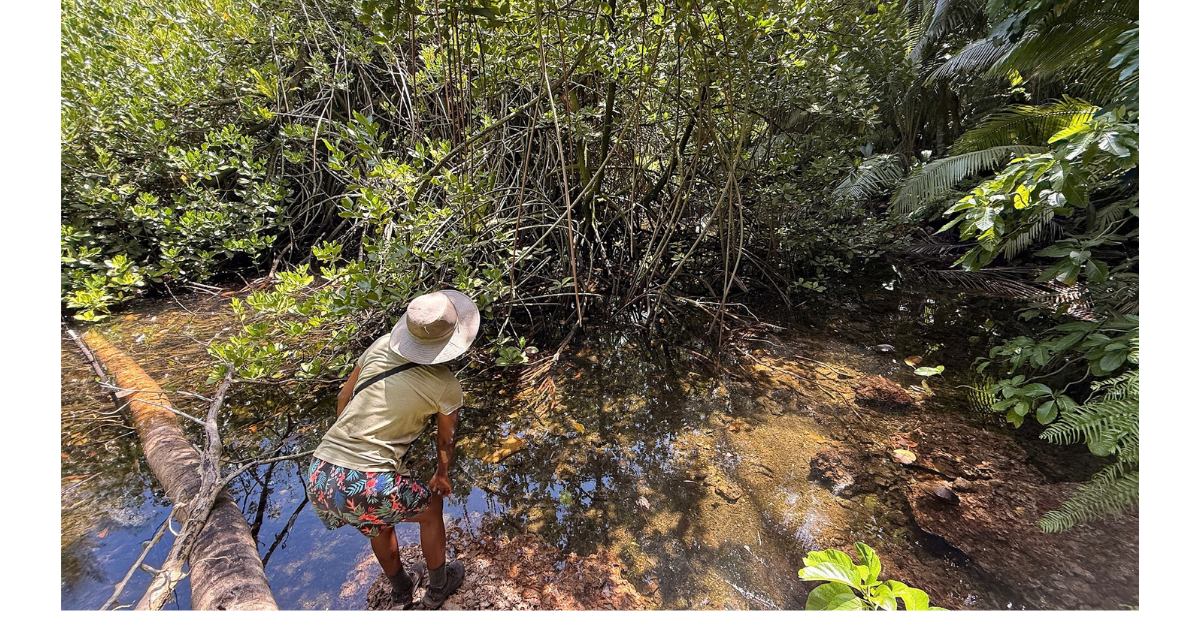
Island Restoration Specialist Priscilla A. Memi inspects some mangroves growing on Niulakita. Photo credit: Island Conservation
Island Restoration Specialist Priscilla A. Memi inspects some mangroves growing on Niulakita. Photo credit: Cozette Romero/Island Conservation

Looking Beyond Simple Narratives 

Mangroves remind us that conservation decisions are often made at the intersection of biodiversity, climate resilience, culture, and history. Protecting mangroves may be the right choice in one location. Managing their expansion may be appropriate in another. Both decisions can be grounded in sound conservation science. 

Another review from 2025 argues that mangroves are valuable not just because they store carbon or protect coastlines, but because their biodiversity underpins many of the ecosystem services people depend on. The authors show how mangroves are highly complex social-ecological systems where plants, fish, birds, invertebrates, microbes, and surrounding habitats interact to support fisheries, coastal protection, water quality, carbon storage, cultural traditions, and local livelihoods. 

One of the review’s central conclusions is that conservation and restoration efforts should move beyond simply increasing mangrove cover and instead focus on maintaining the diversity, structural complexity, and landscape connections that make mangrove ecosystems resilient and productive. Like climate change impacts, management outcomes are highly context-dependent, requiring local and regional assessments rather than one-size-fits-all solutions. 

Effective management depends on understanding the unique ecology of each place before deciding what actions to take. 

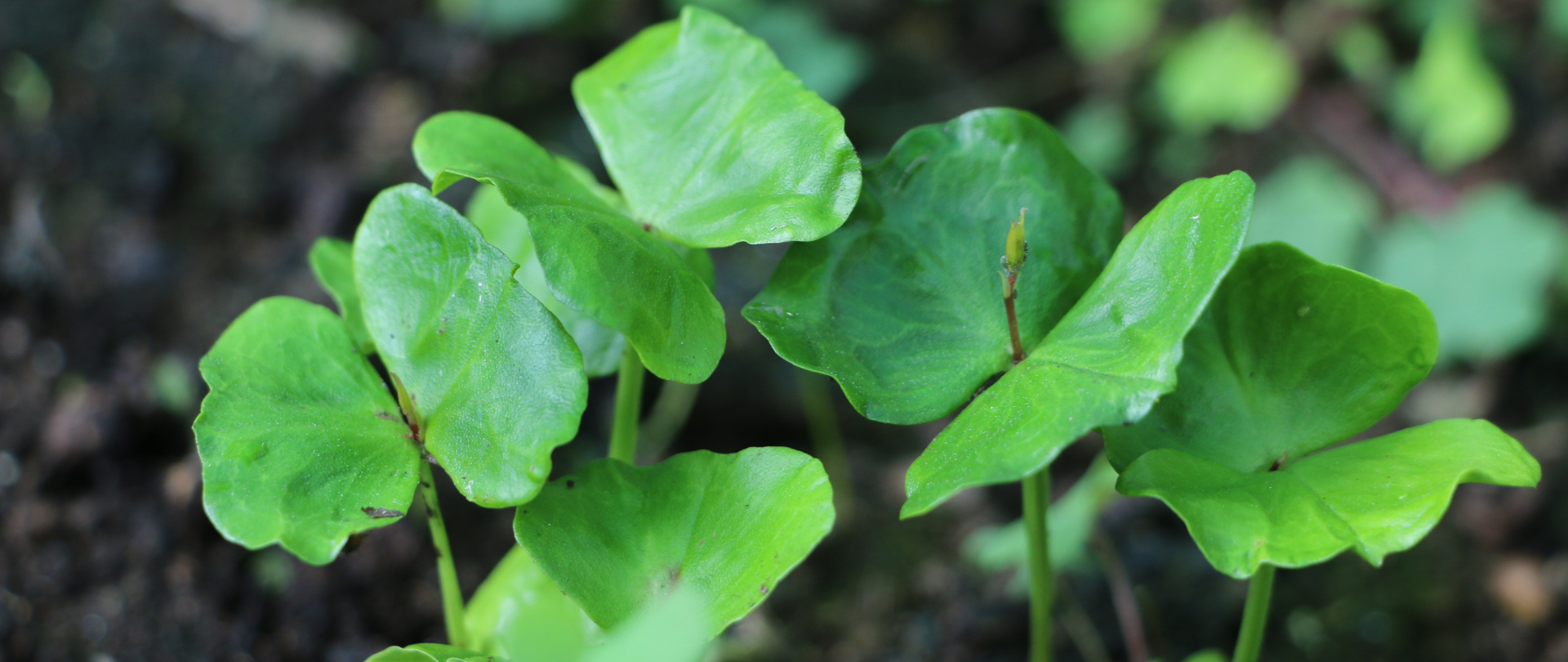
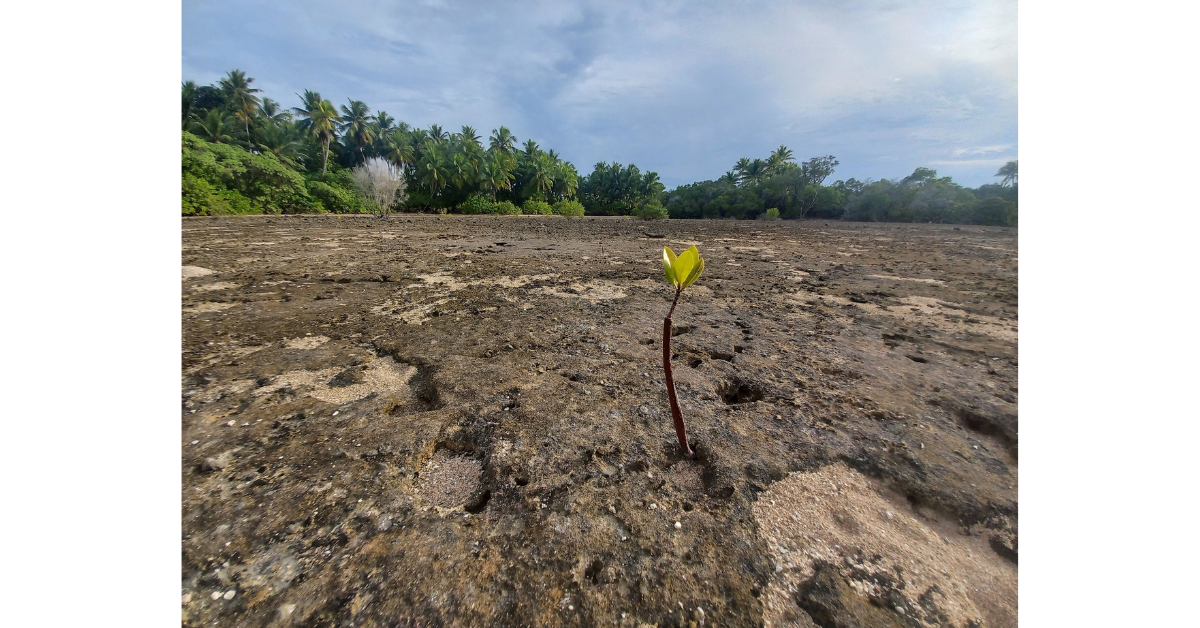
A mangrove seedling grows on Nadikdik Atoll, where our work is holistically restoring the ecosystem. Photo credit: Island Conservation

Islands are like mangroves 

Nowhere is this complexity more apparent than on islands. Two islands separated by only a few miles can have dramatically different species, ecological histories, and conservation needs. They can look, sound, and smell completely different. A recovery action solution that benefits one island may be inappropriate for another. 

That reality is at the heart of Island Conservation’s approach. Rather than applying a single blueprint everywhere, conservation actions begin with understanding each island ecosystem and the vision of its communities on its own terms. Scientists may spend years working with community members to study species interactions, ecosystem processes, and local conditions before recommending action. The goal is not simply to protect species, but to understand how an entire ecosystem functions,what interventions will help it recover, and how this aligns with the community’s priorities. 

Effective conservation is rarely about applying simple labels. It begins with understanding a place deeply enough to recognize that every ecosystem has its own story, and that lasting solutions must be rooted—like mangroves—in the realities of each landscape.

How to Help

There’s more than one way to make an impact. Join our collective of dedicated supporters by donating today or signing up for our newsletter to stay informed.

Q&A

What are mangroves? 

Mangroves are trees and shrubs that grow in coastal areas where land meets the sea. Their unique root systems allow them to survive in salty, oxygen-poor environments while providing habitat for wildlife, stabilizing shorelines, and storing large amounts of carbon. 

Why are mangroves important? 

Mangroves help prevent coastal erosion, reduce storm damage, improve water quality, provide habitat for fish and birds, and store significant amounts of carbon in their vegetation and soils. These benefits make mangroves one of the world’s most valuable coastal ecosystems. 

How do mangroves help fight climate change? 

Mangroves are powerful “blue carbon” ecosystems. They capture carbon dioxide from the atmosphere and store it in their roots, trunks, and coastal sediments for long periods. This ability to sequester and store carbon makes them an important nature-based climate solution. 

Do mangroves prevent coastal erosion? 

Yes. Mangrove roots trap sediment and absorb wave energy, helping stabilize shorelines and reduce erosion. They can also lessen the impacts of storms, flooding, and sea-level rise on coastal communities and ecosystems. 

Are mangroves always beneficial? 

Not necessarily. In places where mangroves are native, they often provide important ecological benefits. However, when mangroves are introduced outside their natural range, they can sometimes alter habitats, displace native species, and change ecosystem processes. Their impact depends on local ecological conditions. 

Can mangroves be invasive? 

Yes. Some mangrove species introduced by people have spread into ecosystems where they did not historically occur. In certain locations, introduced mangroves are considered invasive because they transform native habitats and affect local biodiversity. In other places, they may provide valued ecosystem services, creating complex management decisions. 

Why are introduced mangroves controversial in some island ecosystems? 

Introduced mangroves can create tradeoffs. While they may provide shoreline protection and carbon storage, they can also replace native coastal habitats and alter ecological communities. As a result, conservationists must weigh both the benefits and the costs when deciding how to manage them. 

What do mangroves teach us about conservation? 

Mangroves demonstrate that conservation is rarely one-size-fits-all. The same species can play very different ecological roles depending on where it occurs. Effective conservation requires understanding local biodiversity, ecological history, and community needs before deciding what actions to take. 

Why are islands especially important for site-specific conservation? 

Island ecosystems often contain unique species and ecological relationships found nowhere else. Even islands located close together can have very different conservation challenges and priorities. This means management strategies that work on one island may not be appropriate for another. 

How does Island Conservation decide what conservation actions to take? 

Island Conservation begins by working with the community to uderstand their vision for a healthier island and studying each island-ocean ecosystem individually. Scientists assess species interactions, ecosystem processes, local conditions, and community priorities before recommending interventions. This ecosystem-based approach helps ensure conservation actions are tailored to the specific needs of each island and community. 

What is a nature-based climate solution? 

A nature-based climate solution uses natural ecosystems to address climate change while providing additional benefits for people and wildlife. Examples include protecting and restoring mangroves, forests, wetlands, and seagrass beds that capture carbon and help communities adapt to climate impacts. 

Next

Want to learn more?

Check out other journal entries we think you might be interested in.

What is holistic restoration

March 3, 2026

What is holistic restoration?

What is holistic restoration? Read all about this incredible method to restore ecosystems for people and nature!